


Conformational behavior of fibrinogen on topographically modified polymer surfaces
Literature Information
Publication Date
2010-06-23
DOI
10.1039/C001747G
Impact Factor
3.676
Authors
Li Buay Koh, Isabel Rodriguez, Subbu S. Venkatraman
View Original
Abstract
The influence of topographical surface features at the submicron scale on the structural changes in the surface-adsorbed fibrinogen was investigated on poly(lactic-co-glycolic-acid) (PLGA) films. Attenuated total reflection-Fourier transform infrared spectroscopy (ATR-FTIR) was employed in this study for the induced conformational change of fibrinogen over various adsorption times, while the adsorption kinetics of fibrinogen was quantified by the enzyme linked immunosorbent assay (ELISA). When a PLGA surface is modified topographically, the adsorbed fibrinogen undergoes less conformational change when compared to adsorption on the pristine PLGA surface. The extent of conformational change is related to platelet adhesion. Reduced thrombogenicity was demonstrated by the higher ratios of α-helix to β-turn and β-sheet to β-turn structures on the topographic PLGA film, which suggests that topographical manipulation of surfaces is a viable approach to influence the thrombogenicity of surfaces.
Recommended Journals

Proceedings of the National Academy of Sciences of the United States of America

Russian Chemical Reviews

Journal of Heterocyclic Chemistry

Planta Medica

Journal of Medicinal Chemistry

Journal of Physics and Chemistry of Solids

Science Progress

Helvetica Chimica Acta

Journal of Organometallic Chemistry

Organic Preparations and Procedures International
Related Literature
Photoreductive dissolution of cerium oxide nanoparticles and their size-dependent absorption properties
Natasha W. Pettinger, Jennifer M. Empey, Sascha Fröbel, Bern Kohler
2020-02-17
Paper
DOI: 10.1039/C9CP06579B
Explaining doping in material research (Hf substitution in ZnO films) by directly quantifying the van der Waals force
Chia-Yun Lai, Sergio Santos, Boulos Alfakes, Nitul Rajput, Tobias Boström
2020-02-04
Paper
DOI: 10.1039/C9CP06441A
Phase transition and mechanical properties of cesium bismuth silver halide double perovskites (Cs2AgBiX6, X = Cl, Br, I): a DFT approach
Javad Beheshtian
2020-02-05
Paper
DOI: 10.1039/C9CP05342E
Excited state hydrogen transfer dynamics in phenol–(NH3)2 studied by picosecond UV-near IR-UV time-resolved spectroscopy
Shun-ichi Ishiuchi, Junko Kamizori, Norihiro Tsuji, Makoto Sakai, Mitsuhiko Miyazaki, Claude Dedonder
2020-02-10
Paper
DOI: 10.1039/C9CP06369B
Electronic structure, doping effect and topological signature in realistic intermetallics Li3−xNaxM (x = 3, 2, 1, 0; M = N, P, As, Sb, Bi)
Lei Jin, Xiaoming Zhang, Tingli He, Weizhen Meng, Xuefang Dai, Guodong Liu
2020-02-28
Paper
DOI: 10.1039/C9CP06033B
The antibacterial activity of p-tert-butylcalix[6]arene and its effect on a membrane model: molecular dynamics and Langmuir film studies
Ellen C. Wrobel, Lucas S. de Lara, Taiza A. S. do Carmo, Patrícia Castellen, Márcio Lazzarotto, Sérgio R. de Lázaro, Alexandre Camilo, Jr, Luciano Caseli, Rolf Schmidt, Christine E. DeWolf, Karen Wohnrath
2020-02-20
Paper
DOI: 10.1039/D0CP00432D
Molecular dynamics simulations of alkaline earth metal ions binding to DNA reveal ion size and hydration effects
Makenzie Provorse Long, Serra Alland, Madison E. Martin, Christine M. Isborn
2020-02-20
Paper
DOI: 10.1039/C9CP06844A
Stability, electronic and mechanical properties of chalcogen (Se and Te) monolayers
Jaspreet Singh, Pooja Jamdagni, Mukesh Jakhar, Ashok Kumar
2020-02-12
Paper
DOI: 10.1039/D0CP00511H
Surface plasmon resonance study of the interaction of N-methyl mesoporphyrin IX with G-quadruplex DNA
M. Perenon, H. Bonnet, T. Lavergne, J. Dejeu, E. Defrancq
2020-02-06
Paper
DOI: 10.1039/C9CP06321H
DNP NMR spectroscopy of cross-linked organic polymers: rational guidelines towards optimal sample preparation
Wei-Chih Liao, Atsuko Ogawa, Kazuhiko Sato, Christophe Copéret
2019-12-12
Paper
DOI: 10.1039/C9CP05208A
You might also like
Compound Q&A
How should waste containing 2-Ethyl-4-Methyl-1H-Imidazole-5-Carbaldehyde (CAS: 88634-80-4) be handled?
Waste containing 2-Ethyl-4-Methyl-1H-Imidazole-5-Carbaldehyde (CAS: 88634-80-4) ...
88634-80-42-Ethyl-4-Methyl-1H-...
Compound Q&A
What industries use Triethoxy(octyl)silane (CAS: 1385031-14-0)?
Triethoxy(octyl)silane (CAS: 1385031-14-0) is widely used in the pharmaceuticals...
1385031-14-0Triethoxy(octyl)sila...
Compound Q&A
Are there alternatives to 3-iodo-7-nitro-1H-indazole (CAS: 864724-64-1) in synthesis?
Several alternatives to 3-iodo-7-nitro-1H-indazole (CAS: 864724-64-1) exist in t...
864724-64-13-iodo-7-nitro-1H-in...
Compound Q&A
Are there alternatives to Benzene, bis[(trimethoxysilyl)ethyl] (CAS: 266317-71-9) in synthesis?
Yes, there are alternatives to Benzene, bis[(trimethoxysilyl)ethyl] (CAS: 266317...
266317-71-9Benzene, bis[(trimet...
Compound Q&A
Is Isothiazole-3-carbonitrile (CAS: 1452-17-1) safe?
Isothiazole-3-carbonitrile (CAS: 1452-17-1) is generally considered safe when us...
1452-17-1Isothiazole-3-carbon...
Compound Q&A
Is (3-Chlorophenyl)methanol (CAS: 873-63-2) safe?
(3-Chlorophenyl)methanol (CAS: 873-63-2) is considered low to moderately toxic. ...
873-63-2(3-Chlorophenyl)meth...
Compound Q&A
How is (2S,3S)-2-Hydroxy-3-({[(2-methyl-2-propanyl)oxy]carbonyl}amino)-3-(2-naphthyl)propanoic acid (CAS: 959583-98-3) typically synthesized?
(2S,3S)-2-Hydroxy-3-({[(2-methyl-2-propanyl)oxy]carbonyl}amino)-3-(2-naphthyl)pr...
959583-98-3(2S,3S)-2-Hydroxy-3-...
Compound Q&A
What precautions should be taken when handling Methyl 2-(bromomethyl)-5-methoxybenzoate (CAS: 788081-99-2)?
Proper handling of methyl 2-(bromomethyl)-5-methoxybenzoate requires the use of ...
788081-99-2Methyl 2-(bromomethy...
Compound Q&A
What is 6,8-Dibromoimidazo[1,2-a]pyridine-2-carboxylic acid (CAS: 904805-36-3)?
6,8-Dibromoimidazo[1,2-a]pyridine-2-carboxylic acid (CAS: 904805-36-3) is an aro...
904805-36-36,8-Dibromoimidazo[1...
Compound Q&A
Is 3-Amino-5-bromo-2-pyridinecarbonitrile (CAS: 573675-27-1) safe?
3-Amino-5-bromo-2-pyridinecarbonitrile is considered safe when handled under pro...
573675-27-13-Amino-5-bromo-2-py...
Source Journal
Physical Chemistry Chemical Physics

CiteScore:
5.5
Self-citation Rate:
10.3%
Articles per Year:
3036
Physical Chemistry Chemical Physics (PCCP) is an international journal co-owned by 19 physical chemistry and physics societies from around the world. This journal publishes original, cutting-edge research in physical chemistry, chemical physics and biophysical chemistry. To be suitable for publication in PCCP, articles must include significant innovation and/or insight into physical chemistry; this is the most important criterion that reviewers and Editors will judge against when evaluating submissions. The journal has a broad scope and welcomes contributions spanning experiment, theory, computation and data science. Topical coverage includes spectroscopy, dynamics, kinetics, statistical mechanics, thermodynamics, electrochemistry, catalysis, surface science, quantum mechanics, quantum computing and machine learning. Interdisciplinary research areas such as polymers and soft matter, materials, nanoscience, energy, surfaces/interfaces, and biophysical chemistry are welcomed if they demonstrate significant innovation and/or insight into physical chemistry. Joined experimental/theoretical studies are particularly appreciated when complementary and based on up-to-date approaches.
Recommended Compounds
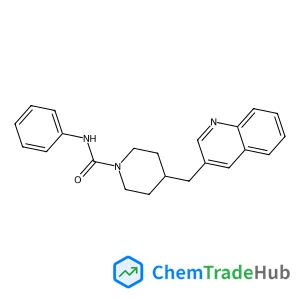
N-phenyl-4-(quinolin-3-ylmethyl)piperidine-1-carboxamide
CAS Number:
959151-50-9
Molecular Formula:
C22H23N3O
![Methyl 8-azabicyclo[3.2.1]octane-3-carboxylate hydrochloride structure](https://static.chemtradehub.com/structs/179/179022-43-6-77f5.webp "Methyl 8-azabicyclo[3.2.1]octane-3-carboxylate hydrochloride structure")
Methyl 8-azabicyclo[3.2.1]octane-3-carboxylate hydrochloride
CAS Number:
179022-43-6
Molecular Formula:
C9H16ClNO2
Recommended Suppliers





Disclaimer
This page provides academic journal information for reference and research purposes only. We are not affiliated with any journal publishers and do not handle publication submissions. For publication-related inquiries, please contact the respective journal publishers directly.
If you notice any inaccuracies in the information displayed, please contact us at support@chemtradehub.com. We will promptly review and address your concerns.