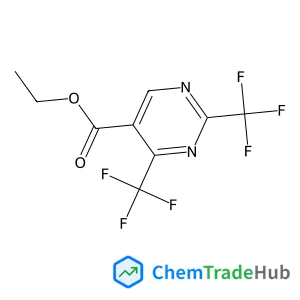
Ethyl 2,4-bis(trifluoromethyl)-5-pyrimidinecarboxylate
CAS Number:
188781-15-9
Molecular Formula:
C9H6F6N2O2
Jaspreet Singh, Pooja Jamdagni, Mukesh Jakhar, Ashok Kumar
The successful experimental fabrication of 2D tellurium (Te) has resulted in growing interest in the monolayers of group VI elements. By employing density functional theory, we have explored the stability and electronic and mechanical properties of 1T-MoS2-like chalcogen (α-Se and α-Te) monolayers. Phonon spectra are free from imaginary modes suggesting these monolayers to be dynamically stable. The stability of these monolayers is further confirmed by room temperature AIMD simulations. Both α-Se and α-Te are indirect gap semiconductors with a band gap (calculated using the hybrid HSE06 functional) of 1.16 eV and 1.11 eV, respectively, and these gaps are further tunable with mechanical strains. Both monolayers possess strong absorption spectra in the visible region. The ideal strengths of these monolayers are comparable with those of many existing 2D materials. Significantly, these monolayers possess ultrahigh carrier mobilities of the order of 103 cm2 V−1 s−1. Combining the semiconducting nature, visible light absorption and superior carrier mobilities, these monolayers can be promising candidates for the superior performance of next-generation nanoscale devices.
H. E. Cingil, J. A. Balmer, S. P. Armes, P. S. Bain
DOI: 10.1039/C0PY00108B
Xuanhe Li, Wei-Hung Chiang, Kuan Chang, Hujun Xu
DOI: 10.1039/D1RE00446H
Yongrong Li
DOI: 10.1039/B9PY00238C
Vivek Kumar, Ravinder Kumar Wanchoo, Amrit Pal Toor
DOI: 10.1039/D1RE00149C
Raquel Viveiros, Teresa Casimiro
DOI: 10.1039/D1RE00194A
Dominique M. Roberge, Paul Hanselmann, Petteri Elsner
DOI: 10.1039/D1RE00264C
Shuai Wang, Lidong Yang, Tianhan Zhu, Nan Jiang, Feng Li, Huan Wang, Chunlei Zhang, Hua Song
DOI: 10.1039/D1RE00302J
Roel J. T. Kleijwegt, Vera C. Henricks, Wyatt Winkenwerder, Wim Baan, John van der Schaaf
DOI: 10.1039/D1RE00191D
Raquel Portela, Patrick Wolf, Jakob M. Marinkovic, Ana Serrano-Lotina, Anders Riisager, Marco Haumann
DOI: 10.1039/D1RE00226K
Sebastian Hartwig, Mary M. Nguyen, Stefan Hecht
DOI: 10.1039/B9PY00217K
When handling lithium chloride hydrate (1:1:1) (CAS: 16712-20-2), it is importan...
4-(4H-1,2,4-Triazol-4-yl)piperidine is generally considered safe for use in phar...
Waste containing 1,3-Thiazole-2-carboxamide (CAS: 16733-85-0) should be collecte...
5-(Difluoromethyl)-2-fluorobenzonitrile (CAS: 934175-58-3) is subject to regulat...
Methyl 3-acetamido-2-thiophenecarboxylate can be synthesized by the reaction of ...
4-Isoquinolinecarbonitrile is a chemical compound with the CAS number 34846-65-6...
Store Methyl 1H-1,2,3-triazole-4-carboxylate (CAS: 877309-59-6) in a cool, dry p...
6-Bromo[1,3]thiazolo[5,4-b]pyridin-2-amine (CAS: 1160791-13-8) is subject to the...
(2S,3S)-2-Ammonio-3-(3,4-dihydroxyphenyl)-3-hydroxypropanoate (CAS: 23651-95-8) ...
7-Bromo-3-methyl-3,4-dihydroquinazolin-4-one is a solid with a crystalline form....

Physical Chemistry Chemical Physics (PCCP) is an international journal co-owned by 19 physical chemistry and physics societies from around the world. This journal publishes original, cutting-edge research in physical chemistry, chemical physics and biophysical chemistry. To be suitable for publication in PCCP, articles must include significant innovation and/or insight into physical chemistry; this is the most important criterion that reviewers and Editors will judge against when evaluating submissions. The journal has a broad scope and welcomes contributions spanning experiment, theory, computation and data science. Topical coverage includes spectroscopy, dynamics, kinetics, statistical mechanics, thermodynamics, electrochemistry, catalysis, surface science, quantum mechanics, quantum computing and machine learning. Interdisciplinary research areas such as polymers and soft matter, materials, nanoscience, energy, surfaces/interfaces, and biophysical chemistry are welcomed if they demonstrate significant innovation and/or insight into physical chemistry. Joined experimental/theoretical studies are particularly appreciated when complementary and based on up-to-date approaches.
![tert-butyl 8-benzyl-2,8-diazaspiro[4.5]decane-2-carboxylate structure](https://static.chemtradehub.com/structs/336/336191-16-3-bb55.webp "tert-butyl 8-benzyl-2,8-diazaspiro[4.5]decane-2-carboxylate structure")