













Valence bond all the way: From the degenerate H-exchange to cytochrome P450
Literature Information
Publication Date
2010-06-24
DOI
10.1039/C001372M
Impact Factor
3.676
Authors
Sason Shaik
View Original
Abstract
This is a personalized Perspective on the development of a valence bond (VB) view of chemical reactivity (J. Am. Chem. Soc., 1981, 103, 3692) as a LEGO process whereby one constructs “reactivity objects”, such as barriers, transition states, and reaction intermediates from VB building blocks, and thereby understands and predicts chemical reactivity in a unified manner. In so doing, I have tried to give the reader a panoramic set of applications, from the simple H-exchange reaction all the way to alkane hydroxylation by cytochrome P450 (Prog. Phys. Org. Chem. 1985, 15, 197; Angew. Chem., Int. Ed., 1999, 38, 586).
Related Literature
Theoretical characterization of sulfur-to-selenium substitution in an emissive RNA alphabet: impact on H-bonding potential and photophysical properties
Mohit Chawla, Pau Besalú-Sala, Kanav Kalra, Romina Oliva, Luigi Cavallo
2018-02-23
Paper
DOI: 10.1039/C7CP07656H
Uptake of water by an acid–base nanoparticle: theoretical and experimental studies of the methanesulfonic acid–methylamine system
Jing Xu, Véronique Perraud, Barbara J. Finlayson-Pitts
2018-08-13
Paper
DOI: 10.1039/C8CP03634A
Singlet and triplet energy transfer dynamics in self-assembled axial porphyrin–anthracene complexes: towards supra-molecular structures for photon upconversion
Victor Gray, Betül Küçüköz, Fredrik Edhborg, Maria Abrahamsson, Kasper Moth-Poulsen, Bo Albinsson
2018-02-12
Paper
DOI: 10.1039/C8CP00884A
Comparison of charge transfer dynamics in polypyridyl ruthenium sensitizers for solar cells and water splitting systems
Iwona Grądzka, Mateusz Gierszewski, Marcin Ziółek
2018-02-12
Paper
DOI: 10.1039/C8CP00258D
A first-principles study of the electrically tunable band gap in few-layer penta-graphene
Jinjin Wang, Zhanyu Wang, R. J. Zhang, Y. X. Zheng, L. Y. Chen, Chia-Chin Tsoo, Hung-Ji Huang
2018-06-12
Paper
DOI: 10.1039/C8CP02624F
Half-metallic and magnetic semiconducting behaviors of metal-doped blue phosphorus nanoribbons from first-principles calculations
Shun-Jin Peng, Kai-Ming Wu, Kai-Lun Yao, Chee-Leung Mak, Chi-Hang Lam
2018-02-13
Paper
DOI: 10.1039/C7CP08635K
Entropic effects make a more tightly folded conformer of a β-amino acid less stable: UV-UV hole burning and IR dip spectroscopy of l-β3-homotryptophan using a laser desorption supersonic jet technique
Woon Yong Sohn, Jeong Jin Kim, Myeongwon Jeon, Takuma Aoki, Shun-ichi Ishiuchi, Masaaki Fujii, Hyuk Kang
2018-07-10
Paper
DOI: 10.1039/C8CP02106F
Site-specific electronic structure of imidazole and imidazolium in aqueous solutions
F. Meyer, M. Blum, Y. L. Jeyachandran, R. G. Wilks, W. Yang, M. Bär, F. Reinert, M. Zharnikov
2018-03-06
Paper
DOI: 10.1039/C7CP07885D
Unravelling the enigma of ultrafast excited state relaxation in non-emissive aggregating conjugated polymers
Benjamin D. Datko, Maksim Y. Livshits, Zhen Zhang, Dana Portlock, Yang Qin, Jeffrey J. Rack, John K. Grey
2018-08-09
Paper
DOI: 10.1039/C8CP04061C
Reply to the ‘Comment on “Methanol dimer formation drastically enhances hydrogen abstraction from methanol by OH at low temperature”’ by D. Heard, R. Shannon, J. Gomez Martin, R. Caravan, M. Blitz, J. Plane, M. Antiñolo, M. Agundez, E. Jimenez, B. Ballesteros, A. Canosa, G. El Dib, J. Albaladejo and J. Cernicharo, Phys. Chem. Chem. Phys., 2018, 20, DOI: 10.1039/C7CP04561A
W. Siebrand, Z. Smedarchina, D. Ferro-Costas, E. Martínez-Núñez, A. Fernández-Ramos
2018-02-22
Comment
DOI: 10.1039/C8CP00519B
You might also like
Compound Q&A
How should waste containing N-Methoxy-N-methyl-1,3-thiazole-5-carboxamide (CAS: 898825-89-3) be handled?
Waste containing N-Methoxy-N-methyl-1,3-thiazole-5-carboxamide (CAS: 898825-89-3...
898825-89-3N-Methoxy-N-methyl-1...
Compound Q&A
How should N-(4-Biphenylyl)dibenzo[b,d]furan-4-amine (CAS: 1318338-47-4) be stored?
N-(4-Biphenylyl)dibenzo[b,d]furan-4-amine should be stored in a tightly sealed c...
1318338-47-4N-(4-Biphenylyl)dibe...
Compound Q&A
What is the market or research trend for 3-Acetamido-5-amino-2,4,6-triiodobenzoic acid (CAS: 1713-07-1)?
The market for 3-Acetamido-5-amino-2,4,6-triiodobenzoic acid (CAS: 1713-07-1) is...
1713-07-13-Acetamido-5-amino-...
Compound Q&A
How should Benzyl 2-O-acetyl-3,4,6-tri-O-benzyl-beta-D-galactopyranoside (CAS: 61820-03-9) be stored?
Benzyl 2-O-acetyl-3,4,6-tri-O-benzyl-beta-D-galactopyranoside (CAS: 61820-03-9) ...
61820-03-9Benzyl 2-O-acetyl-3,...
Compound Q&A
What regulatory guidelines apply to 2-Ethylpiperazine dihydrochloride (CAS: 438050-52-3)?
2-Ethylpiperazine dihydrochloride (CAS: 438050-52-3) is regulated under the Glob...
438050-52-32-Ethylpiperazine di...
Compound Q&A
What regulatory guidelines apply to 1,1'-[1,3-Phenylenebis(methylene)]bis(3-methyl-1H-pyrrole-2,5-dione) (CAS: 119462-56-5)?
1,1'-[1,3-Phenylenebis(methylene)]bis(3-methyl-1H-pyrrole-2,5-dione) (CAS: 11946...
119462-56-51,1'-[1,3-Phenyleneb...
Compound Q&A
Are there alternatives to 5-Fluoro-2-(1-pyrrolidinyl)pyridine (CAS: 1287217-79-1) in synthesis?
Several alternatives can be used in the synthesis of 5-Fluoro-2-(1-pyrrolidinyl)...
1287217-79-15-Fluoro-2-(1-pyrrol...
Compound Q&A
What precautions should be taken when handling 1-((2R,3R,4R,5R)-5-((bis(4-methoxyphenyl)(phenyl)methoxy)methyl)-4-hydroxy-3-methoxytetrahydrofuran-2-yl)-5-methylpyrimidine-2,4(1H,3H)-dione (CAS: 153631-19-7)?
Proper personal protective equipment (PPE) must be worn when handling this compo...
153631-19-71-((2R,3R,4R,5R)-5-(...
Compound Q&A
What precautions should be taken when handling 6-Bromoimidazo[1,2-a]pyridin-8-amine (CAS: 676371-00-9)?
When handling 6-Bromoimidazo[1,2-a]pyridin-8-amine, it is important to wear appr...
676371-00-96-Bromoimidazo[1,2-a...
Compound Q&A
Are there alternatives to (2S,4R)-4-(4-Nitrobenzyl)pyrrolidine-2-carboxylic acid hydrochloride (CAS: 1049740-22-8) in synthesis?
Alternatives to (2S,4R)-4-(4-Nitrobenzyl)pyrrolidine-2-carboxylic acid hydrochlo...
1049740-22-8(2S,4R)-4-(4-Nitrobe...
Source Journal
Physical Chemistry Chemical Physics

CiteScore:
5.5
Self-citation Rate:
10.3%
Articles per Year:
3036
Physical Chemistry Chemical Physics (PCCP) is an international journal co-owned by 19 physical chemistry and physics societies from around the world. This journal publishes original, cutting-edge research in physical chemistry, chemical physics and biophysical chemistry. To be suitable for publication in PCCP, articles must include significant innovation and/or insight into physical chemistry; this is the most important criterion that reviewers and Editors will judge against when evaluating submissions. The journal has a broad scope and welcomes contributions spanning experiment, theory, computation and data science. Topical coverage includes spectroscopy, dynamics, kinetics, statistical mechanics, thermodynamics, electrochemistry, catalysis, surface science, quantum mechanics, quantum computing and machine learning. Interdisciplinary research areas such as polymers and soft matter, materials, nanoscience, energy, surfaces/interfaces, and biophysical chemistry are welcomed if they demonstrate significant innovation and/or insight into physical chemistry. Joined experimental/theoretical studies are particularly appreciated when complementary and based on up-to-date approaches.
Recommended Compounds

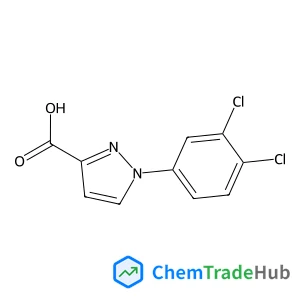
1-(3,4-Dichlorophenyl)-1H-pyrazole-3-carboxylic acid
CAS Number:
1152949-12-6
Molecular Formula:
C10H6Cl2N2O2
![tert-Butyl 6-chloro-4-oxospiro[chroman-2,4'-piperidine]-1'-carboxylate structure](https://static.chemtradehub.com/structs/101/1011482-37-3-88a5.webp "tert-Butyl 6-chloro-4-oxospiro[chroman-2,4'-piperidine]-1'-carboxylate structure")
tert-Butyl 6-chloro-4-oxospiro[chroman-2,4'-piperidine]-1'-carboxylate
CAS Number:
1011482-37-3
Molecular Formula:
C18H22ClNO4
Recommended Suppliers




Disclaimer
This page provides academic journal information for reference and research purposes only. We are not affiliated with any journal publishers and do not handle publication submissions. For publication-related inquiries, please contact the respective journal publishers directly.
If you notice any inaccuracies in the information displayed, please contact us at support@chemtradehub.com. We will promptly review and address your concerns.