











Half-metallic and magnetic semiconducting behaviors of metal-doped blue phosphorus nanoribbons from first-principles calculations
Literature Information
Publication Date
2018-02-13
DOI
10.1039/C7CP08635K
Impact Factor
3.676
Authors
Shun-Jin Peng, Kai-Ming Wu, Kai-Lun Yao, Chee-Leung Mak, Chi-Hang Lam
View Original
Abstract
We investigate the electronic and magnetic properties of substitutional metal atom impurities in two-dimensional (2D) blue phosphorene nanoribbons using first-principles calculations. In impure zigzag blue phosphorene nanoribbons (zBPNRs), a metal atom substitutes for a P atom at position “A/B”. The V-“B”structure shows half-metallic properties, while the Mn-“A/B”, V-“A”, Fe-“B”, and Cr-“A/B” structures show magnetic semiconductor properties. In addition, the Fe-“A” system shows magnetic metallic properties. On the other hand, for metal-doped armchair blue phosphorene nanoribbons (aBPNRs), the Mn-“A/B”, V-“A”, Fe-“A/B”, and Cr-“A/B” structures show magnetic semiconductor properties, while the V-“B” structure shows nonmagnetic properties. We find that the magnetic properties of such substitutional impurities can be understood by regarding the exchange splitting of the metal 3d orbitals. And from analyzing the electron orbitals, we conclude that the main contribution of the DOS for every system comes from the d and p orbitals. These results suggest excellent candidates for new magnetic semiconductors and half-metals for spintronic devices based on blue phosphorenes.
Related Literature
Should a hotter paramagnet transform quicker to a ferromagnet? Monte Carlo simulation results for Ising model
Nalina Vadakkayil, Subir K. Das
2021-04-27
Communication
DOI: 10.1039/D1CP00879J
Bond dissociation energies of low-valent lanthanide hydroxides: lower limits from ion–molecule reactions and comparisons with fluorides
Mariah L. Parker, Jiwen Jian, John K. Gibson
2021-05-05
Paper
DOI: 10.1039/D1CP01362A
Interaction topologies of the S⋯O chalcogen bond: the conformational equilibrium of the cyclohexanol⋯SO2 cluster
Rizalina T. Saragi, Marcos Juanes, Gang Feng, Alberto Lesarri
2021-04-14
Paper
DOI: 10.1039/D1CP00997D
Influence of nuclear spins on electron spin coherence in isolated, p-doped tin clusters
Thomas M. Fuchs, Rolf Schäfer
2021-05-07
Paper
DOI: 10.1039/D1CP01227D
Theoretically modelling graphene-like carbon matryoshka with strong stability and particular three-center two-electron π bonds
Mengyang Li, Yaoxiao Zhao, Zhibin Gao, Kun Yuan, Xiang Zhao
2021-05-06
Paper
DOI: 10.1039/D1CP01307F
Active particle diffusion in convection roll arrays
Pulak Kumar Ghosh, Yunyun Li
2021-05-10
Paper
DOI: 10.1039/D1CP01088C
Molecular dynamics study of the pore formation in single layer graphene oxide by a thermal reduction process
Federico Raffone, Filippo Savazzi, Giancarlo Cicero
2021-04-26
Paper
DOI: 10.1039/D1CP00134E
You might also like
Compound Q&A
How should waste containing N-Methoxy-N-methyl-1,3-thiazole-5-carboxamide (CAS: 898825-89-3) be handled?
Waste containing N-Methoxy-N-methyl-1,3-thiazole-5-carboxamide (CAS: 898825-89-3...
898825-89-3N-Methoxy-N-methyl-1...
Compound Q&A
How should N-(4-Biphenylyl)dibenzo[b,d]furan-4-amine (CAS: 1318338-47-4) be stored?
N-(4-Biphenylyl)dibenzo[b,d]furan-4-amine should be stored in a tightly sealed c...
1318338-47-4N-(4-Biphenylyl)dibe...
Compound Q&A
What is the market or research trend for 3-Acetamido-5-amino-2,4,6-triiodobenzoic acid (CAS: 1713-07-1)?
The market for 3-Acetamido-5-amino-2,4,6-triiodobenzoic acid (CAS: 1713-07-1) is...
1713-07-13-Acetamido-5-amino-...
Compound Q&A
How should Benzyl 2-O-acetyl-3,4,6-tri-O-benzyl-beta-D-galactopyranoside (CAS: 61820-03-9) be stored?
Benzyl 2-O-acetyl-3,4,6-tri-O-benzyl-beta-D-galactopyranoside (CAS: 61820-03-9) ...
61820-03-9Benzyl 2-O-acetyl-3,...
Compound Q&A
What regulatory guidelines apply to 2-Ethylpiperazine dihydrochloride (CAS: 438050-52-3)?
2-Ethylpiperazine dihydrochloride (CAS: 438050-52-3) is regulated under the Glob...
438050-52-32-Ethylpiperazine di...
Compound Q&A
What regulatory guidelines apply to 1,1'-[1,3-Phenylenebis(methylene)]bis(3-methyl-1H-pyrrole-2,5-dione) (CAS: 119462-56-5)?
1,1'-[1,3-Phenylenebis(methylene)]bis(3-methyl-1H-pyrrole-2,5-dione) (CAS: 11946...
119462-56-51,1'-[1,3-Phenyleneb...
Compound Q&A
Are there alternatives to 5-Fluoro-2-(1-pyrrolidinyl)pyridine (CAS: 1287217-79-1) in synthesis?
Several alternatives can be used in the synthesis of 5-Fluoro-2-(1-pyrrolidinyl)...
1287217-79-15-Fluoro-2-(1-pyrrol...
Compound Q&A
What precautions should be taken when handling 1-((2R,3R,4R,5R)-5-((bis(4-methoxyphenyl)(phenyl)methoxy)methyl)-4-hydroxy-3-methoxytetrahydrofuran-2-yl)-5-methylpyrimidine-2,4(1H,3H)-dione (CAS: 153631-19-7)?
Proper personal protective equipment (PPE) must be worn when handling this compo...
153631-19-71-((2R,3R,4R,5R)-5-(...
Compound Q&A
What precautions should be taken when handling 6-Bromoimidazo[1,2-a]pyridin-8-amine (CAS: 676371-00-9)?
When handling 6-Bromoimidazo[1,2-a]pyridin-8-amine, it is important to wear appr...
676371-00-96-Bromoimidazo[1,2-a...
Compound Q&A
Are there alternatives to (2S,4R)-4-(4-Nitrobenzyl)pyrrolidine-2-carboxylic acid hydrochloride (CAS: 1049740-22-8) in synthesis?
Alternatives to (2S,4R)-4-(4-Nitrobenzyl)pyrrolidine-2-carboxylic acid hydrochlo...
1049740-22-8(2S,4R)-4-(4-Nitrobe...
Source Journal
Physical Chemistry Chemical Physics

CiteScore:
5.5
Self-citation Rate:
10.3%
Articles per Year:
3036
Physical Chemistry Chemical Physics (PCCP) is an international journal co-owned by 19 physical chemistry and physics societies from around the world. This journal publishes original, cutting-edge research in physical chemistry, chemical physics and biophysical chemistry. To be suitable for publication in PCCP, articles must include significant innovation and/or insight into physical chemistry; this is the most important criterion that reviewers and Editors will judge against when evaluating submissions. The journal has a broad scope and welcomes contributions spanning experiment, theory, computation and data science. Topical coverage includes spectroscopy, dynamics, kinetics, statistical mechanics, thermodynamics, electrochemistry, catalysis, surface science, quantum mechanics, quantum computing and machine learning. Interdisciplinary research areas such as polymers and soft matter, materials, nanoscience, energy, surfaces/interfaces, and biophysical chemistry are welcomed if they demonstrate significant innovation and/or insight into physical chemistry. Joined experimental/theoretical studies are particularly appreciated when complementary and based on up-to-date approaches.
Recommended Compounds

![[(5-Methyl-1,3,4-thiadiazol-2-yl)sulfanyl]acetic acid structure](https://static.chemtradehub.com/structs/509/50918-26-8-4ce8.webp "[(5-Methyl-1,3,4-thiadiazol-2-yl)sulfanyl]acetic acid structure")
[(5-Methyl-1,3,4-thiadiazol-2-yl)sulfanyl]acetic acid
CAS Number:
50918-26-8
Molecular Formula:
C5H6N2O2S2
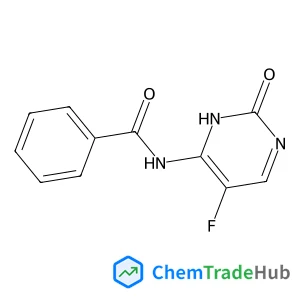
N-(5-Fluoro-2-oxo-2,3-dihydro-4-pyrimidinyl)benzamide
CAS Number:
10357-07-0
Molecular Formula:
C11H8FN3O2
![2-Methylbenzo[h]quinoline structure](https://static.chemtradehub.com/structs/605/605-88-9-ac43.webp "2-Methylbenzo[h]quinoline structure")
Recommended Suppliers






Disclaimer
This page provides academic journal information for reference and research purposes only. We are not affiliated with any journal publishers and do not handle publication submissions. For publication-related inquiries, please contact the respective journal publishers directly.
If you notice any inaccuracies in the information displayed, please contact us at support@chemtradehub.com. We will promptly review and address your concerns.