












Unravelling the enigma of ultrafast excited state relaxation in non-emissive aggregating conjugated polymers
Literature Information
Publication Date
2018-08-09
DOI
10.1039/C8CP04061C
Impact Factor
3.676
Authors
Benjamin D. Datko, Maksim Y. Livshits, Zhen Zhang, Dana Portlock, Yang Qin, Jeffrey J. Rack, John K. Grey
View Original
Abstract
We investigate a class of non-emissive conjugated polymers with very short excited state lifetimes believed to undergo singlet fission and relaxation to mid-gap forbidden excited states. Poly(3-decylthieneylenvinylene) (P3DTV) and its heavy atom analog, poly(3-decylseleneylenvinylene) (P3DSV), are strongly aggregating conjugated polymers that experience large excited state displacements along multiple vibrational modes. We demonstrate this Franck–Condon vibrational activity effectively disperses excitation energy into multiple non-radiative channels that can be explained using a simple, two-state potential energy surface model. Resonance Raman spectroscopy is sensitive to early Franck–Condon vibrational activity and we observe rich harmonic progressions involving multiple high frequency CC backbone symmetric stretching motions (∼1000–1600 cm−1) in both systems reflecting mode-specific excited state geometrical displacements. Transient absorption spectra confirm that efficient non-radiative processes dominate excited state relaxation dynamics which are confined to π-stacked aggregated chains. Surprisingly, we found little influence of the heteroatom consistent with efficient vibrational energy dissipation. Our results highlight the importance of aggregation and multi-dimensional Franck–Condon vibrational dynamics on the ability to harvest excitons, which are not usually considered in materials design and optimization schemes.
Related Literature
Role of conformational heterogeneity in ligand recognition by viral RNA molecules
Lev Levintov, Harish Vashisth
2021-04-01
Paper
DOI: 10.1039/D1CP00679G
Coarse-grained force-field for large scale molecular dynamics simulations of polyacrylamide and polyacrylamide-gels based on quantum mechanics
Andres Jaramillo-Botero, Xue-hai Ju, William A. Goddard, III
2021-04-28
Paper
DOI: 10.1039/D0CP05767C
An ultra-sensitive gas sensor based on a two-dimensional manganese porphyrin monolayer
Ze-Wen Hao, Mi-Mi Dong, Rui-Qin Zhang, Chuan-Kui Wang, Xiao-Xiao Fu
2021-04-22
Paper
DOI: 10.1039/D1CP00747E
Ligand-to-metal charge transfer of a pyridine surface complex on TiO2 for selective dehydrogenative cross-coupling with benzene
Shimpei Naniwa, Shinichiro Hishitani
2021-04-15
Paper
DOI: 10.1039/D1CP00496D
Modelling the non-local thermodynamic equilibrium spectra of silylene (SiH2)
Victoria H. J. Clark, Sergei N. Yurchenko
2021-04-29
Paper
DOI: 10.1039/D1CP00839K
Dynamics of single hydrogen bubbles at Pt microelectrodes in microgravity
Aleksandr Bashkatov, Xuegeng Yang, Gerd Mutschke, Syed Sahil Hossain
2021-04-30
Paper
DOI: 10.1039/D1CP00978H
A theoretical study of wrinkle propagation in graphene with flower-like grain boundaries
2021-05-07
Paper
DOI: 10.1039/D1CP01254A
From absolute potentials to a generalized computational standard hydrogen electrode for aqueous and non-aqueous solvents
Michael Busch, Elisabet Ahlberg, Kari Laasonen
2021-05-04
Paper
DOI: 10.1039/D1CP00499A
Site-selective soft X-ray absorption as a tool to study protonation and electronic structure of gas-phase DNA
Xin Wang, Sivasudhan Rathnachalam, Klaas Bijlsma, Wen Li, Ronnie Hoekstra, Markus Kubin, Martin Timm, Bernd von Issendorff, Vicente Zamudio-Bayer, Shirin Faraji, Thomas Schlathölter
2021-05-10
Paper
DOI: 10.1039/D1CP01014J
Influence of nuclear spins on electron spin coherence in isolated, p-doped tin clusters
Thomas M. Fuchs, Rolf Schäfer
2021-05-07
Paper
DOI: 10.1039/D1CP01227D
You might also like
Compound Q&A
How should waste containing N-Methoxy-N-methyl-1,3-thiazole-5-carboxamide (CAS: 898825-89-3) be handled?
Waste containing N-Methoxy-N-methyl-1,3-thiazole-5-carboxamide (CAS: 898825-89-3...
898825-89-3N-Methoxy-N-methyl-1...
Compound Q&A
How should N-(4-Biphenylyl)dibenzo[b,d]furan-4-amine (CAS: 1318338-47-4) be stored?
N-(4-Biphenylyl)dibenzo[b,d]furan-4-amine should be stored in a tightly sealed c...
1318338-47-4N-(4-Biphenylyl)dibe...
Compound Q&A
What is the market or research trend for 3-Acetamido-5-amino-2,4,6-triiodobenzoic acid (CAS: 1713-07-1)?
The market for 3-Acetamido-5-amino-2,4,6-triiodobenzoic acid (CAS: 1713-07-1) is...
1713-07-13-Acetamido-5-amino-...
Compound Q&A
How should Benzyl 2-O-acetyl-3,4,6-tri-O-benzyl-beta-D-galactopyranoside (CAS: 61820-03-9) be stored?
Benzyl 2-O-acetyl-3,4,6-tri-O-benzyl-beta-D-galactopyranoside (CAS: 61820-03-9) ...
61820-03-9Benzyl 2-O-acetyl-3,...
Compound Q&A
What regulatory guidelines apply to 2-Ethylpiperazine dihydrochloride (CAS: 438050-52-3)?
2-Ethylpiperazine dihydrochloride (CAS: 438050-52-3) is regulated under the Glob...
438050-52-32-Ethylpiperazine di...
Compound Q&A
What regulatory guidelines apply to 1,1'-[1,3-Phenylenebis(methylene)]bis(3-methyl-1H-pyrrole-2,5-dione) (CAS: 119462-56-5)?
1,1'-[1,3-Phenylenebis(methylene)]bis(3-methyl-1H-pyrrole-2,5-dione) (CAS: 11946...
119462-56-51,1'-[1,3-Phenyleneb...
Compound Q&A
Are there alternatives to 5-Fluoro-2-(1-pyrrolidinyl)pyridine (CAS: 1287217-79-1) in synthesis?
Several alternatives can be used in the synthesis of 5-Fluoro-2-(1-pyrrolidinyl)...
1287217-79-15-Fluoro-2-(1-pyrrol...
Compound Q&A
What precautions should be taken when handling 1-((2R,3R,4R,5R)-5-((bis(4-methoxyphenyl)(phenyl)methoxy)methyl)-4-hydroxy-3-methoxytetrahydrofuran-2-yl)-5-methylpyrimidine-2,4(1H,3H)-dione (CAS: 153631-19-7)?
Proper personal protective equipment (PPE) must be worn when handling this compo...
153631-19-71-((2R,3R,4R,5R)-5-(...
Compound Q&A
What precautions should be taken when handling 6-Bromoimidazo[1,2-a]pyridin-8-amine (CAS: 676371-00-9)?
When handling 6-Bromoimidazo[1,2-a]pyridin-8-amine, it is important to wear appr...
676371-00-96-Bromoimidazo[1,2-a...
Compound Q&A
Are there alternatives to (2S,4R)-4-(4-Nitrobenzyl)pyrrolidine-2-carboxylic acid hydrochloride (CAS: 1049740-22-8) in synthesis?
Alternatives to (2S,4R)-4-(4-Nitrobenzyl)pyrrolidine-2-carboxylic acid hydrochlo...
1049740-22-8(2S,4R)-4-(4-Nitrobe...
Source Journal
Physical Chemistry Chemical Physics

CiteScore:
5.5
Self-citation Rate:
10.3%
Articles per Year:
3036
Physical Chemistry Chemical Physics (PCCP) is an international journal co-owned by 19 physical chemistry and physics societies from around the world. This journal publishes original, cutting-edge research in physical chemistry, chemical physics and biophysical chemistry. To be suitable for publication in PCCP, articles must include significant innovation and/or insight into physical chemistry; this is the most important criterion that reviewers and Editors will judge against when evaluating submissions. The journal has a broad scope and welcomes contributions spanning experiment, theory, computation and data science. Topical coverage includes spectroscopy, dynamics, kinetics, statistical mechanics, thermodynamics, electrochemistry, catalysis, surface science, quantum mechanics, quantum computing and machine learning. Interdisciplinary research areas such as polymers and soft matter, materials, nanoscience, energy, surfaces/interfaces, and biophysical chemistry are welcomed if they demonstrate significant innovation and/or insight into physical chemistry. Joined experimental/theoretical studies are particularly appreciated when complementary and based on up-to-date approaches.
Recommended Compounds

N1,N1-Bis(4-aminophenyl)benzene-1,4-diamine trihydrochloride
CAS Number:
114254-48-7
Molecular Formula:
C18H21Cl3N4

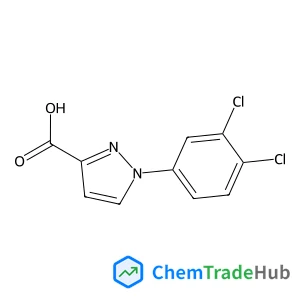
1-(3,4-Dichlorophenyl)-1H-pyrazole-3-carboxylic acid
CAS Number:
1152949-12-6
Molecular Formula:
C10H6Cl2N2O2
Recommended Suppliers




Disclaimer
This page provides academic journal information for reference and research purposes only. We are not affiliated with any journal publishers and do not handle publication submissions. For publication-related inquiries, please contact the respective journal publishers directly.
If you notice any inaccuracies in the information displayed, please contact us at support@chemtradehub.com. We will promptly review and address your concerns.