












Reply to the ‘Comment on “Methanol dimer formation drastically enhances hydrogen abstraction from methanol by OH at low temperature”’ by D. Heard, R. Shannon, J. Gomez Martin, R. Caravan, M. Blitz, J. Plane, M. Antiñolo, M. Agundez, E. Jimenez, B. Ballesteros, A. Canosa, G. El Dib, J. Albaladejo and J. Cernicharo, Phys. Chem. Chem. Phys., 2018, 20, DOI: 10.1039/C7CP04561A
Literature Information
Publication Date
2018-02-22
DOI
10.1039/C8CP00519B
Impact Factor
3.676
Authors
W. Siebrand, Z. Smedarchina, D. Ferro-Costas, E. Martínez-Núñez, A. Fernández-Ramos
View Original
Abstract
In this Reply we answer the two main arguments raised in the Comment. The first argument is related to the binding energy of the methanol dimer and its influence on the dimerization rate constant. We show that the dimerization rate constants calculated in the Comment are unphysically low. We report values that are about two orders of magnitude higher than the values of the Comment, which confirm the conclusions of the original article that dimers can be present in a small amount. The second argument based on the dependence of the pseudo-first order rates on the methanol concentration was already explained in detail in the Supporting Information of the original article.
Related Literature
The effects of vacancies and their mobility on the dynamic heterogeneity in 1,3-dimethylimidazolium hexafluorophosphate organic ionic plastic crystals
Hyungshick Park, Chung Bin Park, Bong June Sung
2021-05-04
Paper
DOI: 10.1039/D1CP00952D
Dopants and grain boundary effects in monolayer MoS2: a first-principles study
Xiaoqian Qiu, Yiren Wang, Yong Jiang
2021-05-06
Paper
DOI: 10.1039/D1CP00156F
Intermolecular dynamics of NH3-rare gas complexes in the ν2 umbrella region of NH3 investigated by rovibrational laser jet-cooled spectroscopy and ab initio calculations
Y. Belkhodja, J. Loreau, A. van der Avoird, Y. Berger, P. Asselin
2021-04-28
Paper
DOI: 10.1039/D1CP00316J
Understanding the unusual stiffness of hydrophobic dipeptide crystals
Jorge M. del Campo, Joel Ireta
2021-04-27
Paper
DOI: 10.1039/D0CP06018F
Theoretically modelling graphene-like carbon matryoshka with strong stability and particular three-center two-electron π bonds
Mengyang Li, Yaoxiao Zhao, Zhibin Gao, Kun Yuan, Xiang Zhao
2021-05-06
Paper
DOI: 10.1039/D1CP01307F
Should a hotter paramagnet transform quicker to a ferromagnet? Monte Carlo simulation results for Ising model
Nalina Vadakkayil, Subir K. Das
2021-04-27
Communication
DOI: 10.1039/D1CP00879J
Active particle diffusion in convection roll arrays
Pulak Kumar Ghosh, Yunyun Li
2021-05-10
Paper
DOI: 10.1039/D1CP01088C
A kinetic model of thin-film fluorescent sensors for strategies to enhance chemical selectivity
Iain A. Campbell, Graham A. Turnbull
2021-04-29
Paper
DOI: 10.1039/D1CP00835H
High-temperature molecular screening of hybrid polyOAPS-imide networks based on octa(aminophenyl)silsesquioxane for increased thermomechanical resistance
Sylvie Neyertz, Saman Salimi, Farzaneh Radmanesh, Nieck E. Benes, David Brown
2021-04-30
Paper
DOI: 10.1039/D1CP01052B
Photon-induced deactivations of multiple traps in CH3NH3PbI3 perovskite films by different photon energies
Asmida Herawati, Hui-Ching Lin, Shun-Hsiang Chan, Tsong-Shin Lim, Forest Shih-Sen Chien
2021-04-26
Paper
DOI: 10.1039/D1CP00974E
You might also like
Compound Q&A
How should waste containing N-Methoxy-N-methyl-1,3-thiazole-5-carboxamide (CAS: 898825-89-3) be handled?
Waste containing N-Methoxy-N-methyl-1,3-thiazole-5-carboxamide (CAS: 898825-89-3...
898825-89-3N-Methoxy-N-methyl-1...
Compound Q&A
How should N-(4-Biphenylyl)dibenzo[b,d]furan-4-amine (CAS: 1318338-47-4) be stored?
N-(4-Biphenylyl)dibenzo[b,d]furan-4-amine should be stored in a tightly sealed c...
1318338-47-4N-(4-Biphenylyl)dibe...
Compound Q&A
What is the market or research trend for 3-Acetamido-5-amino-2,4,6-triiodobenzoic acid (CAS: 1713-07-1)?
The market for 3-Acetamido-5-amino-2,4,6-triiodobenzoic acid (CAS: 1713-07-1) is...
1713-07-13-Acetamido-5-amino-...
Compound Q&A
How should Benzyl 2-O-acetyl-3,4,6-tri-O-benzyl-beta-D-galactopyranoside (CAS: 61820-03-9) be stored?
Benzyl 2-O-acetyl-3,4,6-tri-O-benzyl-beta-D-galactopyranoside (CAS: 61820-03-9) ...
61820-03-9Benzyl 2-O-acetyl-3,...
Compound Q&A
What regulatory guidelines apply to 2-Ethylpiperazine dihydrochloride (CAS: 438050-52-3)?
2-Ethylpiperazine dihydrochloride (CAS: 438050-52-3) is regulated under the Glob...
438050-52-32-Ethylpiperazine di...
Compound Q&A
What regulatory guidelines apply to 1,1'-[1,3-Phenylenebis(methylene)]bis(3-methyl-1H-pyrrole-2,5-dione) (CAS: 119462-56-5)?
1,1'-[1,3-Phenylenebis(methylene)]bis(3-methyl-1H-pyrrole-2,5-dione) (CAS: 11946...
119462-56-51,1'-[1,3-Phenyleneb...
Compound Q&A
Are there alternatives to 5-Fluoro-2-(1-pyrrolidinyl)pyridine (CAS: 1287217-79-1) in synthesis?
Several alternatives can be used in the synthesis of 5-Fluoro-2-(1-pyrrolidinyl)...
1287217-79-15-Fluoro-2-(1-pyrrol...
Compound Q&A
What precautions should be taken when handling 1-((2R,3R,4R,5R)-5-((bis(4-methoxyphenyl)(phenyl)methoxy)methyl)-4-hydroxy-3-methoxytetrahydrofuran-2-yl)-5-methylpyrimidine-2,4(1H,3H)-dione (CAS: 153631-19-7)?
Proper personal protective equipment (PPE) must be worn when handling this compo...
153631-19-71-((2R,3R,4R,5R)-5-(...
Compound Q&A
What precautions should be taken when handling 6-Bromoimidazo[1,2-a]pyridin-8-amine (CAS: 676371-00-9)?
When handling 6-Bromoimidazo[1,2-a]pyridin-8-amine, it is important to wear appr...
676371-00-96-Bromoimidazo[1,2-a...
Compound Q&A
Are there alternatives to (2S,4R)-4-(4-Nitrobenzyl)pyrrolidine-2-carboxylic acid hydrochloride (CAS: 1049740-22-8) in synthesis?
Alternatives to (2S,4R)-4-(4-Nitrobenzyl)pyrrolidine-2-carboxylic acid hydrochlo...
1049740-22-8(2S,4R)-4-(4-Nitrobe...
Source Journal
Physical Chemistry Chemical Physics

CiteScore:
5.5
Self-citation Rate:
10.3%
Articles per Year:
3036
Physical Chemistry Chemical Physics (PCCP) is an international journal co-owned by 19 physical chemistry and physics societies from around the world. This journal publishes original, cutting-edge research in physical chemistry, chemical physics and biophysical chemistry. To be suitable for publication in PCCP, articles must include significant innovation and/or insight into physical chemistry; this is the most important criterion that reviewers and Editors will judge against when evaluating submissions. The journal has a broad scope and welcomes contributions spanning experiment, theory, computation and data science. Topical coverage includes spectroscopy, dynamics, kinetics, statistical mechanics, thermodynamics, electrochemistry, catalysis, surface science, quantum mechanics, quantum computing and machine learning. Interdisciplinary research areas such as polymers and soft matter, materials, nanoscience, energy, surfaces/interfaces, and biophysical chemistry are welcomed if they demonstrate significant innovation and/or insight into physical chemistry. Joined experimental/theoretical studies are particularly appreciated when complementary and based on up-to-date approaches.
Recommended Compounds
![4-Chloro-2-{[(2-chlorophenoxy)acetyl]amino}benzoic acid structure](https://static.chemtradehub.com/structs/351/351424-20-9-9467.webp "4-Chloro-2-{[(2-chlorophenoxy)acetyl]amino}benzoic acid structure")
4-Chloro-2-{[(2-chlorophenoxy)acetyl]amino}benzoic acid
CAS Number:
351424-20-9
Molecular Formula:
C15H11Cl2NO4
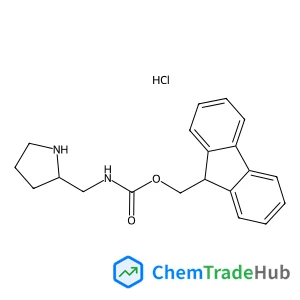
(S)-(9H-Fluoren-9-yl)methyl (pyrrolidin-2-ylmethyl)carbamate hydrochloride
CAS Number:
1217813-15-4
Molecular Formula:
C20H23ClN2O2
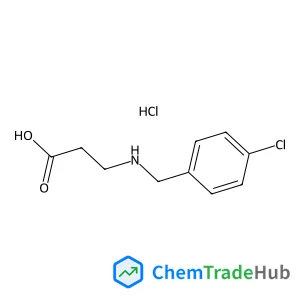
N-(4-Chlorobenzyl)-beta-alanine hydrochloride (1:1)
CAS Number:
1172479-10-5
Molecular Formula:
C10H13Cl2NO2

N1,N1-Bis(4-aminophenyl)benzene-1,4-diamine trihydrochloride
CAS Number:
114254-48-7
Molecular Formula:
C18H21Cl3N4
Recommended Suppliers





Disclaimer
This page provides academic journal information for reference and research purposes only. We are not affiliated with any journal publishers and do not handle publication submissions. For publication-related inquiries, please contact the respective journal publishers directly.
If you notice any inaccuracies in the information displayed, please contact us at support@chemtradehub.com. We will promptly review and address your concerns.