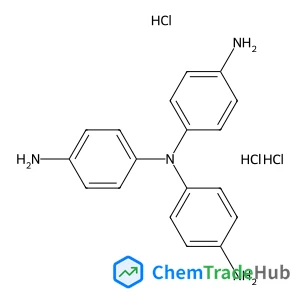
N1,N1-Bis(4-aminophenyl)benzene-1,4-diamine trihydrochloride
CAS Number:
114254-48-7
Molecular Formula:
C18H21Cl3N4
Lei Chen, Qingfan Zhang, Yunfeng Zhang, Winston Z. Li, Bo Han, Chenggang Zhou, Jinping Wu, Robert C. Forrey, Diwakar Garg
Water dissociation on copper is one of the rate-limiting steps in the water-gas-shift (WGS) reaction. Copper atoms dispersed evenly from freshly made catalyst segregate to form clusters under the WGS operating conditions. Using density functional theory, we have examined water adsorption and dissociation on the smallest stable 3-dimensional copper cluster, Cu7. Water molecules are adsorbed on the cluster sequentially until full saturation at which no direct water–copper contact is sterically possible. The adsorption is driven mainly by the overlap between the p-orbital of O atom occupied by the lone pair and the 3d-orbitals of copper, from which a fractional charge is promoted to the 4s-orbital to accommodate the charge transfer from water. Water dissociation on the Cu7 cluster was investigated at both low and high water coverage. It was found that water dissociation into OH and H is exothermic but is inherently a high temperature process at low coverage. At high coverage, the reaction becomes more exothermic with fast kinetics. In both cases, water can catalyze the reaction. It was found that direct dissociation of the OH species is endothermic with a significantly higher barrier at both low and high coverage. However, the OH species can readily react with another adjacent hydroxyl group to form an O adatom and water molecule. Our studies indicate that the basic chemical properties of water dissociative chemisorption may not change significantly with the size of small copper clusters. Similarities between water dissociation on copper clusters and on copper crystalline surfaces are discussed.
Patrik Västilä, Jenny Wettergren, Hans Adolfsson
DOI: 10.1039/B505516D
Chantal Gondran, Olivier Renaudet, Pascal Dumy, Hugues Driguez, Sébastien Fort, Serge Cosnier
DOI: 10.1039/B506699A
John H. Thurston, Dale C. Swenson, Louis Messerle
DOI: 10.1039/B504864H
Makeba B. Murphy-Jolly, Lesley C. Lewis, Andrew J. M. Caffyn
DOI: 10.1039/B507752D
Yu Liu, Ying-Wei Yang, Yong Chen
DOI: 10.1039/B507650A
Tsutomu Kimura, Toshiaki Murai
DOI: 10.1039/B507755A
Gavin D. Jones, Chris McFarland, Thomas J. Anderson, David A. Vicic
DOI: 10.1039/B504996B
Avelino Corma, Marcelo E. Domine
DOI: 10.1039/B506685A
Waste containing N-Methoxy-N-methyl-1,3-thiazole-5-carboxamide (CAS: 898825-89-3...
N-(4-Biphenylyl)dibenzo[b,d]furan-4-amine should be stored in a tightly sealed c...
The market for 3-Acetamido-5-amino-2,4,6-triiodobenzoic acid (CAS: 1713-07-1) is...
Benzyl 2-O-acetyl-3,4,6-tri-O-benzyl-beta-D-galactopyranoside (CAS: 61820-03-9) ...
2-Ethylpiperazine dihydrochloride (CAS: 438050-52-3) is regulated under the Glob...
1,1'-[1,3-Phenylenebis(methylene)]bis(3-methyl-1H-pyrrole-2,5-dione) (CAS: 11946...
Several alternatives can be used in the synthesis of 5-Fluoro-2-(1-pyrrolidinyl)...
Proper personal protective equipment (PPE) must be worn when handling this compo...
When handling 6-Bromoimidazo[1,2-a]pyridin-8-amine, it is important to wear appr...
Alternatives to (2S,4R)-4-(4-Nitrobenzyl)pyrrolidine-2-carboxylic acid hydrochlo...

Physical Chemistry Chemical Physics (PCCP) is an international journal co-owned by 19 physical chemistry and physics societies from around the world. This journal publishes original, cutting-edge research in physical chemistry, chemical physics and biophysical chemistry. To be suitable for publication in PCCP, articles must include significant innovation and/or insight into physical chemistry; this is the most important criterion that reviewers and Editors will judge against when evaluating submissions. The journal has a broad scope and welcomes contributions spanning experiment, theory, computation and data science. Topical coverage includes spectroscopy, dynamics, kinetics, statistical mechanics, thermodynamics, electrochemistry, catalysis, surface science, quantum mechanics, quantum computing and machine learning. Interdisciplinary research areas such as polymers and soft matter, materials, nanoscience, energy, surfaces/interfaces, and biophysical chemistry are welcomed if they demonstrate significant innovation and/or insight into physical chemistry. Joined experimental/theoretical studies are particularly appreciated when complementary and based on up-to-date approaches.