












![1-[6-(1H-Imidazol-1-yl)-3-pyridinyl]methanamine structure](https://static.chemtradehub.com/structs/914/914637-08-4-8825.webp "1-[6-(1H-Imidazol-1-yl)-3-pyridinyl]methanamine structure")
Poly(3-hexylthiophene) bearing pendant fullerenes: aggregation vs. self-organization
Literature Information
Publication Date
2010-02-25
DOI
10.1039/B9PY00384C
Impact Factor
5.582
Authors
Bobak Gholamkhass, Timothy J. Peckham, Steven Holdcroft
View Original
Abstract
Novel graft copolymers are reported based on poly(3-hexylthiophene) (P3HT) bearing side chains of poly(styrene-stat-chloromethylstyrene), onto which a fullerene C60 or PCBM is covalently attached. P3HT was brominated at the 4-position to various extents (1–30 mol%), subsequently Suzuki-coupled with the boronic ester of 1-(4′-bromophenyl)-1-(2″,2″,6″,6″-tetramethyl-1-piperidinyloxy)ethyl (tempo) to form a nitroxide-functionalized P3HT macroinitiator, which was then used to initiate the nitroxide-mediated radical polymerization (NMRP) of chloromethylstyrene (CMS)-stat-styrene (ST) side chains. CMS units were functionalized with azide units and used to attach fullerene. The polymers contained a relatively high mass content of fullerene (20–41 wt%). Photoluminescence of P3HT is strongly quenched by the fullerene. The absorption of P3HT maximum shifts toward shorter wavelengths with increasing graft density. Films of PCBM/C60 graft copolymers form a bicontinuous morphology with feature sizes <5 nm. Grafting fullerene-bearing side chains directly to P3HT is found to reduce the semi-crystallinity of the P3HT domains, reduce the hole charge mobility, and significantly reduce their photovoltaic activity. This is believed to be due to the poorer solubility of the fullerene units relative to the polymer chains which aggregate during film casting and restricts self-organization of the conjugated polymer.
Related Literature
Synthesis of 1,3-dithiol-2-ones as proligands related to molybdopterin
Ben Bradshaw, David Collison, C. David Garner, John A. Joule
2002-11-27
Paper
DOI: 10.1039/B209217D
Vinyl sulfonyl chemistry-driven unidirectional transport of a macrocycle through a [2]rotaxane
Arthur H. G. David, Pablo García–Cerezo, Araceli G. Campaña, Francisco Santoyo–González, Victor Blanco
2021-11-26
Research Article
DOI: 10.1039/D1QO01491A
Optimized synthesis and indium complex formation with the bifunctional chelator NODIA-Me
Jason P. Holland, Harald Scherer, Stephan Maus, Tobias Stemler, Hendrik Bohnenberger, Samer Ezziddin, Philipp Kurz
2018-09-24
Paper
DOI: 10.1039/C8OB01981A
Catalytic asymmetric Henry reactions of silyl nitronates with aldehydes
Tine Risgaard, Kurt V. Gothelf, Karl Anker Jørgensen
2002-12-03
Paper
DOI: 10.1039/B208859M
Dirhodium(ii)/P(t-Bu)3 catalyzed tandem reaction of α,β-unsaturated aldehydes with arylboronic acids
Ziling Ma, Yuanhua Wang
2018-09-20
Paper
DOI: 10.1039/C8OB01997E
Diastereoselective construction of structurally diverse 2,3-dihydroquinolin-4-one scaffolds via redox neutral cascade [1,7]-hydride transfer/cyclization
Ronghao Xie, Shixiao Chen, Xianping Xiang, Xiangcong Yin, Lubin Xu, Shuai-Shuai Li, Liang Wang, Fengying Dong
2021-12-07
Research Article
DOI: 10.1039/D1QO01530C
Synthesis and application of a new chiral monodentate spiro phosphoramidite ligand based on hexamethyl-1,1′-spirobiindane backbone in asymmetric hydroamination/arylation of alkenes
Huanyu Shan, Rihuang Pan, Xufeng Lin
2018-08-16
Communication
DOI: 10.1039/C8OB01785A
You might also like
Compound Q&A
What is the market or research trend for N-(4-Methoxybenzyl)-2-pyridinamine (CAS: 52818-63-0)?
N-(4-Methoxybenzyl)-2-pyridinamine (CAS: 52818-63-0) is increasingly being used ...
52818-63-0N-(4-Methoxybenzyl)-...
Compound Q&A
What precautions should be taken when handling Ethyl 4-(2-chlorophenyl)-1,3-thiazole-2-carboxylate (CAS: 1050507-06-6)?
When handling Ethyl 4-(2-chlorophenyl)-1,3-thiazole-2-carboxylate, appropriate p...
1050507-06-6Ethyl 4-(2-chlorophe...
Compound Q&A
What regulatory guidelines apply to diethyldiselane (CAS: 628-39-7)?
Diethyldiselane (CAS: 628-39-7) is classified under the Globally Harmonized Syst...
628-39-7Diethyldiselane
Compound Q&A
What is the market or research trend for oxocopper (CAS: 12053-18-8)?
The market for oxocopper (CAS: 12053-18-8) is primarily driven by its use in cat...
12053-18-8oxocopper; oxo-(oxoc...
Compound Q&A
What is the market or research trend for 5-{[(2-Methyl-2-propanyl)oxy]carbonyl}-5-azaspiro[2.4]heptane-7-carboxylic acid?
The market for 5-{[(2-Methyl-2-propanyl)oxy]carbonyl}-5-azaspiro[2.4]heptane-7-c...
1268519-54-55-{[(2-Methyl-2-prop...
Compound Q&A
What is 2-(1-Pyrrolidinyl)-4-pyridinamine (CAS: 35981-63-6)?
2-(1-Pyrrolidinyl)-4-pyridinamine is a chemical compound with the CAS number 359...
35981-63-62-(1-Pyrrolidinyl)-4...
Compound Q&A
What are the physical and chemical properties of 2-(3-Pyridinyl)-1-azabicyclo[2.2.2]octane (CAS: 91556-75-1)?
2-(3-Pyridinyl)-1-azabicyclo[2.2.2]octane (CAS: 91556-75-1) is a crystalline sol...
91556-75-12-(3-Pyridinyl)-1-az...
Compound Q&A
How is (S)-Alpha-allyl-proline hydrochloride (CAS: 129704-91-2) typically synthesized?
(S)-Alpha-allyl-proline hydrochloride is usually synthesized via a Wittig reacti...
129704-91-2(S)-Alpha-allyl-prol...
Compound Q&A
What is 3-Methyl-1,2-oxazole-5-carboxylic acid (CAS: 4857-42-5)?
3-Methyl-1,2-oxazole-5-carboxylic acid (CAS: 4857-42-5) is an organic compound w...
4857-42-53-Methyl-1,2-oxazole...
Compound Q&A
How is Lys-SMCC-DM1 (CAS: 1281816-04-3) typically synthesized?
Lys-SMCC-DM1 is synthesized via a multi-step process involving the coupling of S...
1281816-04-3Lys-SMCC-DM1
Source Journal
Polymer Chemistry

CiteScore:
8.6
Self-citation Rate:
7.3%
Articles per Year:
457
Polymer Chemistry welcomes submissions in all areas of polymer science that have a strong focus on macromolecular chemistry. Manuscripts may cover a broad range of fields, yet no direct application focus is required.
Recommended Compounds
![1-(1-Benzyl-1,2,3,6-tetrahydropyridin-4-yl)-1H-benzo[d]imidazol-2(3H)-one structure](https://static.chemtradehub.com/structs/603/60373-71-9-7dfb.webp "1-(1-Benzyl-1,2,3,6-tetrahydropyridin-4-yl)-1H-benzo[d]imidazol-2(3H)-one structure")
1-(1-Benzyl-1,2,3,6-tetrahydropyridin-4-yl)-1H-benzo[d]imidazol-2(3H)-one
CAS Number:
60373-71-9
Molecular Formula:
C19H19N3O
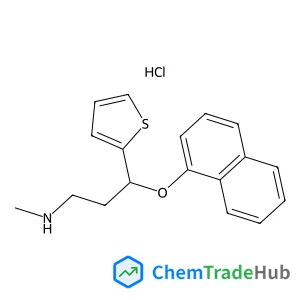
N-Methyl-3-(1-naphthyloxy)-3-(2-thienyl)-1-propanamine hydrochloride (1:1)
CAS Number:
1188266-11-6
Molecular Formula:
C18H20ClNOS

Recommended Suppliers







Disclaimer
This page provides academic journal information for reference and research purposes only. We are not affiliated with any journal publishers and do not handle publication submissions. For publication-related inquiries, please contact the respective journal publishers directly.
If you notice any inaccuracies in the information displayed, please contact us at support@chemtradehub.com. We will promptly review and address your concerns.