












A wavepacket study of the low-energy charge transfer process in the S3+ + H reaction using time-resolved electronic densities
Literature Information
Publication Date
2010-04-08
DOI
10.1039/B926825A
Impact Factor
3.676
Authors
Marta Łabuda, Jesús González-Vázquez, Leticia González
View Original
Abstract
A theoretical investigation of the low-energy charge transfer process induced by the S3+ + H reaction collision is presented. High level ab initio MRCI/CASSCF quantum chemical methods have been used to evaluate the relevant potential energy curves and non-adiabatic couplings. Using the coupled potentials, the dynamics of the system in the few eV energy range has been investigated by means of time-dependent wavepacket propagations. The main channels involved in the process of charge transfer are identified and an approach to follow in real time the electronic density during the collision is introduced.
Related Literature
Bond energy, aromatic stabilization energy and strain in IPR fullerenes
Michał K. Cyrański, Siân T. Howard, Michał L. Chodkiewicz
2004-09-21
Communication
DOI: 10.1039/B408903K
Continuous preparation of functionalised calcium phosphatenanoparticles with adjustable crystallinity
Thea Welzel, Wolfgang Meyer-Zaika, Matthias Epple
2004-04-20
Communication
DOI: 10.1039/B402521K
Transformation of highly ordered large pore silica mesophases (Fm3m, Im3m and p6mm) in a ternary triblock copolymer–butanol–water system
Freddy Kleitz, Leonid A. Solovyov, Gopinathan M. Anilkumar, Shin Hei Choi, Ryong Ryoo
2004-06-02
Communication
DOI: 10.1039/B403903C
Novel cobalt-free oxygen permeable membrane
Xuefeng Zhu, Haihui Wang, Weishen Yang
2004-04-08
Communication
DOI: 10.1039/B400857J
On the stability of furanopyrimidin-2-one bases in oligonucleotides
Guan-Sheng Jiao, Kevin Burgess
2004-05-07
Communication
DOI: 10.1039/B402559H
Effective stabilisation of α-helical structures in short peptides with acetylenic cross-linking agents
Kazuhisa Fujimoto, Natsuko Oimoto, Kahori Katsuno, Masahiko Inouye
2004-05-10
Communication
DOI: 10.1039/B403615H
First example of the chemical, oxidative cleavage of the C–P bond in aminophosphonate chemistry. The oxidation of 1-amino-1-(3,4-dihydroxyphenyl)methylphosphonic acid by NaIO4
Marcin Drąg, Adam Jezierski, Pawel Kafarski
2004-04-08
Communication
DOI: 10.1039/B401633E
NH4[BPO4F]: A novel open-framework ammonium fluorinated borophosphate with a zeolite-like structure related to gismondine topology
Man-Rong Li, Wei Liu, Ming-Hui Ge, Hao-Hong Chen, Xin-Xin Yang, Jing-Tai Zhao
2004-04-29
Communication
DOI: 10.1039/B402966F
Convenient magnesiation of aromatic and heterocyclic rings bearing a hydroxy group in presence of LiCl
Felix Kopp, Arkady Krasovskiy, Paul Knochel
2004-08-26
Communication
DOI: 10.1039/B409664A
Unprecedented copper-catalyzed asymmetric conjugate addition of organometallic reagents to α,β-unsaturated lactams
Mauro Pineschi, Federica Del Moro, Adriaan J. Minnaard, Ben L. Feringa
2004-04-28
Communication
DOI: 10.1039/B403793F
You might also like
Compound Q&A
What precautions should be taken when handling 2-Chloro-1,2-bis(4-methylphenyl)ethanone (CAS: 71193-32-3)?
When handling 2-Chloro-1,2-bis(4-methylphenyl)ethanone (CAS: 71193-32-3), it is ...
71193-32-32-Chloro-1,2-bis(4-m...
Compound Q&A
What industries use 4-Ethoxy-3-(5-methyl-4-oxo-7-propyl-1,4-dihydroimidazo[5,1-f][1,2,4]triazin-2-yl)benzenesulfonyl chloride (CAS: 224789-26-8)?
4-Ethoxy-3-(5-methyl-4-oxo-7-propyl-1,4-dihydroimidazo[5,1-f][1,2,4]triazin-2-yl...
224789-26-84-Ethoxy-3-(5-methyl...
Compound Q&A
How should Methyl 3-Oxo-4-Androsten-17-Carboxylate (CAS: 2681-55-2) be stored?
Methyl 3-Oxo-4-Androsten-17-Carboxylate (CAS: 2681-55-2) should be stored in a c...
2681-55-2Methyl 3-Oxo-4-Andro...
Compound Q&A
What are the main uses of (R)-3-Amino-4-(3-hexylphenylamino)-4-oxobutylphosphonic acid (CAS: 909725-61-7)?
(R)-3-Amino-4-(3-hexylphenylamino)-4-oxobutylphosphonic acid is primarily used i...
909725-61-7(R)-3-Amino-4-(3-hex...
Compound Q&A
What regulatory guidelines apply to 2-Methyl-2-propanyl 3-amino-3-carbamoyl-1-azetidinecarboxylate (CAS: 1254120-14-3)?
2-Methyl-2-propanyl 3-amino-3-carbamoyl-1-azetidinecarboxylate (CAS: 1254120-14-...
1254120-14-32-Methyl-2-propanyl ...
Compound Q&A
Are there alternatives to (E)-4-(tert-Butoxy)-4-oxobut-2-enoic acid (CAS: 135355-96-3) in synthesis?
There are alternative reagents that can be used in synthesis instead of (E)-4-(t...
135355-96-3(E)-4-(tert-Butoxy)-...
Compound Q&A
What are the physical and chemical properties of [2-(3-Chlorophenyl)-1,3-thiazol-4-yl]methanol (CAS: 121202-20-8)?
[2-(3-Chlorophenyl)-1,3-thiazol-4-yl]methanol (CAS: 121202-20-8) is a crystallin...
121202-20-8[2-(3-Chlorophenyl)-...
Compound Q&A
What is the market or research trend for Methyl (2S)-[(4S)-2,2-dimethyl-1,3-dioxolan-4-yl]{[(4-methylphenyl)sulfonyl]oxy}acetate (CAS: 166249-17-8)?
The market and research trends for Methyl (2S)-[(4S)-2,2-dimethyl-1,3-dioxolan-4...
166249-17-8Methyl (2S)-[(4S)-2,...
Compound Q&A
What is the market or research trend for 1-Bromo-2-isocyanatoethane (CAS: 42865-19-0)?
The market for 1-Bromo-2-isocyanatoethane (CAS: 42865-19-0) is driven by its use...
42865-19-01-Bromo-2-isocyanato...
Compound Q&A
What are the main uses of 4-Nitro-D-phenylalanine hydrochloride (CAS: 147065-06-3)?
4-Nitro-D-phenylalanine hydrochloride (CAS: 147065-06-3) is primarily used in re...
147065-06-34-Nitro-D-phenylalan...
Source Journal
Physical Chemistry Chemical Physics

CiteScore:
5.5
Self-citation Rate:
10.3%
Articles per Year:
3036
Physical Chemistry Chemical Physics (PCCP) is an international journal co-owned by 19 physical chemistry and physics societies from around the world. This journal publishes original, cutting-edge research in physical chemistry, chemical physics and biophysical chemistry. To be suitable for publication in PCCP, articles must include significant innovation and/or insight into physical chemistry; this is the most important criterion that reviewers and Editors will judge against when evaluating submissions. The journal has a broad scope and welcomes contributions spanning experiment, theory, computation and data science. Topical coverage includes spectroscopy, dynamics, kinetics, statistical mechanics, thermodynamics, electrochemistry, catalysis, surface science, quantum mechanics, quantum computing and machine learning. Interdisciplinary research areas such as polymers and soft matter, materials, nanoscience, energy, surfaces/interfaces, and biophysical chemistry are welcomed if they demonstrate significant innovation and/or insight into physical chemistry. Joined experimental/theoretical studies are particularly appreciated when complementary and based on up-to-date approaches.
Recommended Compounds
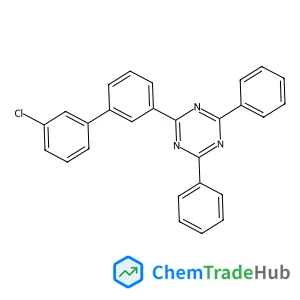
2-(3'-Chlorobiphenyl-3-yl)-4,6-diphenyl-1,3,5-triazine
CAS Number:
1443049-83-9
Molecular Formula:
C27H18ClN3

3,5-Dihydroxy-4-(3-methylbutanoyl)-2,6,6-tris(3-methyl-2-buten-1-yl)-2,4-cyclohexadien-1-one
CAS Number:
468-28-0
Molecular Formula:
C26H38O4
Recommended Suppliers




Disclaimer
This page provides academic journal information for reference and research purposes only. We are not affiliated with any journal publishers and do not handle publication submissions. For publication-related inquiries, please contact the respective journal publishers directly.
If you notice any inaccuracies in the information displayed, please contact us at support@chemtradehub.com. We will promptly review and address your concerns.