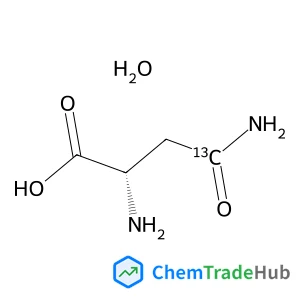
1-(3,4-Dichlorophenyl)-1H-pyrazole-3-carboxylic acid
CAS Number:
1152949-12-6
Molecular Formula:
C10H6Cl2N2O2
Sihzih Chen, Chonzan Hwuang, HsinLing Tu, ChunGuey Wu, ShuehLin Yau, LiangJen Fan, YawWen Yang
Cyclic voltammetry (CV) and in situ scanning tunneling microscopy (STM) were employed to study the adsorption and polymerization of the geometric isomers of ethylaniline (EA) on a Au(111) single-crystal electrode in 0.5 M H2SO4. All three isomers, namely o-, m-, and p-EA, were adsorbed in highly ordered structures, identified as Au(111)-(4 × 2√3)rect for m- and p-EA and (4√3 × 4√3)R30° for o-EA, at the onset potentials (∼0.9 V [vs. reversible hydrogen electrode]) for electropolymerization. Raising the potential in excess of 0.9 V resulted in oxidation and polymerization of m- and o-EA, but decomposition of p-EA. Molecular-resolution STM imaging revealed that poly(m-EA) and poly(o-EA), denoted respectively as m- and o-PEA, exhibited distinctively different molecular shapes. More specifically, m-PEA molecules were predominantly linear and aligned preferentially in the 〈121〉 directions of the Au(111) surface; whereas o-PEA molecules were ill-defined in shape and in dimension. These differences in molecular conformation stemmed from unlike arrangements of adsorbed monomers at 0.9 V. Notably, m-EA were adsorbed in zigzags with two nearest neighbors separated by ∼0.5 nm, which were spatially so similar to the backbones of m-PEA that m-EA molecules coupled readily when the potential was raised high enough to induce the oxidation of m-EA. In contrast, the arrangement of o-EA molecules was so different from the ideal configuration of its polymer that molecules coupled randomly to yield crooked polymer chains less than 20 nm in length. The effect of potential on the structure of m-PEA was examined also, revealing notable branching of linear m-PEA if the electrochemical potential was set at 1.1 V.
Juan Li, Shuqi Zheng, Teng Fang, Luo Yue, Shuai Zhang, Guiwu Lu
DOI: 10.1039/C7CP08680F
Qian-Rui Huang, Ying-Cheng Li, Kun-Lin Ho, Jer-Lai Kuo
DOI: 10.1039/C8CP00533H
Sandra C.C. Nunes, Tânia F. G. G. Cova, Rita S. Dias, Alberto A. C. C. Pais
DOI: 10.1039/C8CP03383H
Jiafang Xu, Liwen Li, Jinxiang Liu, Xiaopu Wang, Youguo Yan, Jun Zhang
DOI: 10.1039/C8CP00010G
P. Polzin, I. V. Eliani, J. Ströh, M. Braun, N. Ruser, P. Rönfeldt, F. Bertram, C. Näther, S. Wöhlbrandt, M. Suta, H. Terraschke
DOI: 10.1039/C7CP07142F
R. J. Shannon, J. C. Gómez Martín, R. L. Caravan, M. Agúndez, A. Canosa, G. El Dib, J. Cernicharo
DOI: 10.1039/C7CP04561A
Steffen Eusterwiemann, Armido Studer
DOI: 10.1039/C7CP05657E
Kejie Shao, Bina Fu, Xingan Wang, Dong H. Zhang
DOI: 10.1039/C8CP04045A
Waste containing N-Methoxy-N-methyl-1,3-thiazole-5-carboxamide (CAS: 898825-89-3...
N-(4-Biphenylyl)dibenzo[b,d]furan-4-amine should be stored in a tightly sealed c...
The market for 3-Acetamido-5-amino-2,4,6-triiodobenzoic acid (CAS: 1713-07-1) is...
Benzyl 2-O-acetyl-3,4,6-tri-O-benzyl-beta-D-galactopyranoside (CAS: 61820-03-9) ...
2-Ethylpiperazine dihydrochloride (CAS: 438050-52-3) is regulated under the Glob...
1,1'-[1,3-Phenylenebis(methylene)]bis(3-methyl-1H-pyrrole-2,5-dione) (CAS: 11946...
Several alternatives can be used in the synthesis of 5-Fluoro-2-(1-pyrrolidinyl)...
Proper personal protective equipment (PPE) must be worn when handling this compo...
When handling 6-Bromoimidazo[1,2-a]pyridin-8-amine, it is important to wear appr...
Alternatives to (2S,4R)-4-(4-Nitrobenzyl)pyrrolidine-2-carboxylic acid hydrochlo...

Physical Chemistry Chemical Physics (PCCP) is an international journal co-owned by 19 physical chemistry and physics societies from around the world. This journal publishes original, cutting-edge research in physical chemistry, chemical physics and biophysical chemistry. To be suitable for publication in PCCP, articles must include significant innovation and/or insight into physical chemistry; this is the most important criterion that reviewers and Editors will judge against when evaluating submissions. The journal has a broad scope and welcomes contributions spanning experiment, theory, computation and data science. Topical coverage includes spectroscopy, dynamics, kinetics, statistical mechanics, thermodynamics, electrochemistry, catalysis, surface science, quantum mechanics, quantum computing and machine learning. Interdisciplinary research areas such as polymers and soft matter, materials, nanoscience, energy, surfaces/interfaces, and biophysical chemistry are welcomed if they demonstrate significant innovation and/or insight into physical chemistry. Joined experimental/theoretical studies are particularly appreciated when complementary and based on up-to-date approaches.
![2-(7,7-Difluorobicyclo[4.1.0]hept-1-yl)ethanamine structure](https://static.chemtradehub.com/structs/209/2098065-08-6-ff24.webp "2-(7,7-Difluorobicyclo[4.1.0]hept-1-yl)ethanamine structure")
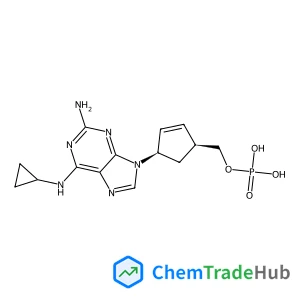
![[(5-Methyl-1,3,4-thiadiazol-2-yl)sulfanyl]acetic acid structure](https://static.chemtradehub.com/structs/509/50918-26-8-4ce8.webp "[(5-Methyl-1,3,4-thiadiazol-2-yl)sulfanyl]acetic acid structure")