













Vibrational spectra of small methylamine clusters accessed by an ab initio anharmonic approach
Literature Information
Publication Date
2018-02-13
DOI
10.1039/C8CP00533H
Impact Factor
3.676
Authors
Qian-Rui Huang, Ying-Cheng Li, Kun-Lin Ho, Jer-Lai Kuo
View Original
Abstract
Methylamine (MMA) is one of the simplest amines, and the vibrational spectra of its dimer have recently been obtained experimentally. The vibrational spectra of NH stretch modes were well resolved, but the complex features of the CH3 group could not be fully accounted for even with the assistance of ab initio molecular dynamics (AIMD) with various density functional methods. In this study, we carried out anharmonic vibrational calculations on MMA clusters up to tetramers using MP2/aug-cc-pVDZ to examine vibrational coupling among CH/NH and compute the vibrational spectra of these clusters between 2800 and 3500 cm−1. We found that the main origin of the complexity between 2800 and 3000 cm−1 was caused by Fermi resonance (FR) between the stretching and bending overtones of the CH3 group. This spectral feature becomes simpler in trimers and tetramers. Furthermore, Fermi resonance in the NH2 group is found to be very strong. In the MMA dimer, no noticeable FR features can be found; however, in its trimers and tetramers, the enhancement of hydrogen bond strength due to the cooperative effect will cause the N–H stretching mode to red-shift to revert the energy order of the fundamental of the N–H stretch and overtone of N–H bending between n = 3 and n = 4. Therefore, significant re-distribution of the intensities of the bands at 3200 and 3300 cm−1 should be seen.
Related Literature
Effects of doping high-valence transition metal (V, Nb and Zr) ions on the structure and electrochemical performance of LIB cathode material LiNi0.8Co0.1Mn0.1O2
Yan-Hui Chen, Jing Zhang, Yi Li, Yong-Fan Zhang, Shu-Ping Huang, Wei Lin
2021-04-13
Paper
DOI: 10.1039/D1CP00426C
Expanding carbon capture capacity: uncovering additional CO2 adsorption sites in imine-linked porous organic cages
Zezhong John Li, Simcha Srebnik
2021-03-23
Paper
DOI: 10.1039/D0CP06708C
Effective N2 capture by aryl cations at ambient temperature and pressure
Xia Xu, Jianxiong Dai, Xing Guo, Cheng Qian, Pei Zhang, Yixiang Duan, Yonghui Tian
2021-04-16
Communication
DOI: 10.1039/D1CP00903F
Polarization-resolved single-molecule tracking reveals strange dynamics of fluorescent tracers through a deep rubbery polymer network
Jaladhar Mahato, Sukanya Bhattacharya, Dharmendar K. Sharma, Arindam Chowdhury
2021-04-08
Paper
DOI: 10.1039/D0CP05864E
Aqueous TMAO solution under high hydrostatic pressure
Inga Kolling, Christoph Hölzl, Sho Imoto, Serena R. Alfarano, Hendrik Vondracek, Lukas Knake, Fabio Novelli, Claudius Hoberg, Jean-Blaise Brubach, Pascale Roy, Harald Forbert, Gerhard Schwaab, Dominik Marx, Martina Havenith
2021-04-29
Paper
DOI: 10.1039/D1CP00703C
An ultra-sensitive gas sensor based on a two-dimensional manganese porphyrin monolayer
Ze-Wen Hao, Mi-Mi Dong, Rui-Qin Zhang, Chuan-Kui Wang, Xiao-Xiao Fu
2021-04-22
Paper
DOI: 10.1039/D1CP00747E
Dopants and grain boundary effects in monolayer MoS2: a first-principles study
Xiaoqian Qiu, Yiren Wang, Yong Jiang
2021-05-06
Paper
DOI: 10.1039/D1CP00156F
The many-body expansion for aqueous systems revisited: III. Hofmeister ion–water interactions
Kristina M. Herman, Joseph P. Heindel
2021-04-06
Paper
DOI: 10.1039/D1CP00409C
Quantum mechanical tunnelling: the missing term to achieve sub-kJ mol−1 barrier heights
Sebastian Kozuch, Tim Schleif, Amir Karton
2021-04-21
Paper
DOI: 10.1039/D1CP01275D
Capturing the dynamic association between a tris-dipicolinate lanthanide complex and a decapeptide: a combined paramagnetic NMR and molecular dynamics exploration
Sandrine Denis-Quanquin, Alessio Bartocci, Florence Szczepaniak, Francois Riobé, Olivier Maury, Nicolas Giraud
2021-03-15
Paper
DOI: 10.1039/D0CP06570F
You might also like
Compound Q&A
How should waste containing N-Methoxy-N-methyl-1,3-thiazole-5-carboxamide (CAS: 898825-89-3) be handled?
Waste containing N-Methoxy-N-methyl-1,3-thiazole-5-carboxamide (CAS: 898825-89-3...
898825-89-3N-Methoxy-N-methyl-1...
Compound Q&A
How should N-(4-Biphenylyl)dibenzo[b,d]furan-4-amine (CAS: 1318338-47-4) be stored?
N-(4-Biphenylyl)dibenzo[b,d]furan-4-amine should be stored in a tightly sealed c...
1318338-47-4N-(4-Biphenylyl)dibe...
Compound Q&A
What is the market or research trend for 3-Acetamido-5-amino-2,4,6-triiodobenzoic acid (CAS: 1713-07-1)?
The market for 3-Acetamido-5-amino-2,4,6-triiodobenzoic acid (CAS: 1713-07-1) is...
1713-07-13-Acetamido-5-amino-...
Compound Q&A
How should Benzyl 2-O-acetyl-3,4,6-tri-O-benzyl-beta-D-galactopyranoside (CAS: 61820-03-9) be stored?
Benzyl 2-O-acetyl-3,4,6-tri-O-benzyl-beta-D-galactopyranoside (CAS: 61820-03-9) ...
61820-03-9Benzyl 2-O-acetyl-3,...
Compound Q&A
What regulatory guidelines apply to 2-Ethylpiperazine dihydrochloride (CAS: 438050-52-3)?
2-Ethylpiperazine dihydrochloride (CAS: 438050-52-3) is regulated under the Glob...
438050-52-32-Ethylpiperazine di...
Compound Q&A
What regulatory guidelines apply to 1,1'-[1,3-Phenylenebis(methylene)]bis(3-methyl-1H-pyrrole-2,5-dione) (CAS: 119462-56-5)?
1,1'-[1,3-Phenylenebis(methylene)]bis(3-methyl-1H-pyrrole-2,5-dione) (CAS: 11946...
119462-56-51,1'-[1,3-Phenyleneb...
Compound Q&A
Are there alternatives to 5-Fluoro-2-(1-pyrrolidinyl)pyridine (CAS: 1287217-79-1) in synthesis?
Several alternatives can be used in the synthesis of 5-Fluoro-2-(1-pyrrolidinyl)...
1287217-79-15-Fluoro-2-(1-pyrrol...
Compound Q&A
What precautions should be taken when handling 1-((2R,3R,4R,5R)-5-((bis(4-methoxyphenyl)(phenyl)methoxy)methyl)-4-hydroxy-3-methoxytetrahydrofuran-2-yl)-5-methylpyrimidine-2,4(1H,3H)-dione (CAS: 153631-19-7)?
Proper personal protective equipment (PPE) must be worn when handling this compo...
153631-19-71-((2R,3R,4R,5R)-5-(...
Compound Q&A
What precautions should be taken when handling 6-Bromoimidazo[1,2-a]pyridin-8-amine (CAS: 676371-00-9)?
When handling 6-Bromoimidazo[1,2-a]pyridin-8-amine, it is important to wear appr...
676371-00-96-Bromoimidazo[1,2-a...
Compound Q&A
Are there alternatives to (2S,4R)-4-(4-Nitrobenzyl)pyrrolidine-2-carboxylic acid hydrochloride (CAS: 1049740-22-8) in synthesis?
Alternatives to (2S,4R)-4-(4-Nitrobenzyl)pyrrolidine-2-carboxylic acid hydrochlo...
1049740-22-8(2S,4R)-4-(4-Nitrobe...
Source Journal
Physical Chemistry Chemical Physics

CiteScore:
5.5
Self-citation Rate:
10.3%
Articles per Year:
3036
Physical Chemistry Chemical Physics (PCCP) is an international journal co-owned by 19 physical chemistry and physics societies from around the world. This journal publishes original, cutting-edge research in physical chemistry, chemical physics and biophysical chemistry. To be suitable for publication in PCCP, articles must include significant innovation and/or insight into physical chemistry; this is the most important criterion that reviewers and Editors will judge against when evaluating submissions. The journal has a broad scope and welcomes contributions spanning experiment, theory, computation and data science. Topical coverage includes spectroscopy, dynamics, kinetics, statistical mechanics, thermodynamics, electrochemistry, catalysis, surface science, quantum mechanics, quantum computing and machine learning. Interdisciplinary research areas such as polymers and soft matter, materials, nanoscience, energy, surfaces/interfaces, and biophysical chemistry are welcomed if they demonstrate significant innovation and/or insight into physical chemistry. Joined experimental/theoretical studies are particularly appreciated when complementary and based on up-to-date approaches.
Recommended Compounds
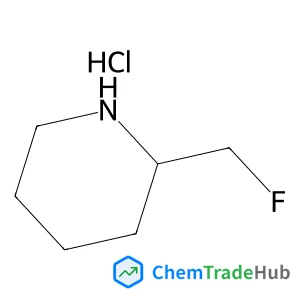
(2S)-2-(Fluoromethyl)piperidine hydrochloride (1:1)
CAS Number:
886216-73-5
Molecular Formula:
C6H13ClFN

![[5-fluoro-2-(morpholine-4-carbonyl)phenyl]boronic acid structure](https://static.chemtradehub.com/structs/121/1217501-26-2-505c.webp "[5-fluoro-2-(morpholine-4-carbonyl)phenyl]boronic acid structure")
[5-fluoro-2-(morpholine-4-carbonyl)phenyl]boronic acid
CAS Number:
1217501-26-2
Molecular Formula:
C11H13BFNO4
![2-Methylbenzo[h]quinoline structure](https://static.chemtradehub.com/structs/605/605-88-9-ac43.webp "2-Methylbenzo[h]quinoline structure")
Recommended Suppliers





Disclaimer
This page provides academic journal information for reference and research purposes only. We are not affiliated with any journal publishers and do not handle publication submissions. For publication-related inquiries, please contact the respective journal publishers directly.
If you notice any inaccuracies in the information displayed, please contact us at support@chemtradehub.com. We will promptly review and address your concerns.