












Acetylenic spacers in phenylene end-substituted oligothiophene core for highly air-stable organic field-effect transistors
Literature Information
Publication Date
2010-02-24
DOI
10.1039/B923352K
Impact Factor
3.676
Authors
Abdou Karim Diallo, Christine Videlot-Ackermann, Philippe Marsal, Hugues Brisset, Frédéric Fages, Atsufumi Kumagai, Noriyuki Yoshimoto, Françoise Serein-Spirau, Jean-Pierre Lère-Porte
View Original
Abstract
Two thiophene–phenylene semiconductors, bis(2-phenylethynyl) end-substituted oligothiophenes (diPhAc-nTs, n = 2, 3), were synthesized and studied with respect to their optical, electrochemical, structural and electrical properties. The optical and electrochemical properties of the oligomers in solution were investigated by UV-vis absorption and photoluminescence spectroscopies, and cyclic voltammetry. High vacuum evaporated thin films were investigated by optical absorption, X-ray diffraction and AFM, and implemented as p-type semiconducting layers into organic thin-film transistors (OTFTs). A comparative study in solution and in the solid state with distyryl-oligothiophenes (DSnTs, n = 2, 3) reveals the great influence of acetylenic (–CC–) vs. olefinic (–CC–) spacers in thiophene–phenylene derivatives on electronic structure, physical properties, and device efficiencies. Substituting olefinic for acetylenic π-spacers in terthiophene-based conjugated semiconductors leads to one of incontrovertible attributes of OTFTs for low cost applications, a high mobility at low substrate temperature (Tsub) i.e. typically 25 °C. Fine-tuning in the HOMO/LUMO levels by reducing the HOMO level introduces increased air-oxidation strength of thin films where OTFTs provide exactly the same hole mobility value after 100 days in air. All the results suggested that introduction of carbon–carbon triple bonds provided an efficient route to highly air-stable organic thin film transistors.
Related Literature
Improvement of silver azide crystal morphology and detonation behavior by fast mixing using a microreaction system with an integrated static micromixer
Cong Chen, Shuangfei Zhao, Peng Zhu, Jinyu Shi, Fanyuhui Yan, Huanming Xia, Ruiqi Shen
2019-11-15
Paper
DOI: 10.1039/C9RE00393B
Microfluidic processing of HZSM-5 films in a capillary microreactor for the continuous acetalisation reaction of glycerol with acetone
Guangcai Zhang, Lu Zhang, Xuesong Wang, Aicheng Chen, Qinhui Zhang
2020-01-09
Paper
DOI: 10.1039/C9RE00450E
Biocompatible and pH-sensitive PEG hydrogels with degradable phosphoester and phosphoamide linkers end-capped with amine for controlled drug delivery
Lidong Zhang, Young-Il Jeong, Sudan Zheng, Sung Il Jang, Hongsuk Suh, Dae Hwan Kang, Il Kim
2012-11-07
Paper
DOI: 10.1039/C2PY20755A
Synthesis of hybrid semiconducting polymer–metal latexes
Christine Labrugère
2012-09-25
Paper
DOI: 10.1039/C2PY20602A
Electron deficient conjugated polymers based on benzotriazole
James L. Banal, Jegadesan Subbiah, Hamish Graham, Jin-Kyun Lee, Kenneth P. Ghiggino, Wallace W. H. Wong
2012-11-20
Paper
DOI: 10.1039/C2PY20850D
Control of cationic epoxy polymerization by supramolecular initiation
Thomas Vidil, François Tournilhac, Ludwik Leibler
2013-01-08
Communication
DOI: 10.1039/C2PY21140H
Multivariate analysis of inline benchtop NMR data enables rapid optimization of a complex nitration in flow
Johannes Poms
2020-02-21
Paper
DOI: 10.1039/D0RE00048E
Polymer–trimannoside conjugates via a combination of RAFT and thiol–ene chemistry
Debashish Roy, Bilal Ghosn, Eun-Ho Song, Daniel M. Ratner, Patrick S. Stayton
2012-11-14
Paper
DOI: 10.1039/C2PY20820B
Continuous flow synthesis of the URAT1 inhibitor lesinurad
Mariana C. F. C. B. Damião, Henrique M. Marçon, Julio Cezar Pastre
2020-01-27
Paper
DOI: 10.1039/C9RE00483A
UV-cleavable unimolecular micelles: synthesis and characterization toward photocontrolled drug release carriers
Xiao Liu, Zhicheng Tian, Chen Chen, Harry R. Allcock
2012-11-15
Paper
DOI: 10.1039/C2PY20825C
You might also like
Compound Q&A
Is 2-(2-chloroacetamido)-3-phenylpropanoic acid (CAS: 7765-11-9) safe?
2-(2-Chloroacetamido)-3-phenylpropanoic acid (CAS: 7765-11-9) is generally consi...
7765-11-92-(2-chloroacetamido...
Compound Q&A
Is 2-(Benzyloxy)-5-bromobenzoic acid (CAS: 62176-31-2) safe?
2-(Benzyloxy)-5-bromobenzoic acid can be handled safely if appropriate precautio...
62176-31-22-(Benzyloxy)-5-brom...
Compound Q&A
What is (4-Methyl-1,2,5-oxadiazol-3-yl)methanamine hydrochloride (CAS: 1159825-48-5)?
(4-Methyl-1,2,5-oxadiazol-3-yl)methanamine hydrochloride is a chemical compound ...
1159825-48-5(4-Methyl-1,2,5-oxad...
Compound Q&A
What is 2-(5-Hexylthiophen-2-yl)-4,4,5,5-tetramethyl-1,3,2-dioxaborolane (CAS: 917985-54-7)?
2-(5-Hexylthiophen-2-yl)-4,4,5,5-tetramethyl-1,3,2-dioxaborolane (CAS: 917985-54...
917985-54-72-(5-Hexylthiophen-2...
Compound Q&A
Are there alternatives to 4-(8-Methyl-9H-1,3-dioxolo[4,5-h][2,3]benzodiazepin-5-yl)benzenamine (CAS: 102771-26-6) in synthesis?
While 4-(8-Methyl-9H-1,3-dioxolo[4,5-h][2,3]benzodiazepin-5-yl)benzenamine (CAS:...
102771-26-64-(8-Methyl-9H-1,3-d...
Compound Q&A
What is the market or research trend for tert-butyl 3-hydroxy-4,5,7,8-tetrahydro-2H-pyrazolo[3,4-d]azepine-6-carboxylate (CAS: 851376-80-2)?
The market for tert-butyl 3-hydroxy-4,5,7,8-tetrahydro-2H-pyrazolo[3,4-d]azepine...
851376-80-2tert-butyl 3-hydroxy...
Compound Q&A
How should waste containing 3,5-Diamino-1H-pyrazole-4-carbonitrile (CAS: 6844-58-2) be handled?
Waste containing 3,5-Diamino-1H-pyrazole-4-carbonitrile (CAS: 6844-58-2) should ...
6844-58-23,5-Diamino-1H-pyraz...
Compound Q&A
How is (6-Fluoro-3-pyridinyl)boronic acid (CAS: 351019-18-6) typically synthesized?
(6-Fluoro-3-pyridinyl)boronic acid can be synthesized through the reaction of 6-...
351019-18-6(6-Fluoro-3-pyridiny...
Compound Q&A
What industries use Dibenzyl carbonimidoylbiscarbamate (CAS: 10065-79-9)?
Dibenzyl carbonimidoylbiscarbamate (CAS: 10065-79-9) finds applications in vario...
10065-79-9Dibenzyl carbonimido...
Compound Q&A
What is the market or research trend for (beta,beta,2,3,4,5,6-~2~H_7_)Phenylalanine (CAS: 74228-83-4)?
The market for (beta,beta,2,3,4,5,6-~2~H_7_)Phenylalanine (CAS: 74228-83-4) is g...
74228-83-4(beta,beta,2,3,4,5,6...
Source Journal
Physical Chemistry Chemical Physics

CiteScore:
5.5
Self-citation Rate:
10.3%
Articles per Year:
3036
Physical Chemistry Chemical Physics (PCCP) is an international journal co-owned by 19 physical chemistry and physics societies from around the world. This journal publishes original, cutting-edge research in physical chemistry, chemical physics and biophysical chemistry. To be suitable for publication in PCCP, articles must include significant innovation and/or insight into physical chemistry; this is the most important criterion that reviewers and Editors will judge against when evaluating submissions. The journal has a broad scope and welcomes contributions spanning experiment, theory, computation and data science. Topical coverage includes spectroscopy, dynamics, kinetics, statistical mechanics, thermodynamics, electrochemistry, catalysis, surface science, quantum mechanics, quantum computing and machine learning. Interdisciplinary research areas such as polymers and soft matter, materials, nanoscience, energy, surfaces/interfaces, and biophysical chemistry are welcomed if they demonstrate significant innovation and/or insight into physical chemistry. Joined experimental/theoretical studies are particularly appreciated when complementary and based on up-to-date approaches.
Recommended Compounds

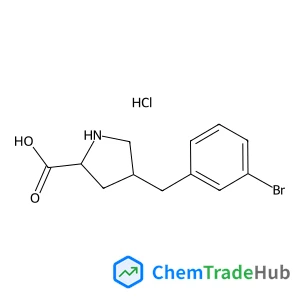
(2S,4R)-4-(3-Bromobenzyl)pyrrolidine-2-carboxylic acid hydrochloride
CAS Number:
1049734-10-2
Molecular Formula:
C12H15BrClNO2
Recommended Suppliers






Disclaimer
This page provides academic journal information for reference and research purposes only. We are not affiliated with any journal publishers and do not handle publication submissions. For publication-related inquiries, please contact the respective journal publishers directly.
If you notice any inaccuracies in the information displayed, please contact us at support@chemtradehub.com. We will promptly review and address your concerns.