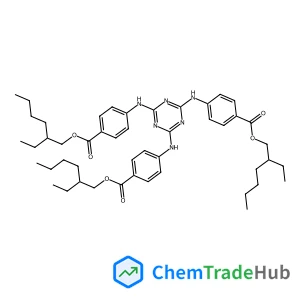
![Bis[(1,2,3,4,5-eta)-1-(diphenylphosphino)cyclopentadienyl]iron structure](https://static.chemtradehub.com/structs/121/12150-46-8-ecd2.webp "Bis[(1,2,3,4,5-eta)-1-(diphenylphosphino)cyclopentadienyl]iron structure")
Bis[(1,2,3,4,5-eta)-1-(diphenylphosphino)cyclopentadienyl]iron
CAS Number:
12150-46-8
Molecular Formula:
C34H28FeP2
Mariana C. F. C. B. Damião, Henrique M. Marçon, Julio Cezar Pastre
Herein, the urate anion exchange transporter 1 (URAT1) inhibitor lesinurad is synthesized from commercially available building blocks by a five-step linear continuous flow sequence. Our previously developed continuous flow platform was successfully applied to generate the 3-thio-1,2,4-triazole key intermediate 2 in 88% yield, after 55 minutes of residence time. Condensation, cyclization and S-alkylation were telescoped in a single operation without conducting solvent exchanges and intermediate purifications. Next, 1,2,4-triazole bromination and ester hydrolysis were also performed in continuous flow regime to deliver lesinurad in 68% overall yield in a total residence time of 2 hours. Our approach enables the fast generation of lesinurad and can be directly applied to produce major quantities of this important API.
Ping Zhou, Maryam Nazari Haghighi Pashaki, Hans-Martin Frey, Andreas Hauser, Silvio Decurtins, Andrea Cannizzo, Thomas Feurer, Robert Häner, Shi-Xia Liu
DOI: 10.1039/D3SC03184E
DOI: 10.1039/D3CS00194F
Fang He, Shi-Zhang Qiao
DOI: 10.1039/D3CS00445G
Jinmin Miao, Jiajun Dong, Yiming Miao, Yunpeng Bai, Zihan Qu, Brenson A. Jassim, Bo Huang, Quyen Nguyen, Yuan Ma, Allison A. Murray, Jinyue Li
DOI: 10.1039/D3SC04541B
Alexey A. Festa, Olga A. Storozhenko, Leonid G. Voskressensky
DOI: 10.1039/D3CS00366C
Ning-Yu Huang, Yu-Tao Zheng, Di Chen, Zhen-Yu Chen, Chao-Zhu Huang, Qiang Xu
DOI: 10.1039/D2CS00289B
Marcus E. Graziotto, Clinton J. Kidman, Simon A. James, Hugh H. Harris
DOI: 10.1039/D3CS00509G
Yiping Zhao, Amit Kumar, Yanjun Yang
DOI: 10.1039/D3CS00540B
Jin-Tao Ren, Lei Chen, Hao-Yu Wang
DOI: 10.1039/D3CS00557G
Ethyl 3-cyclohexylpropanoate is a clear, colorless to light yellow liquid with a...
Waste containing 2-(Hydroxymethyl)-5-(methoxycarbonyl)-6-methyl-4-(2-nitrophenyl...
Waste containing 2,4,6-Tris(pentafluoroethyl)-1,3,5-triazine (CAS: 858-46-8) sho...
When handling Chloroac-nle-oh (CAS: 56787-36-1), it is essential to wear appropr...
Ethyl 6-phenylimidazo[2,1-b][1,3]thiazole-3-carboxylate is primarily used in the...
Alternatives to alpha-(2-Bromophenyl)benzylamine (CAS: 55095-15-3) in synthesis ...
Waste containing 2-Chloro-5-methoxypyridine (CAS: 139585-48-1) should be managed...
1-(4-Methoxyphenyl)-2,5-dimethyl-1H-pyrrole (CAS: 5044-27-9) is used in various ...
There are alternative reagents and compounds that can be used in the synthesis o...
Tungsten(IV) oxide, also known as tungsten dioxide, is a chemical compound with ...

Reaction Chemistry & Engineering is an interdisciplinary journal reporting cutting-edge research focused on enhancing the understanding and efficiency of reactions. Reaction engineering leverages the interface where fundamental molecular chemistry meets chemical engineering and technology. Challenges in chemistry can be overcome by the application of new technologies, while engineers may find improved solutions for process development from the latest developments in reaction chemistry. Reaction Chemistry & Engineering is a unique forum for researchers whose interests span the broad areas of chemical engineering and chemical sciences to come together in solving problems of importance to wider society. All papers should be written to be approachable by readers across the engineering and chemical sciences. Papers that consider multiple scales, from the laboratory up to and including plant scale, are particularly encouraged.
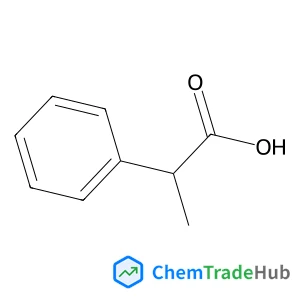
![2-{3-[4-(3-Chlorophenyl)-1-piperazinyl]propyl}[1,2,4]triazolo[4,3-a]pyridin-3(2H)-one hydrochloride (1:1) structure](https://static.chemtradehub.com/structs/253/25332-39-2-496e.webp "2-{3-[4-(3-Chlorophenyl)-1-piperazinyl]propyl}[1,2,4]triazolo[4,3-a]pyridin-3(2H)-one hydrochloride (1:1) structure")