













Nd3+ doped Gd3Sc2Al3O12 nanoparticles: towards efficient nanoprobes for temperature sensing
Literature Information
Publication Date
2019-05-01
DOI
10.1039/C9CP01808E
Impact Factor
3.676
Authors
Geraldine Dantelle, Marija Matulionyte, Denis Testemale, Alexandra Cantarano, Alain Ibanez, Fiorenzo Vetrone
View Original
Abstract
Development of contactless temperature-probing nanoplatforms based on thermosensitive near-infrared (NIR) light-emitting nanoparticles opens up new horizons for biomedical theranostics at a deep tissue level. Here, we report on the crystallinity and relative thermal sensitivity of NIR emitting Nd3+ doped Gd3Sc2Al3O12 (GSAG:Nd3+) nanoparticles synthesized by a solvothermal method. The obtained nanoparticles are well-crystallized, with sizes less than 100 nm, and can be dispersed in water without any additional functionalization. Upon excitation at 806 nm, the nanoparticles exhibit emission in the first and second biological optical transparency windows. The temperature sensing properties were evaluated from the luminescence intensity ratio of the thermally coupled emission lines corresponding to the R1, R2 → Z5 transitions between the Stark sublevels of the 4F3/2 and 4I9/2 electronic states of Nd3+ in the physiological temperature range of 20–50 °C. GSAG:Nd3+ nanoparticles exhibit a maximal relative thermal sensitivity of 0.20% °C−1, higher than that of YAG:Nd3+ nanoparticles used as a control, due to the difference in the crystal field of the host matrices. A higher synthesis temperature in the range of 300–400 °C was also provided to improve the crystallinity of the GSAG:Nd3+ nanoparticles which results in a higher relative thermal sensitivity. Our results demonstrate the potential of GSAG:Nd3+ nanoparticles as luminescence nanothermometers and emphasize the interest of the GSAG matrix itself, which with the presence of Gd, could lead to multimodal diagnostic applications in nanothermometry and magnetic resonance imaging (MRI).
Related Literature
Photocatalytic oxidation of methane over SrCO3 decorated SrTiO3 nanocatalysts via a synergistic effect
Xiaoyang Pan, Zhiguo Yi
2016-09-01
Paper
DOI: 10.1039/C6CP04604E
Investigation of helium at a Y2Ti2O7 nanocluster embedded in a BCC Fe matrix
Thomas Danielson, Eric Tea
2016-10-18
Paper
DOI: 10.1039/C6CP05233A
On the origin of the great rigidity of self-assembled diphenylalanine nanotubes
Pavel Zelenovskiy, Igor Kornev, Semen Vasilev
2016-10-13
Communication
DOI: 10.1039/C6CP04337B
Formation of lamellar micelle-like oligomers and membrane disruption revealed by the study of short peptide hIAPP18–27
Ying Wei, Jun Lu, Tong Lu, Feihong Meng, Jia Xu, Li Wang, Yang Li, Liping Wang, Fei Li
2016-09-29
Paper
DOI: 10.1039/C6CP04431J
Peeling the astronomical onion
Alexander Rosu-Finsen, Demian Marchione, Tara L. Salter, James W. Stubbing, Wendy A. Brown, Martin R. S. McCoustra
2016-11-08
Paper
DOI: 10.1039/C6CP05751A
The impact of endohedral atoms on the electronic and optical properties of Au25(SR)18 and Au38(SR)24
2016-05-24
Paper
DOI: 10.1039/C6CP02691E
Energy frameworks and a topological analysis of the supramolecular features in in situ cryocrystallized liquids: tuning the weak interaction landscape via fluorination
Dhananjay Dey, Subhrajyoti Bhandary, Sajesh P. Thomas, Mark A. Spackman, Deepak Chopra
2016-10-31
Paper
DOI: 10.1039/C6CP05917A
Direct observation of ice nucleation events on individual atmospheric particles
Bingbing Wang, Daniel A. Knopf, Swarup China, Bruce W. Arey, Mary K. Gilles, Alexander Laskin
2016-09-14
Paper
DOI: 10.1039/C6CP05253C
Convective heat transfer in a measurement cell for scanning electrochemical microscopy
Javor K. Novev, Richard G. Compton
2016-10-14
Paper
DOI: 10.1039/C6CP06121D
You might also like
Compound Q&A
What precautions should be taken when handling 2-Chloro-1,2-bis(4-methylphenyl)ethanone (CAS: 71193-32-3)?
When handling 2-Chloro-1,2-bis(4-methylphenyl)ethanone (CAS: 71193-32-3), it is ...
71193-32-32-Chloro-1,2-bis(4-m...
Compound Q&A
What industries use 4-Ethoxy-3-(5-methyl-4-oxo-7-propyl-1,4-dihydroimidazo[5,1-f][1,2,4]triazin-2-yl)benzenesulfonyl chloride (CAS: 224789-26-8)?
4-Ethoxy-3-(5-methyl-4-oxo-7-propyl-1,4-dihydroimidazo[5,1-f][1,2,4]triazin-2-yl...
224789-26-84-Ethoxy-3-(5-methyl...
Compound Q&A
How should Methyl 3-Oxo-4-Androsten-17-Carboxylate (CAS: 2681-55-2) be stored?
Methyl 3-Oxo-4-Androsten-17-Carboxylate (CAS: 2681-55-2) should be stored in a c...
2681-55-2Methyl 3-Oxo-4-Andro...
Compound Q&A
What are the main uses of (R)-3-Amino-4-(3-hexylphenylamino)-4-oxobutylphosphonic acid (CAS: 909725-61-7)?
(R)-3-Amino-4-(3-hexylphenylamino)-4-oxobutylphosphonic acid is primarily used i...
909725-61-7(R)-3-Amino-4-(3-hex...
Compound Q&A
What regulatory guidelines apply to 2-Methyl-2-propanyl 3-amino-3-carbamoyl-1-azetidinecarboxylate (CAS: 1254120-14-3)?
2-Methyl-2-propanyl 3-amino-3-carbamoyl-1-azetidinecarboxylate (CAS: 1254120-14-...
1254120-14-32-Methyl-2-propanyl ...
Compound Q&A
Are there alternatives to (E)-4-(tert-Butoxy)-4-oxobut-2-enoic acid (CAS: 135355-96-3) in synthesis?
There are alternative reagents that can be used in synthesis instead of (E)-4-(t...
135355-96-3(E)-4-(tert-Butoxy)-...
Compound Q&A
What are the physical and chemical properties of [2-(3-Chlorophenyl)-1,3-thiazol-4-yl]methanol (CAS: 121202-20-8)?
[2-(3-Chlorophenyl)-1,3-thiazol-4-yl]methanol (CAS: 121202-20-8) is a crystallin...
121202-20-8[2-(3-Chlorophenyl)-...
Compound Q&A
What is the market or research trend for Methyl (2S)-[(4S)-2,2-dimethyl-1,3-dioxolan-4-yl]{[(4-methylphenyl)sulfonyl]oxy}acetate (CAS: 166249-17-8)?
The market and research trends for Methyl (2S)-[(4S)-2,2-dimethyl-1,3-dioxolan-4...
166249-17-8Methyl (2S)-[(4S)-2,...
Compound Q&A
What is the market or research trend for 1-Bromo-2-isocyanatoethane (CAS: 42865-19-0)?
The market for 1-Bromo-2-isocyanatoethane (CAS: 42865-19-0) is driven by its use...
42865-19-01-Bromo-2-isocyanato...
Compound Q&A
What are the main uses of 4-Nitro-D-phenylalanine hydrochloride (CAS: 147065-06-3)?
4-Nitro-D-phenylalanine hydrochloride (CAS: 147065-06-3) is primarily used in re...
147065-06-34-Nitro-D-phenylalan...
Source Journal
Physical Chemistry Chemical Physics

CiteScore:
5.5
Self-citation Rate:
10.3%
Articles per Year:
3036
Physical Chemistry Chemical Physics (PCCP) is an international journal co-owned by 19 physical chemistry and physics societies from around the world. This journal publishes original, cutting-edge research in physical chemistry, chemical physics and biophysical chemistry. To be suitable for publication in PCCP, articles must include significant innovation and/or insight into physical chemistry; this is the most important criterion that reviewers and Editors will judge against when evaluating submissions. The journal has a broad scope and welcomes contributions spanning experiment, theory, computation and data science. Topical coverage includes spectroscopy, dynamics, kinetics, statistical mechanics, thermodynamics, electrochemistry, catalysis, surface science, quantum mechanics, quantum computing and machine learning. Interdisciplinary research areas such as polymers and soft matter, materials, nanoscience, energy, surfaces/interfaces, and biophysical chemistry are welcomed if they demonstrate significant innovation and/or insight into physical chemistry. Joined experimental/theoretical studies are particularly appreciated when complementary and based on up-to-date approaches.
Recommended Compounds

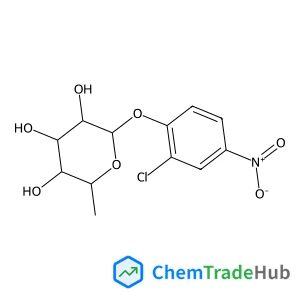
2-Chloro-4-nitrophenyl 6-deoxy-alpha-L-galactopyranoside
CAS Number:
157843-41-9
Molecular Formula:
C12H14ClNO7
Recommended Suppliers



Disclaimer
This page provides academic journal information for reference and research purposes only. We are not affiliated with any journal publishers and do not handle publication submissions. For publication-related inquiries, please contact the respective journal publishers directly.
If you notice any inaccuracies in the information displayed, please contact us at support@chemtradehub.com. We will promptly review and address your concerns.