













4-Cyclohexene-1,2-dicarboxylic acid, 1,2-dimethyl ester, (1R,2R)-rel-
CAS Number:
17673-68-6
Molecular Formula:
C10H14O4
The first page of this article is displayed as the abstract.
Ryuhei Matsumoto, Masaya Kakuta, Taiki Sugiyama, Yoshio Goto, Hideki Sakai, Yuichi Tokita, Tsuyonobu Hatazawa, Seiya Tsujimura, Osamu Shirai, Kenji Kano
DOI: 10.1039/C0CP00556H
Evgeny A. Pidko, Rutger A. van Santen, Emiel J. M. Hensen
DOI: 10.1039/B815943B
Jesús González-Vázquez, Leticia González, Sarah R. Nichols, Thomas C. Weinacht, Tamás Rozgonyi
DOI: 10.1039/C0CP00303D
Ilaria Biondi, Manish Chaubey, Zhaofu Fei, Rosario Scopelliti, Christian G. Hartinger, Yongdan Li, Cinzia Chiappe, Paul J. Dyson
DOI: 10.1039/B920025H
Hongtao Liu, Yang Liu, Jinghong Li
DOI: 10.1039/B921469K
Wladimir Thiessen, Aliaksei Dubavik, Vladimir Lesnyak, Nikolai Gaponik, Alexander Eychmüller, Thomas Wolff
DOI: 10.1039/B917276A
Katherine B. Holt
DOI: 10.1039/B920075D
Jinming Zhang, Hao Zhang, Jin Wu, Jun Zhang, Jiasong He, Junfeng Xiang
DOI: 10.1039/C005453B
Reshmi Kurian, Michael Filatov
DOI: 10.1039/B918655G
Shogo Miyoshi, Manfred Martin
DOI: 10.1039/B901208G
6-(3-Fluorophenyl)picolinic acid is generally considered safe for laboratory use...
(3R)-3-Pyrrolidinol is used in the pharmaceutical industry as a precursor for dr...
When handling (4R,5R)-4,5-Diethoxycarbonyl-2,2-dimethyldioxolane (CAS: 59779-75-...
1-(6-Chloroimidazo[1,2-b]pyridazin-3-yl)ethanone is often synthesized via a mult...
The market for N-Ethyl-3,4-dimethylbenzylamine (CAS: 39180-83-1) remains steady,...
Tert-butyl 3-(pyrrolidin-1-yl)azetidine-1-carboxylate is a chemical compound wit...
1-Bromo-3-chloro-2,4-dimethoxybenzene (CAS: 1228956-93-1) falls under the classi...
The safety of 8-Bromo-2-methyl-3,4-dihydroisoquinolin-1(2H)-one (CAS: 1368622-07...
Benzyl [(3S)-2,6-dioxo-3-piperidinyl]carbamate is generally safe when handled wi...
1-{[4-(4,4,5,5-Tetramethyl-1,3,2-dioxaborolan-2-yl)phenyl]sulfonyl}pyrrolidine s...

Physical Chemistry Chemical Physics (PCCP) is an international journal co-owned by 19 physical chemistry and physics societies from around the world. This journal publishes original, cutting-edge research in physical chemistry, chemical physics and biophysical chemistry. To be suitable for publication in PCCP, articles must include significant innovation and/or insight into physical chemistry; this is the most important criterion that reviewers and Editors will judge against when evaluating submissions. The journal has a broad scope and welcomes contributions spanning experiment, theory, computation and data science. Topical coverage includes spectroscopy, dynamics, kinetics, statistical mechanics, thermodynamics, electrochemistry, catalysis, surface science, quantum mechanics, quantum computing and machine learning. Interdisciplinary research areas such as polymers and soft matter, materials, nanoscience, energy, surfaces/interfaces, and biophysical chemistry are welcomed if they demonstrate significant innovation and/or insight into physical chemistry. Joined experimental/theoretical studies are particularly appreciated when complementary and based on up-to-date approaches.
![2-[({[(2-Methyl-2-propanyl)oxy]carbonyl}amino)methyl]isonicotinic acid structure](https://static.chemtradehub.com/structs/473/473924-63-9-973b.webp "2-[({[(2-Methyl-2-propanyl)oxy]carbonyl}amino)methyl]isonicotinic acid structure")
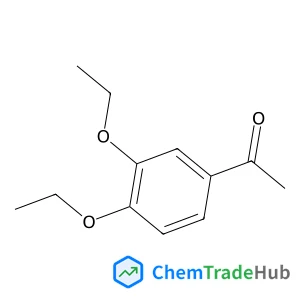
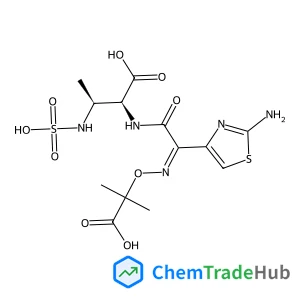
![(2E)-4-[(1R,2S,8R,19S,21R)-14-Hydroxy-11-isopropenyl-8,23,23-trimethyl-5-(3-methyl-2-buten-1-yl)-16,20-dioxo-3,7,22-trioxaheptacyclo[17.4.1.1~8,12~.0~2,17~.0~2,21~.0~4,15~.0~6,13~]pentacosa-4(15),5,13
,17-tetraen-21-yl]-2-methyl-2-butenoic acid structure](https://static.chemtradehub.com/structs/173/173867-04-4-d2d3.webp "(2E)-4-[(1R,2S,8R,19S,21R)-14-Hydroxy-11-isopropenyl-8,23,23-trimethyl-5-(3-methyl-2-buten-1-yl)-16,20-dioxo-3,7,22-trioxaheptacyclo[17.4.1.1~8,12~.0~2,17~.0~2,21~.0~4,15~.0~6,13~]pentacosa-4(15),5,13
,17-tetraen-21-yl]-2-methyl-2-butenoic acid structure")





