












Theoretical analysis of hydrogen bonding in catechol–n(H2O) clusters (n = 0…3)
Literature Information
Publication Date
2010-03-16
DOI
10.1039/B922203K
Impact Factor
3.676
Authors
Rodolfo Gómez-Balderas, Jesús Hernández-Trujillo
View Original
Abstract
The electronic structure and hydrogen bonding of the stable isomers of catechol and its complexes with one to three water molecules is studied by means of theoretical methods. A conformational analysis based on a simulated annealing search on the potential energy surface of each complex was carried out previous to the quantum chemical energy minimization. Twenty three stable conformers were found including some involving a π-interaction between the catechol moiety and a water molecule. The topological properties of the electron density reveal the presence of an intramolecular hydrogen bond only in the case of one complex with three water molecules. The infrared spectra of these molecules were computed and compared to available experimental results. An alternative assignment of the experimental vibrational spectrum within the range 3340–3750 cm−1 of the catechol–3(H2O) complex (M. Gerhards, C. Unterberg, and K. Kleinermanns, Phys. Chem. Chem. Phys. 2000, 2, p. 5538) is proposed. The red-shift observed for the stretching vibrational frequency of the catechol hydrogen donor hydroxyl group in the presence of water molecules is rationalized in terms of the properties of the electron distribution and a Darwinian family tree is proposed to classify the diverse structural and energetic characteristics of the stable complexes found.
Related Literature
Soluble μ-Fi bridged niobium clusters: synthesis and crystal structures of (Et4N)6[Nb6Fi6Bri6(NCS)a6]Br2 and Cs1.6K2.4[Nb6Fi6Ii6(NCS)a6]
Nikolaï G. Naumov, Stéphane Cordier, Christiane Perrin
2004-04-07
Communication
DOI: 10.1039/B400668B
Convenient magnesiation of aromatic and heterocyclic rings bearing a hydroxy group in presence of LiCl
Felix Kopp, Arkady Krasovskiy, Paul Knochel
2004-08-26
Communication
DOI: 10.1039/B409664A
Programmed single step self-assembly of a [2 × 2] grid architecture built on metallic centers of different coordination geometries
Anne Petitjean, Nathalie Kyritsakas, Jean-Marie Lehn
2004-04-23
Communication
DOI: 10.1039/B402854F
Self-assembly of a novel pentanuclear centred-tetrahedral silver species
Edwin C. Constable, Catherine E. Housecroft, Markus Neuburger, Sebastien Reymann, Sylvia Schaffner
2004-03-29
Communication
DOI: 10.1039/B402376E
Poly(vinyl alcohol) star polymers prepared via MADIX/RAFT polymerisation
Martina H. Stenzel, Thomas P. Davis, Christopher Barner-Kowollik
2004-06-02
Communication
DOI: 10.1039/B404763J
Self-assembly of aluminium–salen coupled nanostructures from encoded modules with cleavable disulfide DNA-linkers
Raymond S. Brown, Morten Nielsen, Kurt V. Gothelf
2004-05-27
Communication
DOI: 10.1039/B403956D
Semi-quantitative estimation by IR of framework, extraframework and defect Al species of HBEA zeolites
Isabelle Gener, Philippe Ayrault, Michel Guisnet
2004-09-01
Communication
DOI: 10.1039/B409964H
Cu@C60 formation in rf-plasma and ring-current induced magnetism of C60
Houjin Huang, Masafumi Ata, Yoko Yoshimoto
2004-04-20
Communication
DOI: 10.1039/B402196G
Ring-closing metathesis in biphasic BMI·PF6ionic liquid/toluene medium: a powerful recyclable and environmentally friendly process
Hervé Clavier, Nicolas Audic, Marc Mauduit, Jean-Claude Guillemin
2004-08-25
Communication
DOI: 10.1039/B407964G
Nano-complex formation of cyclodextrin and azobenzene using supercritical carbon dioxide
Min Wu, Yoshiaki Yuguchi, Takako Kumagai, Takashi Endo, Takahiro Hirotsu
2004-05-10
Communication
DOI: 10.1039/B400289J
You might also like
Compound Q&A
What precautions should be taken when handling 2-Chloro-1,2-bis(4-methylphenyl)ethanone (CAS: 71193-32-3)?
When handling 2-Chloro-1,2-bis(4-methylphenyl)ethanone (CAS: 71193-32-3), it is ...
71193-32-32-Chloro-1,2-bis(4-m...
Compound Q&A
What industries use 4-Ethoxy-3-(5-methyl-4-oxo-7-propyl-1,4-dihydroimidazo[5,1-f][1,2,4]triazin-2-yl)benzenesulfonyl chloride (CAS: 224789-26-8)?
4-Ethoxy-3-(5-methyl-4-oxo-7-propyl-1,4-dihydroimidazo[5,1-f][1,2,4]triazin-2-yl...
224789-26-84-Ethoxy-3-(5-methyl...
Compound Q&A
How should Methyl 3-Oxo-4-Androsten-17-Carboxylate (CAS: 2681-55-2) be stored?
Methyl 3-Oxo-4-Androsten-17-Carboxylate (CAS: 2681-55-2) should be stored in a c...
2681-55-2Methyl 3-Oxo-4-Andro...
Compound Q&A
What are the main uses of (R)-3-Amino-4-(3-hexylphenylamino)-4-oxobutylphosphonic acid (CAS: 909725-61-7)?
(R)-3-Amino-4-(3-hexylphenylamino)-4-oxobutylphosphonic acid is primarily used i...
909725-61-7(R)-3-Amino-4-(3-hex...
Compound Q&A
What regulatory guidelines apply to 2-Methyl-2-propanyl 3-amino-3-carbamoyl-1-azetidinecarboxylate (CAS: 1254120-14-3)?
2-Methyl-2-propanyl 3-amino-3-carbamoyl-1-azetidinecarboxylate (CAS: 1254120-14-...
1254120-14-32-Methyl-2-propanyl ...
Compound Q&A
Are there alternatives to (E)-4-(tert-Butoxy)-4-oxobut-2-enoic acid (CAS: 135355-96-3) in synthesis?
There are alternative reagents that can be used in synthesis instead of (E)-4-(t...
135355-96-3(E)-4-(tert-Butoxy)-...
Compound Q&A
What are the physical and chemical properties of [2-(3-Chlorophenyl)-1,3-thiazol-4-yl]methanol (CAS: 121202-20-8)?
[2-(3-Chlorophenyl)-1,3-thiazol-4-yl]methanol (CAS: 121202-20-8) is a crystallin...
121202-20-8[2-(3-Chlorophenyl)-...
Compound Q&A
What is the market or research trend for Methyl (2S)-[(4S)-2,2-dimethyl-1,3-dioxolan-4-yl]{[(4-methylphenyl)sulfonyl]oxy}acetate (CAS: 166249-17-8)?
The market and research trends for Methyl (2S)-[(4S)-2,2-dimethyl-1,3-dioxolan-4...
166249-17-8Methyl (2S)-[(4S)-2,...
Compound Q&A
What is the market or research trend for 1-Bromo-2-isocyanatoethane (CAS: 42865-19-0)?
The market for 1-Bromo-2-isocyanatoethane (CAS: 42865-19-0) is driven by its use...
42865-19-01-Bromo-2-isocyanato...
Compound Q&A
What are the main uses of 4-Nitro-D-phenylalanine hydrochloride (CAS: 147065-06-3)?
4-Nitro-D-phenylalanine hydrochloride (CAS: 147065-06-3) is primarily used in re...
147065-06-34-Nitro-D-phenylalan...
Source Journal
Physical Chemistry Chemical Physics

CiteScore:
5.5
Self-citation Rate:
10.3%
Articles per Year:
3036
Physical Chemistry Chemical Physics (PCCP) is an international journal co-owned by 19 physical chemistry and physics societies from around the world. This journal publishes original, cutting-edge research in physical chemistry, chemical physics and biophysical chemistry. To be suitable for publication in PCCP, articles must include significant innovation and/or insight into physical chemistry; this is the most important criterion that reviewers and Editors will judge against when evaluating submissions. The journal has a broad scope and welcomes contributions spanning experiment, theory, computation and data science. Topical coverage includes spectroscopy, dynamics, kinetics, statistical mechanics, thermodynamics, electrochemistry, catalysis, surface science, quantum mechanics, quantum computing and machine learning. Interdisciplinary research areas such as polymers and soft matter, materials, nanoscience, energy, surfaces/interfaces, and biophysical chemistry are welcomed if they demonstrate significant innovation and/or insight into physical chemistry. Joined experimental/theoretical studies are particularly appreciated when complementary and based on up-to-date approaches.
Recommended Compounds
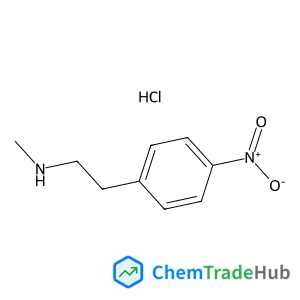
N-Methyl-2-(4-nitrophenyl)ethanamine hydrochloride (1:1)
CAS Number:
166943-39-1
Molecular Formula:
C9H13ClN2O2
Recommended Suppliers





Disclaimer
This page provides academic journal information for reference and research purposes only. We are not affiliated with any journal publishers and do not handle publication submissions. For publication-related inquiries, please contact the respective journal publishers directly.
If you notice any inaccuracies in the information displayed, please contact us at support@chemtradehub.com. We will promptly review and address your concerns.