













Density functional calculations of the electronic structure of 3-phenylamino-4-phenyl-1,2,4-triazole-5-thione
Literature Information
Publication Date
2010-02-03
DOI
10.1039/B920743K
Impact Factor
3.676
Authors
Ali Hussain Reshak, Dalibor Stys, S. Auluck, I. V. Kityk
View Original
Abstract
Starting with the X-ray diffraction data on the 3-phenylamino-4-phenyl-1,2,4-triazole-5-thione compound obtained by Wang et al. [Molecules, 2009, 14, 608], we have optimised the atomic positions by minimization of the forces acting on the atoms using a full potential linear augmented plane wave method within density-functional theory along with the generalized gradient approximation (GGA) by Perdew, Burke and Ernzerhof (PBE) exchange–correlation potential. In addition, for the electronic band-structure and the calculation of the gap the Engel–Vosko (EV-GGA) scheme has applied. The full potential calculations show that the valence band maximum (VBM) is located at the Γ point and the conduction band minimum (CBM) is located at the Z point of the Brillouin zone resulting in an indirect energy gap of 3.1 eV. The upper VBM is mainly formed by S-p states while the lower CB has mainly C-p states character. Thus the S-p states in the upper valence band and the C-p states in the lower conduction band have a significant effect on the energy band gap. We present an analysis of the partial densities of states which gives useful information on hybridization and the orbital character of the states. We have calculated the bond lengths and bond angles and find better agreement with the experimental data than the density functional theory calculations at B3LYP/6-311G** and PBE1PBE/6-311G** levels of theory by the Berny method within the Gaussian 03 software package. This is attributed to the fact that the values obtained by these methods belong to the isolated molecule in the gas-phase whereas the experimental and the full potential linear augmented plane wave method values are attributed to the molecule in the solid state.
Related Literature
The molecular mechanism of structural changes in the antimicrobial peptide CM15 upon complex formation with drug molecule suramin: a computational analysis
Adam Sieradzan, Ferenc Zsila, Tünde Juhász, Szilvia Bősze, Adam Liwo, Sergey A. Samsonov
2019-05-01
Paper
DOI: 10.1039/C9CP00471H
Exclusion principle repulsion effects on the covalent bond beyond the Born–Oppenheimer approximation
A. Sarsa, J. M. Alcaraz-Pelegrina, C. Le Sech
2019-04-18
Paper
DOI: 10.1039/C9CP01063G
Sudden polarization and zwitterion formation as a pseudo-Jahn–Teller effect: a new insight into the photochemistry of alkenes
Ya Wang, Yang Liu, Isaac B. Bersuker
2019-04-26
Paper
DOI: 10.1039/C9CP01023H
Characteristics of sulfur atoms adsorbed on Ag(100), Ag(110), and Ag(111) as probed with scanning tunneling microscopy: experiment and theory
Peter M. Spurgeon, Da-Jiang Liu, Junepyo Oh, Hyun Jin Yang, Yousoo Kim
2019-05-10
Paper
DOI: 10.1039/C9CP01626K
Redox-probe-free scanning electrochemical microscopy combined with fast Fourier transform electrochemical impedance spectroscopy
Aušra Valiūnienė, Jurate Petroniene, Georgi Popkirov, Almira Ramanaviciene, Arunas Ramanavicius
2019-04-05
Paper
DOI: 10.1039/C9CP00187E
High-speed tracking of fast chemical precipitations
Réka Zahorán, Ákos Kukovecz, Ágota Tóth, Dezső Horváth, Gábor Schuszter
2019-05-02
Paper
DOI: 10.1039/C9CP01707K
Cooperativity and coverage dependent molecular desorption in self-assembled monolayers: computational case study with coronene on Au(111) and HOPG
Bhaskar Chilukuri, Ursula Mazur, K. W. Hipps
2019-05-09
Paper
DOI: 10.1039/C9CP01774G
Improved phase stability of the CsPbI3 perovskite via organic cation doping
Jiajia Zhang, Lei Yang, Yu Zhong, Hequn Hao, Mei Yang, Renyong Liu
2019-05-03
Paper
DOI: 10.1039/C9CP01211G
Furthering the reaction mechanism of cationic vanadium clusters towards oxygen
Haiming Wu
2019-05-03
Paper
DOI: 10.1039/C9CP01192G
Controlling intramolecular hydrogen migration by asymmetric laser fields: the water case
Emmanouil Kechaoglou, Spyridon Kaziannis, Constantine Kosmidis
2019-05-09
Paper
DOI: 10.1039/C9CP01470E
You might also like
Compound Q&A
What precautions should be taken when handling 2-Chloro-1,2-bis(4-methylphenyl)ethanone (CAS: 71193-32-3)?
When handling 2-Chloro-1,2-bis(4-methylphenyl)ethanone (CAS: 71193-32-3), it is ...
71193-32-32-Chloro-1,2-bis(4-m...
Compound Q&A
What industries use 4-Ethoxy-3-(5-methyl-4-oxo-7-propyl-1,4-dihydroimidazo[5,1-f][1,2,4]triazin-2-yl)benzenesulfonyl chloride (CAS: 224789-26-8)?
4-Ethoxy-3-(5-methyl-4-oxo-7-propyl-1,4-dihydroimidazo[5,1-f][1,2,4]triazin-2-yl...
224789-26-84-Ethoxy-3-(5-methyl...
Compound Q&A
How should Methyl 3-Oxo-4-Androsten-17-Carboxylate (CAS: 2681-55-2) be stored?
Methyl 3-Oxo-4-Androsten-17-Carboxylate (CAS: 2681-55-2) should be stored in a c...
2681-55-2Methyl 3-Oxo-4-Andro...
Compound Q&A
What are the main uses of (R)-3-Amino-4-(3-hexylphenylamino)-4-oxobutylphosphonic acid (CAS: 909725-61-7)?
(R)-3-Amino-4-(3-hexylphenylamino)-4-oxobutylphosphonic acid is primarily used i...
909725-61-7(R)-3-Amino-4-(3-hex...
Compound Q&A
What regulatory guidelines apply to 2-Methyl-2-propanyl 3-amino-3-carbamoyl-1-azetidinecarboxylate (CAS: 1254120-14-3)?
2-Methyl-2-propanyl 3-amino-3-carbamoyl-1-azetidinecarboxylate (CAS: 1254120-14-...
1254120-14-32-Methyl-2-propanyl ...
Compound Q&A
Are there alternatives to (E)-4-(tert-Butoxy)-4-oxobut-2-enoic acid (CAS: 135355-96-3) in synthesis?
There are alternative reagents that can be used in synthesis instead of (E)-4-(t...
135355-96-3(E)-4-(tert-Butoxy)-...
Compound Q&A
What are the physical and chemical properties of [2-(3-Chlorophenyl)-1,3-thiazol-4-yl]methanol (CAS: 121202-20-8)?
[2-(3-Chlorophenyl)-1,3-thiazol-4-yl]methanol (CAS: 121202-20-8) is a crystallin...
121202-20-8[2-(3-Chlorophenyl)-...
Compound Q&A
What is the market or research trend for Methyl (2S)-[(4S)-2,2-dimethyl-1,3-dioxolan-4-yl]{[(4-methylphenyl)sulfonyl]oxy}acetate (CAS: 166249-17-8)?
The market and research trends for Methyl (2S)-[(4S)-2,2-dimethyl-1,3-dioxolan-4...
166249-17-8Methyl (2S)-[(4S)-2,...
Compound Q&A
What is the market or research trend for 1-Bromo-2-isocyanatoethane (CAS: 42865-19-0)?
The market for 1-Bromo-2-isocyanatoethane (CAS: 42865-19-0) is driven by its use...
42865-19-01-Bromo-2-isocyanato...
Compound Q&A
What are the main uses of 4-Nitro-D-phenylalanine hydrochloride (CAS: 147065-06-3)?
4-Nitro-D-phenylalanine hydrochloride (CAS: 147065-06-3) is primarily used in re...
147065-06-34-Nitro-D-phenylalan...
Source Journal
Physical Chemistry Chemical Physics

CiteScore:
5.5
Self-citation Rate:
10.3%
Articles per Year:
3036
Physical Chemistry Chemical Physics (PCCP) is an international journal co-owned by 19 physical chemistry and physics societies from around the world. This journal publishes original, cutting-edge research in physical chemistry, chemical physics and biophysical chemistry. To be suitable for publication in PCCP, articles must include significant innovation and/or insight into physical chemistry; this is the most important criterion that reviewers and Editors will judge against when evaluating submissions. The journal has a broad scope and welcomes contributions spanning experiment, theory, computation and data science. Topical coverage includes spectroscopy, dynamics, kinetics, statistical mechanics, thermodynamics, electrochemistry, catalysis, surface science, quantum mechanics, quantum computing and machine learning. Interdisciplinary research areas such as polymers and soft matter, materials, nanoscience, energy, surfaces/interfaces, and biophysical chemistry are welcomed if they demonstrate significant innovation and/or insight into physical chemistry. Joined experimental/theoretical studies are particularly appreciated when complementary and based on up-to-date approaches.
Recommended Compounds
![2-Hydroxy-4-[({[(4-methylphenyl)sulfonyl]oxy}acetyl)amino]benzoic acid structure](https://static.chemtradehub.com/structs/501/501919-59-1-579f.webp "2-Hydroxy-4-[({[(4-methylphenyl)sulfonyl]oxy}acetyl)amino]benzoic acid structure")
2-Hydroxy-4-[({[(4-methylphenyl)sulfonyl]oxy}acetyl)amino]benzoic acid
CAS Number:
501919-59-1
Molecular Formula:
C16H15NO7S
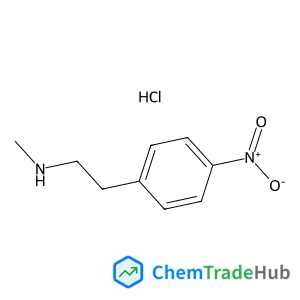
N-Methyl-2-(4-nitrophenyl)ethanamine hydrochloride (1:1)
CAS Number:
166943-39-1
Molecular Formula:
C9H13ClN2O2
![4-[2-(Trichlorosilyl)ethyl]benzenesulfonyl chloride structure](https://static.chemtradehub.com/structs/797/79793-00-3-de16.webp "4-[2-(Trichlorosilyl)ethyl]benzenesulfonyl chloride structure")
4-[2-(Trichlorosilyl)ethyl]benzenesulfonyl chloride
CAS Number:
79793-00-3
Molecular Formula:
C8H8Cl4O2SSi
Recommended Suppliers






Disclaimer
This page provides academic journal information for reference and research purposes only. We are not affiliated with any journal publishers and do not handle publication submissions. For publication-related inquiries, please contact the respective journal publishers directly.
If you notice any inaccuracies in the information displayed, please contact us at support@chemtradehub.com. We will promptly review and address your concerns.