












Self-association-free dimeric cinchona alkaloid organocatalysts: unprecedented catalytic activity, enantioselectivity and catalyst recyclability in dynamic kinetic resolution of racemic azlactones
Literature Information
Publication Date
2009-10-16
DOI
10.1039/B917882A
Impact Factor
6.222
Authors
Ji Woong Lee, Tae Hi Ryu, Joong Suk Oh, Han Yong Bae, Hyeong Bin Jang
View Original
Abstract
Self-association-free, bifunctional, squaramide-based dimeric cinchona alkaloid organocatalysts show unprecedented catalytic activity, enantioselectivity and catalyst recyclability in the dynamic kinetic resolution (DKR) reaction of a broad range of racemic azlactones.
Related Literature
Plasma-reduced Co(OH)2 with activated hydrogen evolution and overall water splitting performance
Junxiang Jiang, Yuanhao Tang, Lin Dong, Wenhao Zhang, Haobin Wu
2020-03-30
Communication
DOI: 10.1039/D0SE00381F
A facile route for preparing nickel(ii) oxide thin films for high-performance inverted perovskite solar cells
Guibin Shen, Hongye Dong, Qingbin Cai, Xiaoning Wen, Xiangning Xu, Cheng Mu
2020-04-28
Paper
DOI: 10.1039/D0SE00200C
Facile fabrication of graphitization-enhanced wrinkled paper-like N-doped porous carbon via a ZnCl2-modified NaCl-template method for use as an anode in lithium ion batteries
Shuai Ru, Xia Wang, Guoqing Ma, Junyu Tan, Haihong Xiao, Zhaoquan Ai
2020-04-22
Paper
DOI: 10.1039/D0SE00517G
Multifunctional CuxS- and DOX-loaded AuNR@mSiO2 platform for combined melanoma therapy with inspired antitumor immunity
Yamin Zhang, Biling Jiang, Chen Guo, Liping Liu, Jian Xu, Yujue Wang, Chen Shen, Jinjin Zhu, Guanxin Shen, Hao Jiang, Jintao Zhu, Juan Tao
2021-04-19
Paper
DOI: 10.1039/D1BM00373A
Dehydrative etherification of carbohydrates to 5-ethoxymethylfurfural over SBA-15-supported Sn-modified heteropolysilicate catalysts
2020-04-13
Paper
DOI: 10.1039/D0SE00509F
Three-dimensional flower-like nickel phyllosilicates for CO2 methanation: enhanced catalytic activity and high stability
Tengfei Zhang, Zhiwei Tian, Qing Liu
2020-04-16
Paper
DOI: 10.1039/D0SE00360C
Cobalt(ii) ions and cobalt nanoparticle embedded porous organic polymers: an efficient electrocatalyst for water-splitting reactions
Krishnan Giribabu, Murugavel Kathiresan, Kyusik Yun
2020-05-11
Paper
DOI: 10.1039/D0SE00580K
You might also like
Compound Q&A
What industries use (1R,3S)-1,3-Cyclopentanediol (CAS: 16326-97-9)?
(1R,3S)-1,3-Cyclopentanediol finds applications in various industries. In the ph...
16326-97-9(1R,3S)-1,3-Cyclopen...
Compound Q&A
What precautions should be taken when handling N'-[4-(Dimethylamino)phenyl]-N,N-dimethyl-1,4-benzenediamine (CAS: 637-31-0)?
When handling N'-[4-(Dimethylamino)phenyl]-N,N-dimethyl-1,4-benzenediamine, it i...
637-31-0N'-[4-(Dimethylamino...
Compound Q&A
Are there alternatives to 5-(2,4-Difluorophenyl)-2-methoxypyrimidine (CAS: 1352318-16-1) in synthesis?
There are several alternatives to 5-(2,4-Difluorophenyl)-2-methoxypyrimidine in ...
1352318-16-15-(2,4-Difluoropheny...
Compound Q&A
What regulatory guidelines apply to 1-(3-Methoxyphenoxy)propan-2-ol (CAS: 382141-68-6)?
1-(3-Methoxyphenoxy)propan-2-ol (CAS: 382141-68-6) must comply with the Globally...
382141-68-61-(3-Methoxyphenoxy)...
Compound Q&A
Is Tetrodotoxin Citrate (CAS: 18660-81-6) safe?
Tetrodotoxin Citrate is extremely dangerous and should be handled with extreme c...
18660-81-6Tetrodotoxin Citrate
Compound Q&A
What are the main uses of 2-Methyl-2-propanyl [(1R,3S)-3-hydroxycyclopentyl]carbamate (CAS: 225641-84-9)?
2-Methyl-2-propanyl [(1R,3S)-3-hydroxycyclopentyl]carbamate (CAS: 225641-84-9) i...
225641-84-92-Methyl-2-propanyl ...
Compound Q&A
How should waste containing 4-(2-Hydroxyhexafluoroisopropyl)Benzoic Acid (CAS: 16261-80-6) be handled?
Waste containing 4-(2-Hydroxyhexafluoroisopropyl)Benzoic Acid (CAS: 16261-80-6) ...
16261-80-64-(2-Hydroxyhexafluo...
Compound Q&A
How is 2-Methyl-2-proanyl {(2S)-1-[(benzyloxy)amino]-3-hydroxy-3-methyl-1-oxo-2-butanyl}carbamate (CAS: 102507-19-7) typically synthesized?
2-Methyl-2-proanyl {(2S)-1-[(benzyloxy)amino]-3-hydroxy-3-methyl-1-oxo-2-butanyl...
102507-19-72-Methyl-2-propanyl ...
Compound Q&A
What is Benzeneethanamine, α-ethyl-, hydrochloride (1:1) (CAS: 20735-15-3)?
Benzeneethanamine, α-ethyl-, hydrochloride (1:1) is an organic compound with the...
20735-15-3Benzeneethanamine, α...
Compound Q&A
Are there alternatives to 3-{(E)-[4-(Dimethylamino)phenyl]diazenyl}benzoic acid (CAS: 20691-84-3) in synthesis?
In the synthesis of compounds similar to 3-{(E)-[4-(Dimethylamino)phenyl]diazeny...
20691-84-33-{(E)-[4-(Dimethyla...
Source Journal
Chemical Communications

CiteScore:
8.6
Self-citation Rate:
4.7%
Articles per Year:
2458
ChemComm publishes urgent research which is of outstanding significance and interest to experts in the field, while also appealing to the journal’s broad chemistry readership. Our communication format is ideally suited to short, urgent studies that are of such importance that they require accelerated publication. Our scope covers all topics in chemistry, and research at the interface of chemistry and other disciplines (such as materials science, nanoscience, physics, engineering and biology) where there is a significant novelty in the chemistry aspects. Major topic areas covered include: Analytical Chemistry Catalysis Chemical Biology and medicinal chemistry Computational Chemistry and Machine Learning Energy and sustainable chemistry Environmental Chemistry Green Chemistry Inorganic Chemistry Materials Chemistry Nanoscience Organic Chemistry Physical Chemistry Polymer Chemistry Supramolecular Chemistry
Recommended Compounds
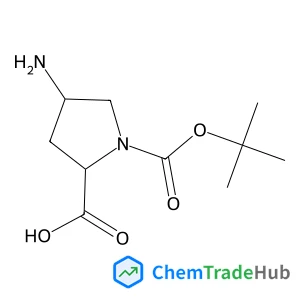
(2R,4R)-1-Boc-4-Aminopyrrolidine-2-carboxylic acid
CAS Number:
132622-98-1
Molecular Formula:
C10H18N2O4
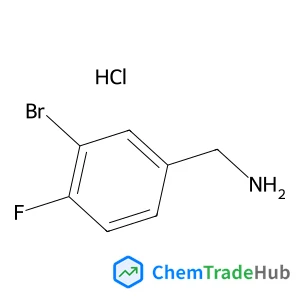
1-(3-Bromo-4-fluorophenyl)methanamine hydrochloride (1:1)
CAS Number:
202865-68-7
Molecular Formula:
C7H8BrClFN
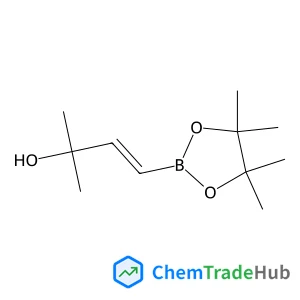
(E)-2-methyl-4-(4,4,5,5-tetramethyl-1,3,2-dioxaborolan-2-yl)but-3-en-2-ol
CAS Number:
581802-26-8
Molecular Formula:
C11H21BO3
Recommended Suppliers






Disclaimer
This page provides academic journal information for reference and research purposes only. We are not affiliated with any journal publishers and do not handle publication submissions. For publication-related inquiries, please contact the respective journal publishers directly.
If you notice any inaccuracies in the information displayed, please contact us at support@chemtradehub.com. We will promptly review and address your concerns.