












Front cover
Literature Information
Publication Date
DOI
10.1039/B914693H
Impact Factor
6.222
Authors
View Original
Abstract
The first page of this article is displayed as the abstract.
Related Literature
Microwave absorption in powders of small conducting particles for heating applications
Adrian Porch, Peter P. Edwards
2012-12-19
Paper
DOI: 10.1039/C2CP43310A
Bonding trends within ternary isocoordinate chalcogenide glasses GexAsySe1−x−y
George Opletal, Rong P. Wang, Salvy P. Russo
2013-02-13
Paper
DOI: 10.1039/C3CP43364A
Electrodeposition of germanium from the ionic liquid 1-butyl-1-methylpyrrolidinium dicyanamide
Minxian Wu, Neil R. Brooks, Stijn Schaltin, Koen Binnemans, Jan Fransaer
2013-02-25
Paper
DOI: 10.1039/C3CP44554B
Spatio-chemical characterization of a polymer blend by magnetic resonance force microscopy
Ivan T. Tomka, Jacco D. van Beek, Rosmarie Joss, Beat H. Meier
2013-01-14
Communication
DOI: 10.1039/C3CP44196B
Molecular rearrangement reactions in the gas phase triggered by electron attachment
Benedikt Ómarsson, Elías H. Bjarnason, Sean A. Haughey, Thomas A. Field, Alexander Abramov, Peter Klüpfel, Hannes Jónsson, Oddur Ingólfsson
2013-02-06
Paper
DOI: 10.1039/C3CP44320E
2nd TYC workshop on energy materials
F. Baletto, J. Blumberger, A. Shluger
2013-02-20
Editorial
DOI: 10.1039/C2CP90214A
Infrared spectrum of the disilane cation (Si2H6+) from Ar-tagging spectroscopy
Marco Savoca, Martin Andreas Robert George, Judith Langer, Otto Dopfer
2013-01-17
Paper
DOI: 10.1039/C2CP43773B
An electrochemical impedance study of the oxygen evolution reaction at hydrous iron oxide in base
Richard L. Doyle, Michael E. G. Lyons
2013-01-08
Paper
DOI: 10.1039/C3CP43464H
Excited state interactions between flurbiprofen and tryptophan in drug–protein complexes and in model dyads. Fluorescence studies from the femtosecond to the nanosecond time domains
Ignacio Vayá, Paula Bonancía, M. Consuelo Jiménez, Dimitra Markovitsi, Thomas Gustavsson, Miguel A. Miranda
2013-01-23
Paper
DOI: 10.1039/C3CP43847C
Towards a lattice-matching solid-state battery: synthesis of a new class of lithium-ion conductors with the spinel structure
Fabio Rosciano, Paolo P. Pescarmona, Kristof Houthoofd, Andre Persoons, Patrick Bottke, Martin Wilkening
2013-02-25
Paper
DOI: 10.1039/C3CP50803J
You might also like
Compound Q&A
How should waste containing (6-Bromo-2-naphthyl)oxy](dimethyl)(2-methyl-2-propanyl)silane be handled?
Waste containing (6-Bromo-2-naphthyl)oxy](dimethyl)(2-methyl-2-propanyl)silane (...
100751-65-3[(6-Bromo-2-naphthyl...
Compound Q&A
How is 7-Fluoro-4-isoquinolinecarboxylic acid (CAS: 1841081-40-0) typically synthesized?
7-Fluoro-4-isoquinolinecarboxylic acid can be synthesized via a multi-step proce...
1841081-40-07-Fluoro-4-isoquinol...
Compound Q&A
What are the physical and chemical properties of 2,3,5,6-Tetrabromothieno[3,2-b]thiophene (CAS: 124638-53-5)?
2,3,5,6-Tetrabromothieno[3,2-b]thiophene is a crystalline compound with a high m...
124638-53-52,3,5,6-Tetrabromoth...
Compound Q&A
Is 1-[4-(Benzylamino)-7,8-dihydro-5H-pyrano[4,3-d]pyrimidin-2-yl]-2-methyl-1H-indole-4-carboxamide (CAS: 1542705-92-9) safe?
1-[4-(Benzylamino)-7,8-dihydro-5H-pyrano[4,3-d]pyrimidin-2-yl]-2-methyl-1H-indol...
1542705-92-91-[4-(Benzylamino)-7...
Compound Q&A
What is the market or research trend for imidazo[5,1-d]-1,2,3,5-tetrazine-8-carboxylic acid, 3,4-dihydro-3-methyl-4-oxo- (CAS: 113942-30-6)?
The market for imidazo[5,1-d]-1,2,3,5-tetrazine-8-carboxylic acid, 3,4-dihydro-3...
113942-30-6Imidazo[5,1-d]-1,2,3...
Compound Q&A
What is 3-(Triisopropylsilyl)propiolaldehyde (CAS: 163271-80-5)?
3-(Triisopropylsilyl)propiolaldehyde is a synthetic organic compound with the CA...
163271-80-53-(Triisopropylsilyl...
Compound Q&A
What regulatory guidelines apply to 6-Nitro-2H-1,4-benzoxazin-3(4H)-one (CAS: 81721-87-1)?
6-Nitro-2H-1,4-benzoxazin-3(4H)-one (CAS: 81721-87-1) is subject to various regu...
81721-87-16-Nitro-2H-1,4-benzo...
Compound Q&A
How should waste containing (3-Fluorophenyl)(4-{[(2-methyl-2-propanyl)oxy]carbonyl}-1-piperazinyl)acetic acid (CAS: 885272-91-3) be handled?
Waste containing (3-Fluorophenyl)(4-{[(2-methyl-2-propanyl)oxy]carbonyl}-1-piper...
885272-91-3(3-Fluorophenyl)(4-{...
Compound Q&A
What are the physical and chemical properties of N,N'-4,4'-Biphenyldiyldiisonicotinamide (CAS: 55119-40-9)?
N,N'-4,4'-Biphenyldiyldiisonicotinamide is a white crystalline solid with a mole...
55119-40-9N,N'-4,4'-Biphenyldi...
Compound Q&A
What industries use 6-Bromo-8-fluoro-2-quinazolinol (CAS: 1036756-15-6)?
6-Bromo-8-fluoro-2-quinazolinol is primarily used in the pharmaceutical industry...
1036756-15-66-Bromo-8-fluoro-2-q...
Source Journal
Chemical Communications

CiteScore:
8.6
Self-citation Rate:
4.7%
Articles per Year:
2458
ChemComm publishes urgent research which is of outstanding significance and interest to experts in the field, while also appealing to the journal’s broad chemistry readership. Our communication format is ideally suited to short, urgent studies that are of such importance that they require accelerated publication. Our scope covers all topics in chemistry, and research at the interface of chemistry and other disciplines (such as materials science, nanoscience, physics, engineering and biology) where there is a significant novelty in the chemistry aspects. Major topic areas covered include: Analytical Chemistry Catalysis Chemical Biology and medicinal chemistry Computational Chemistry and Machine Learning Energy and sustainable chemistry Environmental Chemistry Green Chemistry Inorganic Chemistry Materials Chemistry Nanoscience Organic Chemistry Physical Chemistry Polymer Chemistry Supramolecular Chemistry
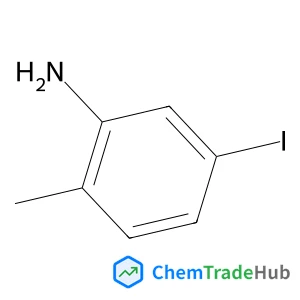
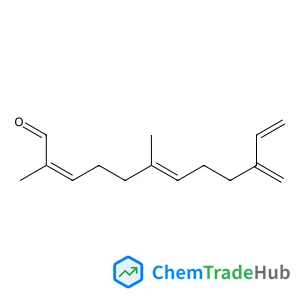
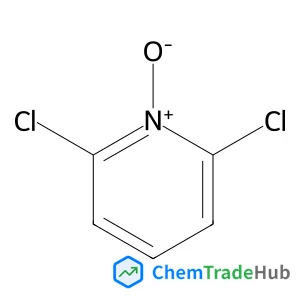
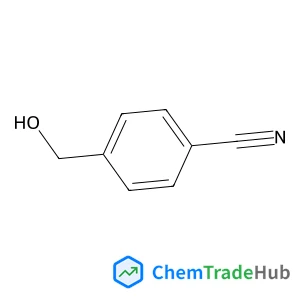
Recommended Compounds
Recommended Suppliers






Disclaimer
This page provides academic journal information for reference and research purposes only. We are not affiliated with any journal publishers and do not handle publication submissions. For publication-related inquiries, please contact the respective journal publishers directly.
If you notice any inaccuracies in the information displayed, please contact us at support@chemtradehub.com. We will promptly review and address your concerns.