












A vibrational circular dichroism approach to the determination of the absolute configuration of flexible and transparent molecules: fluorenoneketals of 1,n-diols
Literature Information
Publication Date
2010-03-17
DOI
10.1039/B913213A
Impact Factor
3.676
Authors
Patrizia Scafato, Carlo Rosini
View Original
Abstract
The infrared absorption (IR) and vibrational circular dichroism (VCD) spectra for five ketal molecules, three of which obtained from 1,2-diols and two from 1,3-diols, were recorded in the mid-IR region. The spectra have been satisfactorily reproduced by DFT calculations, even with not too large wavefunction basis sets, especially due to the low number of conformers to be considered. The mobility of some moieties provides a recognizable signature. A characteristic couplet of VCD bands attributed to normal modes involving the methine and a phenyl ring bonded to the stereogenic carbon atom is evidenced for two ketals of the series as a signature of the absolute configuration; due comparison with existing literature is made. A relation is discussed of the present VCD data with the literature VCD data of simple alcohols and diols.
Related Literature
Shape of CeO2nanoparticles using simulated amorphisation and recrystallisation
Thi X. T. Sayle, Stephen C. Parker, Dean C. Sayle
2004-09-21
Communication
DOI: 10.1039/B408752F
Novel cobalt-free oxygen permeable membrane
Xuefeng Zhu, Haihui Wang, Weishen Yang
2004-04-08
Communication
DOI: 10.1039/B400857J
Ferromagnetic NiII–GdIII interactions in complexes with NiGd, NiGdNi, and NiGdGdNi cores supported by tripodal ligands
Tomoka Yamaguchi, Yukinari Sunatsuki, Masaaki Kojima, Haruo Akashi, Masanobu Tsuchimoto, Nazzareno Re, Shutaro Osa, Naohide Matsumoto
2004-04-05
Communication
DOI: 10.1039/B401033G
Thin Pd membrane prepared on macroporous stainless steel tube filter by an in-situ multi-dimensional plating mechanism
Jianhua Tong, Yasuyuki Matsumura
2004-09-20
Communication
DOI: 10.1039/B406975G
Stereochemistry of hydrogen removal from the ‘unactivated’ C-3 position of 4-hydroxybutyryl-CoA catalysed by 4-hydroxybutyryl-CoA dehydratase
Richard Scott, Ulrike Näser, Peter Friedrich, Thorsten Selmer, Wolfgang Buckel, Bernard T. Golding
2004-04-23
Communication
DOI: 10.1039/B402322F
Microwave induced preparation of a-axis oriented double-ended needle-shaped ZnO microparticles
Deirdre Ledwith, Suresh C. Pillai, Graeme W. Watson, John M. Kelly
2004-09-01
Communication
DOI: 10.1039/B407768G
A new series of sodium cobalt oxyhydrates
Donna C. Arnold, Chris J. Nuttall, Alexandros Lappas
2004-09-21
Communication
DOI: 10.1039/B405907G
Kinetics of chalconeoxidation by peroxide anion catalysed by poly-l-leucine
Giacomo Carrea, Stefano Colonna, Alastair D. Meek, Gianluca Ottolina, Stanley M. Roberts
2004-05-17
Communication
DOI: 10.1039/B401497A
Direct synthesis of hydrogen peroxide solution with palladium-loaded sulfonic acid polystyrene resins
Gema Blanco-Brieva, Encarnación Cano-Serrano, Jose M. Campos-Martin, Jose L. G. Fierro
2004-04-22
Communication
DOI: 10.1039/B402530J
Nano-complex formation of cyclodextrin and azobenzene using supercritical carbon dioxide
Min Wu, Yoshiaki Yuguchi, Takako Kumagai, Takashi Endo, Takahiro Hirotsu
2004-05-10
Communication
DOI: 10.1039/B400289J
You might also like
Compound Q&A
What precautions should be taken when handling 2-Chloro-1,2-bis(4-methylphenyl)ethanone (CAS: 71193-32-3)?
When handling 2-Chloro-1,2-bis(4-methylphenyl)ethanone (CAS: 71193-32-3), it is ...
71193-32-32-Chloro-1,2-bis(4-m...
Compound Q&A
What industries use 4-Ethoxy-3-(5-methyl-4-oxo-7-propyl-1,4-dihydroimidazo[5,1-f][1,2,4]triazin-2-yl)benzenesulfonyl chloride (CAS: 224789-26-8)?
4-Ethoxy-3-(5-methyl-4-oxo-7-propyl-1,4-dihydroimidazo[5,1-f][1,2,4]triazin-2-yl...
224789-26-84-Ethoxy-3-(5-methyl...
Compound Q&A
How should Methyl 3-Oxo-4-Androsten-17-Carboxylate (CAS: 2681-55-2) be stored?
Methyl 3-Oxo-4-Androsten-17-Carboxylate (CAS: 2681-55-2) should be stored in a c...
2681-55-2Methyl 3-Oxo-4-Andro...
Compound Q&A
What are the main uses of (R)-3-Amino-4-(3-hexylphenylamino)-4-oxobutylphosphonic acid (CAS: 909725-61-7)?
(R)-3-Amino-4-(3-hexylphenylamino)-4-oxobutylphosphonic acid is primarily used i...
909725-61-7(R)-3-Amino-4-(3-hex...
Compound Q&A
What regulatory guidelines apply to 2-Methyl-2-propanyl 3-amino-3-carbamoyl-1-azetidinecarboxylate (CAS: 1254120-14-3)?
2-Methyl-2-propanyl 3-amino-3-carbamoyl-1-azetidinecarboxylate (CAS: 1254120-14-...
1254120-14-32-Methyl-2-propanyl ...
Compound Q&A
Are there alternatives to (E)-4-(tert-Butoxy)-4-oxobut-2-enoic acid (CAS: 135355-96-3) in synthesis?
There are alternative reagents that can be used in synthesis instead of (E)-4-(t...
135355-96-3(E)-4-(tert-Butoxy)-...
Compound Q&A
What are the physical and chemical properties of [2-(3-Chlorophenyl)-1,3-thiazol-4-yl]methanol (CAS: 121202-20-8)?
[2-(3-Chlorophenyl)-1,3-thiazol-4-yl]methanol (CAS: 121202-20-8) is a crystallin...
121202-20-8[2-(3-Chlorophenyl)-...
Compound Q&A
What is the market or research trend for Methyl (2S)-[(4S)-2,2-dimethyl-1,3-dioxolan-4-yl]{[(4-methylphenyl)sulfonyl]oxy}acetate (CAS: 166249-17-8)?
The market and research trends for Methyl (2S)-[(4S)-2,2-dimethyl-1,3-dioxolan-4...
166249-17-8Methyl (2S)-[(4S)-2,...
Compound Q&A
What is the market or research trend for 1-Bromo-2-isocyanatoethane (CAS: 42865-19-0)?
The market for 1-Bromo-2-isocyanatoethane (CAS: 42865-19-0) is driven by its use...
42865-19-01-Bromo-2-isocyanato...
Compound Q&A
What are the main uses of 4-Nitro-D-phenylalanine hydrochloride (CAS: 147065-06-3)?
4-Nitro-D-phenylalanine hydrochloride (CAS: 147065-06-3) is primarily used in re...
147065-06-34-Nitro-D-phenylalan...
Source Journal
Physical Chemistry Chemical Physics

CiteScore:
5.5
Self-citation Rate:
10.3%
Articles per Year:
3036
Physical Chemistry Chemical Physics (PCCP) is an international journal co-owned by 19 physical chemistry and physics societies from around the world. This journal publishes original, cutting-edge research in physical chemistry, chemical physics and biophysical chemistry. To be suitable for publication in PCCP, articles must include significant innovation and/or insight into physical chemistry; this is the most important criterion that reviewers and Editors will judge against when evaluating submissions. The journal has a broad scope and welcomes contributions spanning experiment, theory, computation and data science. Topical coverage includes spectroscopy, dynamics, kinetics, statistical mechanics, thermodynamics, electrochemistry, catalysis, surface science, quantum mechanics, quantum computing and machine learning. Interdisciplinary research areas such as polymers and soft matter, materials, nanoscience, energy, surfaces/interfaces, and biophysical chemistry are welcomed if they demonstrate significant innovation and/or insight into physical chemistry. Joined experimental/theoretical studies are particularly appreciated when complementary and based on up-to-date approaches.
Recommended Compounds

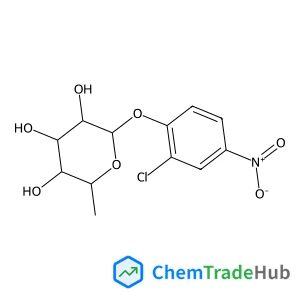
2-Chloro-4-nitrophenyl 6-deoxy-alpha-L-galactopyranoside
CAS Number:
157843-41-9
Molecular Formula:
C12H14ClNO7

5,7-Dihydroxy-2-(4-hydroxyphenyl)-4-oxo-4H-chromen-3-yl 2-O-(6-deoxy-alpha-L-mannopyranosyl)-beta-D-glucopyranoside
CAS Number:
32602-81-6
Molecular Formula:
C27H30O15
Recommended Suppliers




Disclaimer
This page provides academic journal information for reference and research purposes only. We are not affiliated with any journal publishers and do not handle publication submissions. For publication-related inquiries, please contact the respective journal publishers directly.
If you notice any inaccuracies in the information displayed, please contact us at support@chemtradehub.com. We will promptly review and address your concerns.