













Depolarisation of rotational orientation and alignment of OH (X2Π) in collisions with molecular partners: N2 and O2
Literature Information
Publication Date
2009-07-31
DOI
10.1039/B909051G
Impact Factor
3.676
Authors
Grant Paterson, Sarandis Marinakis, Matthew L. Costen, Kenneth G. McKendrick
View Original
Abstract
The depolarisation of selected OH (X2Π3/2v = 0, J = 1.5 and 4.5, e) levels in collisions with the molecular partners N2 and O2 at room temperature (nominally 298 K) has been studied using the polarisation spectroscopy (PS) technique. We obtain total depolarisation rate constants, k(K)PS, which are the combination of population transfer out of the initial level and elastic depolarisation of the tensor moment of respective rank K = 1 (orientation) or K = 2 (alignment) of its angular momentum distribution. N2 causes more rapid decay of PS signals than O2. There are no clear dependences of k(K)PS on J for either partner. The K-dependence for N2 mirrors that determined previously for the noble gases, but is less regular for O2, warranting further investigation. Comparison with independent line-broadening data suggests that there may be an additional, pure-elastic-dephasing contribution to collisional broadening for N2 that is not apparent for O2. The presence of an independently established deeper HO–OO attractive minimum at shorter range clearly does not outweigh other factors that favour k(K)PS for N2.The most obvious explanation is stronger, longer-range attractive interactions due to the larger quadrupole moment of N2. However, this appears to be contradicted by the rigorous ab initio calculations currently available on OH–O2.
Recommended Journals
Related Literature
Electron stimulated desorption from condensed pyrimidine and pyridazine
L. Ellis-Gibbings, A. D. Bass, P. Cloutier, G. García, L. Sanche
2017-04-28
Paper
DOI: 10.1039/C7CP00715A
Sugar–peptidic bond interactions: spectroscopic characterization of a model system
Ander Camiruaga, Imanol Usabiaga, Aran Insausti, José A. Fernández
2017-04-11
Paper
DOI: 10.1039/C7CP00615B
Unexpected coordination number and phase diagram of niobium diselenide under compression
Zhong-Li Liu, Hong Jia, Rui Li, Xiu-Lu Zhang, Ling-Cang Cai
2017-05-03
Paper
DOI: 10.1039/C7CP00805H
Intracellular-molecular changes in plasma-irradiated budding yeast cells studied using multiplex coherent anti-Stokes Raman scattering microscopy
Ryo Furuta, Naoyuki Kurake, Kenji Ishikawa, Keigo Takeda, Hiroshi Hashizume, Hiroki Kondo, Takayuki Ohta, Masafumi Ito, Makoto Sekine, Masaru Hori
2017-04-27
Communication
DOI: 10.1039/C7CP00489C
Tunable photoluminescence and room temperature ferromagnetism of In2S3:Dy3+,Tb3+ nanoparticles
Zhifang Li, Tianye Yang, Qi Zhao, Mingzhe Zhang
2017-06-19
Paper
DOI: 10.1039/C7CP02481A
Understanding doping strategies in the design of organic electrode materials for Li and Na ion batteries: an electronic structure perspective
Johann Lüder, Mun Ho Cheow, Sergei Manzhos
2017-05-10
Paper
DOI: 10.1039/C7CP01554B
Effects of orientation at the phthalocyanine–CdSe interface on the electron transfer characteristics
B. V. Nazarchuk, V. V. Golovanova, N. V. Tkachenko, T. T. Rantala
2017-03-24
Paper
DOI: 10.1039/C7CP00833C
Dielectric functions and critical points of crystalline WS2 ultrathin films with tunable thickness
Da-Hai Li, Hua Zheng, Zi-Yi Wang, Rong-Jun Zhang, Hao Zhang, Yu-Xiang Zheng, Song-You Wang, David Wei Zhang, Liang-Yao Chen
2017-04-12
Paper
DOI: 10.1039/C7CP00660H
Editorial of the PCCP themed issue on “Physical Chemistry for Life Sciences”
Christoph van Wüllen, Kirsten Schwing, Christoph Riehn, Markus Gerhards
2017-04-19
Editorial
DOI: 10.1039/C7CP90069D
On exo-cyclic aromaticity
Tamal Goswami, Manoswita Homray, Satadal Paul, Debojit Bhattacharya, Anirban Misra
2017-04-18
Communication
DOI: 10.1039/C7CP02031G
You might also like
Compound Q&A
How should waste containing N-Methoxy-N-methyl-1,3-thiazole-5-carboxamide (CAS: 898825-89-3) be handled?
Waste containing N-Methoxy-N-methyl-1,3-thiazole-5-carboxamide (CAS: 898825-89-3...
898825-89-3N-Methoxy-N-methyl-1...
Compound Q&A
How should N-(4-Biphenylyl)dibenzo[b,d]furan-4-amine (CAS: 1318338-47-4) be stored?
N-(4-Biphenylyl)dibenzo[b,d]furan-4-amine should be stored in a tightly sealed c...
1318338-47-4N-(4-Biphenylyl)dibe...
Compound Q&A
What is the market or research trend for 3-Acetamido-5-amino-2,4,6-triiodobenzoic acid (CAS: 1713-07-1)?
The market for 3-Acetamido-5-amino-2,4,6-triiodobenzoic acid (CAS: 1713-07-1) is...
1713-07-13-Acetamido-5-amino-...
Compound Q&A
How should Benzyl 2-O-acetyl-3,4,6-tri-O-benzyl-beta-D-galactopyranoside (CAS: 61820-03-9) be stored?
Benzyl 2-O-acetyl-3,4,6-tri-O-benzyl-beta-D-galactopyranoside (CAS: 61820-03-9) ...
61820-03-9Benzyl 2-O-acetyl-3,...
Compound Q&A
What regulatory guidelines apply to 2-Ethylpiperazine dihydrochloride (CAS: 438050-52-3)?
2-Ethylpiperazine dihydrochloride (CAS: 438050-52-3) is regulated under the Glob...
438050-52-32-Ethylpiperazine di...
Compound Q&A
What regulatory guidelines apply to 1,1'-[1,3-Phenylenebis(methylene)]bis(3-methyl-1H-pyrrole-2,5-dione) (CAS: 119462-56-5)?
1,1'-[1,3-Phenylenebis(methylene)]bis(3-methyl-1H-pyrrole-2,5-dione) (CAS: 11946...
119462-56-51,1'-[1,3-Phenyleneb...
Compound Q&A
Are there alternatives to 5-Fluoro-2-(1-pyrrolidinyl)pyridine (CAS: 1287217-79-1) in synthesis?
Several alternatives can be used in the synthesis of 5-Fluoro-2-(1-pyrrolidinyl)...
1287217-79-15-Fluoro-2-(1-pyrrol...
Compound Q&A
What precautions should be taken when handling 1-((2R,3R,4R,5R)-5-((bis(4-methoxyphenyl)(phenyl)methoxy)methyl)-4-hydroxy-3-methoxytetrahydrofuran-2-yl)-5-methylpyrimidine-2,4(1H,3H)-dione (CAS: 153631-19-7)?
Proper personal protective equipment (PPE) must be worn when handling this compo...
153631-19-71-((2R,3R,4R,5R)-5-(...
Compound Q&A
What precautions should be taken when handling 6-Bromoimidazo[1,2-a]pyridin-8-amine (CAS: 676371-00-9)?
When handling 6-Bromoimidazo[1,2-a]pyridin-8-amine, it is important to wear appr...
676371-00-96-Bromoimidazo[1,2-a...
Compound Q&A
Are there alternatives to (2S,4R)-4-(4-Nitrobenzyl)pyrrolidine-2-carboxylic acid hydrochloride (CAS: 1049740-22-8) in synthesis?
Alternatives to (2S,4R)-4-(4-Nitrobenzyl)pyrrolidine-2-carboxylic acid hydrochlo...
1049740-22-8(2S,4R)-4-(4-Nitrobe...
Source Journal
Physical Chemistry Chemical Physics

CiteScore:
5.5
Self-citation Rate:
10.3%
Articles per Year:
3036
Physical Chemistry Chemical Physics (PCCP) is an international journal co-owned by 19 physical chemistry and physics societies from around the world. This journal publishes original, cutting-edge research in physical chemistry, chemical physics and biophysical chemistry. To be suitable for publication in PCCP, articles must include significant innovation and/or insight into physical chemistry; this is the most important criterion that reviewers and Editors will judge against when evaluating submissions. The journal has a broad scope and welcomes contributions spanning experiment, theory, computation and data science. Topical coverage includes spectroscopy, dynamics, kinetics, statistical mechanics, thermodynamics, electrochemistry, catalysis, surface science, quantum mechanics, quantum computing and machine learning. Interdisciplinary research areas such as polymers and soft matter, materials, nanoscience, energy, surfaces/interfaces, and biophysical chemistry are welcomed if they demonstrate significant innovation and/or insight into physical chemistry. Joined experimental/theoretical studies are particularly appreciated when complementary and based on up-to-date approaches.
Recommended Compounds
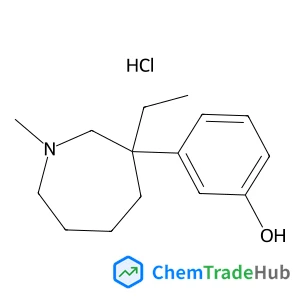
3-(3-Ethyl-1-methyl-3-azepanyl)phenol hydrochloride (1:1)
CAS Number:
59263-76-2
Molecular Formula:
C15H24ClNO

Recommended Suppliers




Disclaimer
This page provides academic journal information for reference and research purposes only. We are not affiliated with any journal publishers and do not handle publication submissions. For publication-related inquiries, please contact the respective journal publishers directly.
If you notice any inaccuracies in the information displayed, please contact us at support@chemtradehub.com. We will promptly review and address your concerns.