


Face selective translation of a cyclodextrin ring along an axle
Literature Information
Publication Date
2009-06-29
DOI
10.1039/B906425G
Impact Factor
6.222
Authors
Tomoya Oshikiri, Hiroyasu Yamaguchi, Yoshinori Takashima, Akira Harada
View Original
Abstract
A cyclodextrin ring was face-selectively transferred between two stations linked by a 2-methylpyridinium group on an axle molecule.
Recommended Journals

Journal of Catalysis

Organic Preparations and Procedures International

Pharmacological Reviews

Israel Journal of Chemistry

European Journal of Wood and Wood Products

Molecular Pharmacology

Journal of Heterocyclic Chemistry

Proceedings of the National Academy of Sciences of the United States of America

Fibre Chemistry

Journal of Medicinal Chemistry
Related Literature
An acoustic field-based conformal transfection system for improving the gene delivery efficiency
Jieqiong Wang, Shuai Zhao, Man Lin Lai, Tianan Jiang, Fei Yan
2021-04-14
Paper
DOI: 10.1039/D1BM00251A
Measuring estriol and estrone simultaneously in liquid cosmetic samples using second-order calibration coupled with excitation–emission matrix fluorescence based on region selection
De-Zhu Tu, Hai-Long Wu, Yuan-Na Li, Juan Zhang, Yong Li, Chong-Chong Nie, Xiao-Hua Zhang, Ru-Qin Yu
2011-11-23
Paper
DOI: 10.1039/C1AY05388D
Insights into the scalability of catalytic upgrading of biomass pyrolysis vapors using micro and bench-scale reactors
Andreas Eschenbacher, Alireza Saraeian, Brent H. Shanks, Peter Arendt Jensen, Ulrik Birk Henriksen, Jesper Ahrenfeldt, Anker Degn Jensen
2020-05-15
Paper
DOI: 10.1039/D0SE00303D
Plasma-reduced Co(OH)2 with activated hydrogen evolution and overall water splitting performance
Junxiang Jiang, Yuanhao Tang, Lin Dong, Wenhao Zhang, Haobin Wu
2020-03-30
Communication
DOI: 10.1039/D0SE00381F
Morphology oriented CuS nanostructures: superior K-ion storage using surface enhanced pseudocapacitive effects
Chandrasekaran Nithya, Gowtham Thiyagaraj
2020-04-28
Paper
DOI: 10.1039/D0SE00469C
Substrate strain engineering: an efficient strategy to enhance the catalytic activity of SACs on waved graphene for e-NRR
Di Liu, Haoqiang Ai, Wan Tong Lou, Feifei Li, Kin Ho Lo
2020-05-14
Paper
DOI: 10.1039/D0SE00518E
You might also like
Compound Q&A
What industries use (1R,3S)-1,3-Cyclopentanediol (CAS: 16326-97-9)?
(1R,3S)-1,3-Cyclopentanediol finds applications in various industries. In the ph...
16326-97-9(1R,3S)-1,3-Cyclopen...
Compound Q&A
What precautions should be taken when handling N'-[4-(Dimethylamino)phenyl]-N,N-dimethyl-1,4-benzenediamine (CAS: 637-31-0)?
When handling N'-[4-(Dimethylamino)phenyl]-N,N-dimethyl-1,4-benzenediamine, it i...
637-31-0N'-[4-(Dimethylamino...
Compound Q&A
Are there alternatives to 5-(2,4-Difluorophenyl)-2-methoxypyrimidine (CAS: 1352318-16-1) in synthesis?
There are several alternatives to 5-(2,4-Difluorophenyl)-2-methoxypyrimidine in ...
1352318-16-15-(2,4-Difluoropheny...
Compound Q&A
What regulatory guidelines apply to 1-(3-Methoxyphenoxy)propan-2-ol (CAS: 382141-68-6)?
1-(3-Methoxyphenoxy)propan-2-ol (CAS: 382141-68-6) must comply with the Globally...
382141-68-61-(3-Methoxyphenoxy)...
Compound Q&A
Is Tetrodotoxin Citrate (CAS: 18660-81-6) safe?
Tetrodotoxin Citrate is extremely dangerous and should be handled with extreme c...
18660-81-6Tetrodotoxin Citrate
Compound Q&A
What are the main uses of 2-Methyl-2-propanyl [(1R,3S)-3-hydroxycyclopentyl]carbamate (CAS: 225641-84-9)?
2-Methyl-2-propanyl [(1R,3S)-3-hydroxycyclopentyl]carbamate (CAS: 225641-84-9) i...
225641-84-92-Methyl-2-propanyl ...
Compound Q&A
How should waste containing 4-(2-Hydroxyhexafluoroisopropyl)Benzoic Acid (CAS: 16261-80-6) be handled?
Waste containing 4-(2-Hydroxyhexafluoroisopropyl)Benzoic Acid (CAS: 16261-80-6) ...
16261-80-64-(2-Hydroxyhexafluo...
Compound Q&A
How is 2-Methyl-2-proanyl {(2S)-1-[(benzyloxy)amino]-3-hydroxy-3-methyl-1-oxo-2-butanyl}carbamate (CAS: 102507-19-7) typically synthesized?
2-Methyl-2-proanyl {(2S)-1-[(benzyloxy)amino]-3-hydroxy-3-methyl-1-oxo-2-butanyl...
102507-19-72-Methyl-2-propanyl ...
Compound Q&A
What is Benzeneethanamine, α-ethyl-, hydrochloride (1:1) (CAS: 20735-15-3)?
Benzeneethanamine, α-ethyl-, hydrochloride (1:1) is an organic compound with the...
20735-15-3Benzeneethanamine, α...
Compound Q&A
Are there alternatives to 3-{(E)-[4-(Dimethylamino)phenyl]diazenyl}benzoic acid (CAS: 20691-84-3) in synthesis?
In the synthesis of compounds similar to 3-{(E)-[4-(Dimethylamino)phenyl]diazeny...
20691-84-33-{(E)-[4-(Dimethyla...
Source Journal
Chemical Communications

CiteScore:
8.6
Self-citation Rate:
4.7%
Articles per Year:
2458
ChemComm publishes urgent research which is of outstanding significance and interest to experts in the field, while also appealing to the journal’s broad chemistry readership. Our communication format is ideally suited to short, urgent studies that are of such importance that they require accelerated publication. Our scope covers all topics in chemistry, and research at the interface of chemistry and other disciplines (such as materials science, nanoscience, physics, engineering and biology) where there is a significant novelty in the chemistry aspects. Major topic areas covered include: Analytical Chemistry Catalysis Chemical Biology and medicinal chemistry Computational Chemistry and Machine Learning Energy and sustainable chemistry Environmental Chemistry Green Chemistry Inorganic Chemistry Materials Chemistry Nanoscience Organic Chemistry Physical Chemistry Polymer Chemistry Supramolecular Chemistry
Recommended Compounds

1-(3-Bromo-4-fluorophenyl)methanamine hydrochloride (1:1)
CAS Number:
202865-68-7
Molecular Formula:
C7H8BrClFN
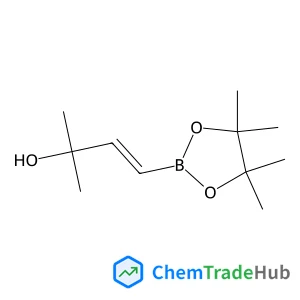
(E)-2-methyl-4-(4,4,5,5-tetramethyl-1,3,2-dioxaborolan-2-yl)but-3-en-2-ol
CAS Number:
581802-26-8
Molecular Formula:
C11H21BO3

(S)-3-((((9H-Fluoren-9-yl)methoxy)carbonyl)amino)-2-phenylpropanoic acid
CAS Number:
1217663-60-9
Molecular Formula:
C24H21NO4
Recommended Suppliers






Disclaimer
This page provides academic journal information for reference and research purposes only. We are not affiliated with any journal publishers and do not handle publication submissions. For publication-related inquiries, please contact the respective journal publishers directly.
If you notice any inaccuracies in the information displayed, please contact us at support@chemtradehub.com. We will promptly review and address your concerns.