












Epigenetics in metal carcinogenesis: nickel, arsenic, chromium and cadmium
Literature Information
Publication Date
2009-04-09
DOI
10.1039/B903049B
Impact Factor
0
Authors
Adriana Arita, Max Costa
View Original
Abstract
Although carcinogenic metals have been known to disrupt a wide range of cellular processes the precise mechanism by which they exert their carcinogenic effects is not known. Over the last decade or two, studies in the field of metal carcinogenesis suggest that epigenetic mechanisms may play a role in metal-induced carcinogenesis. In this review we summarize the evidence demonstrating that exposure to carcinogenic metals such as nickel, arsenic, chromium, and cadmium can perturb DNA methylation levels as well as global and gene specific histone tail posttranslational modification marks. We also wish to emphasize the importance of understanding that gene expression can be regulated by both genetic and epigenetic mechanisms and both these must be considered when studying the mechanism underlying the toxicity and cell transforming ability of carcinogenic metals and other toxicants, as well as aberrant changes in gene expression that occur during disease states such as cancer.
Related Literature
Exploring the phase space of time of flight mass selected PtxY nanoparticles
Federico Masini, Patricia Hernández-Fernández, Davide Deiana, Christian Ejersbo Strebel, David Norman McCarthy, Anders Bodin, Paolo Malacrida, Ifan Stephens, Ib Chorkendorff
2014-07-17
Paper
DOI: 10.1039/C4CP02144D
Stability and spinodal decomposition of the solid-solution phase in the ruthenium–cerium–oxide electro-catalyst
Yanmei Li, Xin Wang, Yanqun Shao, Bo Wu, Zhongzhi Tang, Wei Lin
2014-10-29
Paper
DOI: 10.1039/C4CP04131C
Thermodynamic and kinetic characterization of transmembrane helix association
Aiswarya B. Pawar, Sneha A. Deshpande, Srinivasa M. Gopal, Tsjerk A. Wassenaar, Chaitanya A. Athale, Durba Sengupta
2014-11-21
Paper
DOI: 10.1039/C4CP03732D
Size-dependent pressure-induced amorphization: a thermodynamic panorama
Denis Machon, Patrice Mélinon
2014-11-11
Paper
DOI: 10.1039/C4CP04633A
Photoelectrochemical hydrogen evolution of tapered silicon nanowires
Yanjun Xiao, Keya Zhou, Junna Wang, Stefan L. Schweizer, Alexander Sprafke, Jung-Ho Lee
2014-11-11
Communication
DOI: 10.1039/C4CP04396K
Energetic contributions of residues to the formation of early amyloid-β oligomers
R. Pouplana, J. M. Campanera
2014-12-05
Paper
DOI: 10.1039/C4CP04544K
Mechanical properties and stabilities of α-boron monolayers
Qing Peng, Liang Han, Sheng Liu, Zhongfang Chen, Jie Lian, Suvranu De
2014-11-25
Paper
DOI: 10.1039/C4CP04050C
Influence of dispersive forces on the final shape of a reverse micelle
I. León, R. Montero, A. Longarte, José A. Fernández
2014-12-02
Paper
DOI: 10.1039/C4CP03667K
Magnetic and geometric anisotropy in particle-crosslinked ferrohydrogels
Lisa Roeder, Philipp Bender, Matthias Kundt, Andreas Tschöpe, Annette M. Schmidt
2014-11-17
Paper
DOI: 10.1039/C4CP04493B
Molecular charge transfer by adsorbing TCNQ/TTF molecules via π–π interaction: a simple and effective strategy to modulate the electronic and magnetic behaviors of zigzag SiC nanoribbons
Dan Liu, Guangtao Yu, Yuanhui Sun, Xuri Huang, Jia Guan, Hui Zhang, Hui Li, Wei Chen
2014-11-05
Paper
DOI: 10.1039/C4CP03690E
You might also like
Compound Q&A
What is Ethyl 3-cyclohexylpropanoate (CAS: 10094-36-7)?
Ethyl 3-cyclohexylpropanoate is a clear, colorless to light yellow liquid with a...
10094-36-7Ethyl 3-cyclohexylpr...
Compound Q&A
How should waste containing 2-(Hydroxymethyl)-5-(methoxycarbonyl)-6-methyl-4-(2-nitrophenyl)nicotinic acid (CAS: 34783-31-8) be handled?
Waste containing 2-(Hydroxymethyl)-5-(methoxycarbonyl)-6-methyl-4-(2-nitrophenyl...
34783-31-82-(Hydroxymethyl)-5-...
Compound Q&A
How should waste containing 2,4,6-Tris(pentafluoroethyl)-1,3,5-triazine (CAS: 858-46-8) be handled?
Waste containing 2,4,6-Tris(pentafluoroethyl)-1,3,5-triazine (CAS: 858-46-8) sho...
858-46-82,4,6-Tris(pentafluo...
Compound Q&A
What precautions should be taken when handling Chloroac-nle-oh (CAS: 56787-36-1)?
When handling Chloroac-nle-oh (CAS: 56787-36-1), it is essential to wear appropr...
56787-36-1Chloroac-nle-oh
Compound Q&A
What industries use Ethyl 6-phenylimidazo[2,1-b][1,3]thiazole-3-carboxylate (CAS: 752244-05-6)?
Ethyl 6-phenylimidazo[2,1-b][1,3]thiazole-3-carboxylate is primarily used in the...
752244-05-6Ethyl 6-phenylimidaz...
Compound Q&A
Are there alternatives to alpha-(2-Bromophenyl)benzylamine (CAS: 55095-15-3) in synthesis?
Alternatives to alpha-(2-Bromophenyl)benzylamine (CAS: 55095-15-3) in synthesis ...
55095-15-3alpha-(2-Bromophenyl...
Compound Q&A
How should waste containing 2-Chloro-5-methoxypyridine (CAS: 139585-48-1) be handled?
Waste containing 2-Chloro-5-methoxypyridine (CAS: 139585-48-1) should be managed...
139585-48-12-Chloro-5-methoxypy...
Compound Q&A
What industries use 1-(4-Methoxyphenyl)-2,5-dimethyl-1H-pyrrole (CAS: 5044-27-9)?
1-(4-Methoxyphenyl)-2,5-dimethyl-1H-pyrrole (CAS: 5044-27-9) is used in various ...
5044-27-91-(4-Methoxyphenyl)-...
Compound Q&A
Are there alternatives to 3-Bromo-5-(N-Boc)aminomethylisoxazole (CAS: 903131-45-3) in synthesis?
There are alternative reagents and compounds that can be used in the synthesis o...
903131-45-33-Bromo-5-(N-Boc)ami...
Compound Q&A
What is Tungsten(IV) oxide (CAS: 12036-22-5)?
Tungsten(IV) oxide, also known as tungsten dioxide, is a chemical compound with ...
12036-22-5Tungsten(IV) oxide
Source Journal
Metallomics

CiteScore:
7
Self-citation Rate:
6.9%
Articles per Year:
77
Metallomics publishes cutting-edge investigations aimed at elucidating the identification, distribution, dynamics, role and impact of metals and metalloids in biological systems. Studies that address the “what, where, when, how and why” of these inorganic elements in cells, tissues, organisms, and various environmental niches are welcome, especially those employing multidisciplinary approaches drawn from the analytical, bioinorganic, medicinal, environmental, biophysical, cell biology, plant biology and chemical biology communities. We are particularly interested in articles that enhance our chemical and/or physical understanding of the molecular mechanisms of metal-dependent life processes, and those that probe the common space between metallomics and other ‘omics approaches to uncover new insights into biological processes. Metallomics seeks to position itself at the forefront of those advances in analytical chemistry destined to clarify the enormous complexity of biological systems. As such, we particularly welcome those papers that outline cutting-edge analytical technologies, e.g., in the development and application of powerful new imaging, spectroscopic and mass spectrometric modalities. Work that describes new insights into metal speciation, trafficking and dynamics in complex systems or as a function of microenvironment are also strongly encouraged. Studies that examine the interconnectivity of metal-dependent processes with systems level responses relevant to organismal health or disease are also strongly encouraged, for example those that probe the effect of chemical exposure on metal homeostasis or the impact of metal-based drugs on cellular processes.
Recommended Compounds

![Bis[(1,2,3,4,5-eta)-1-(diphenylphosphino)cyclopentadienyl]iron structure](https://static.chemtradehub.com/structs/121/12150-46-8-ecd2.webp "Bis[(1,2,3,4,5-eta)-1-(diphenylphosphino)cyclopentadienyl]iron structure")
Bis[(1,2,3,4,5-eta)-1-(diphenylphosphino)cyclopentadienyl]iron
CAS Number:
12150-46-8
Molecular Formula:
C34H28FeP2
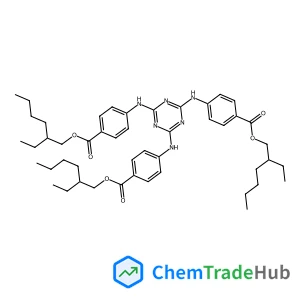
Tris(2-ethylhexyl) 4,4',4''-(1,3,5-triazine-2,4,6-triyltriimino)tribenzoate
CAS Number:
88122-99-0
Molecular Formula:
C48H66N6O6

Recommended Suppliers








Disclaimer
This page provides academic journal information for reference and research purposes only. We are not affiliated with any journal publishers and do not handle publication submissions. For publication-related inquiries, please contact the respective journal publishers directly.
If you notice any inaccuracies in the information displayed, please contact us at support@chemtradehub.com. We will promptly review and address your concerns.