












Ab initio study of the structure and magnetism of atomic oxygen adsorbed Scn (n = 2–14) clusters
Literature Information
Publication Date
2009-05-27
DOI
10.1039/B902627D
Impact Factor
3.676
Authors
Mingli Yang
View Original
Abstract
We have investigated the structure and magnetism of atomic oxygen adsorbed Scn (n = 2–14) clusters by using the ab initio density functional theory approach. The oxygen atom tends to attack the hollow site in the ground state structures, and the bridge site in some metastable structures. The adsorption energies exhibit clear size-dependent variation, with maxima at n = 6, 10, 12 and minima at n = 4, 7 and 13, which can be assigned to the stability of the corresponding pure Scn clusters. The incoming O atom exhibits great influence on the magnetism of the clusters. The magnetic moments of the Scn clusters are partly or totally quenched at n = 2, 4, 6, 10, 12, 13, and 14, and enhanced at n = 7, 9, and 11 upon the addition of O, particularly the magnetic moment increases from 1 to 5 μB for n = 11 and decreases from 19 to 7 μB for n = 13. The different magnetic responses to O adsorption are further investigated using the Hirshfeld population analysis and partial and local density of states analysis.
Related Literature
Concise total synthesis of the aporphine alkaloid 7,7′-bisdehydro-O-methylisopiline by an InCl3 mediated cycloisomerization reaction
Alois Fürstner, Victor Mamane
2003-07-22
Communication
DOI: 10.1039/B306880C
A reductive recycle strategy for the facile synthesis of molybdenum(VI) alkylidyne catalysts for alkyne metathesis
Wei Zhang, Stefan Kraft, Jeffrey S. Moore
2003-02-27
Communication
DOI: 10.1039/B212405J
Highly effective ferric hydroxide supported gold catalyst for selective oxidation of CO in the presence of H2
Botao Qiao, Youquan Deng
2003-07-28
Communication
DOI: 10.1039/B307181B
Decomposition of Pt-intercalated hydrotalcite-like nanocomposites to produce micro/mesoporous catalysts
Masato Machida, Shin Hamada
2003-06-20
Communication
DOI: 10.1039/B304352E
Polymernanosphere lithography: fabrication of an ordered trigonal polymeric nanostructure
Dong Kee Yi, Dong-Yu Kim
2003-03-26
Communication
DOI: 10.1039/B300638G
Spectral properties of a novel antimony(iii)-phthalocyanine complex that behaves like J-aggregates in non-aqueous media
Hiroaki Isago
2003-06-20
Communication
DOI: 10.1039/B304089E
Total synthesis of (±)-dihydrospiniferin-1 via a polyfluoro alkanosulfonyl fluoride induced tandem carbonium ion rearrangement reaction
Ling Chen, Kai Ding, Wei-Sheng Tian
2003-02-28
Communication
DOI: 10.1039/B300016H
Identification of distinct Brønsted acidic sites in zeolite mordenite by proton localization and [27Al]-1H REAPDOR NMR
Subramanian Ganapathy, Rajiv Kumar, Laurent Delevoye, Jean-Paul Amoureux
2003-07-10
Communication
DOI: 10.1039/B304548J
Distortion of a cellobio-derived isofagomine highlights the potential conformational itinerary of inverting β-glucosidases
Annabelle Varrot, James Macdonald, Robert V. Stick, Gavin Pell, Harry J. Gilbert, Gideon J. Davies
2003-03-20
Communication
DOI: 10.1039/B301592K
Effects of trace metals and organic additives on porosity and dielectric constant of high purity mesoporous silica films
Jerome C. Birnbaum, Glen E. Fryxell, Xiaohong Li, Chris A. Coyle, Glen C. Dunham, Suresh Baskaran
2003-06-20
Communication
DOI: 10.1039/B304903E
You might also like
Compound Q&A
What precautions should be taken when handling 2-Methyl-2-propanyl 5-amino-2-thiophenecarboxylate (CAS: 1498311-57-1)?
When handling 2-Methyl-2-propanyl 5-amino-2-thiophenecarboxylate (CAS: 1498311-5...
1498311-57-12-Methyl-2-propanyl ...
Compound Q&A
What are the physical and chemical properties of 5-Bromo-1,2-dichloro-3-fluorobenzene (CAS: 1000572-93-9)?
5-Bromo-1,2-dichloro-3-fluorobenzene (CAS: 1000572-93-9) is a crystalline solid ...
1000572-93-95-Bromo-1,2-dichloro...
Compound Q&A
How should (2R)-2-Amino-2-(4-bromophenyl)ethanol (CAS: 354153-64-3) be stored?
(2R)-2-Amino-2-(4-bromophenyl)ethanol (CAS: 354153-64-3) should be stored in a c...
354153-64-3(2R)-2-Amino-2-(4-br...
Compound Q&A
What regulatory guidelines apply to Methyl 4-(aminomethyl)tetrahydro-2H-pyran-4-carboxylate hydrochloride (CAS: 362707-24-2)?
Methyl 4-(aminomethyl)tetrahydro-2H-pyran-4-carboxylate hydrochloride (CAS: 3627...
362707-24-2Methyl 4-(aminomethy...
Compound Q&A
What are the main uses of 1,4-dimethyl-1H-pyrazole-5-sulfonyl chloride (CAS: 1174834-52-6)?
1,4-Dimethyl-1H-pyrazole-5-sulfonyl chloride is primarily used as an intermediat...
1174834-52-61,4-dimethyl-1H-pyra...
Compound Q&A
Is Dinaphtho[1,2-b:2',1'-d]furan (CAS: 239-69-0) safe?
Dinaphtho[1,2-b:2',1'-d]furan is generally safe when handled with appropriate pe...
239-69-0Dinaphtho[1,2-b:2',1...
Compound Q&A
What is the market or research trend for 7-Methyl-7,9-dihydro-1H-purine-2,6,8(3H)-trione (CAS: 612-37-3)?
The market for 7-Methyl-7,9-dihydro-1H-purine-2,6,8(3H)-trione (CAS: 612-37-3) i...
612-37-37-Methyl-7,9-dihydro...
Compound Q&A
What are the physical and chemical properties of 2-(4-Chlorophenyl)malonaldehyde (CAS: 205676-17-1)?
2-(4-Chlorophenyl)malonaldehyde (CAS: 205676-17-1) is a colorless or light yello...
205676-17-12-(4-Chlorophenyl)ma...
Compound Q&A
How is 2-Methylchrysene (CAS: 3351-32-4) typically synthesized?
2-Methylchrysene (CAS: 3351-32-4) is typically synthesized via the reaction of c...
3351-32-42-Methylchrysene
Compound Q&A
Is N-(6-aminopyrimidin-4-yl)acetamide (CAS: 89533-23-3) safe?
N-(6-aminopyrimidin-4-yl)acetamide (CAS: 89533-23-3) is generally considered saf...
89533-23-3N-(6-aminopyrimidin-...
Source Journal
Physical Chemistry Chemical Physics

CiteScore:
5.5
Self-citation Rate:
10.3%
Articles per Year:
3036
Physical Chemistry Chemical Physics (PCCP) is an international journal co-owned by 19 physical chemistry and physics societies from around the world. This journal publishes original, cutting-edge research in physical chemistry, chemical physics and biophysical chemistry. To be suitable for publication in PCCP, articles must include significant innovation and/or insight into physical chemistry; this is the most important criterion that reviewers and Editors will judge against when evaluating submissions. The journal has a broad scope and welcomes contributions spanning experiment, theory, computation and data science. Topical coverage includes spectroscopy, dynamics, kinetics, statistical mechanics, thermodynamics, electrochemistry, catalysis, surface science, quantum mechanics, quantum computing and machine learning. Interdisciplinary research areas such as polymers and soft matter, materials, nanoscience, energy, surfaces/interfaces, and biophysical chemistry are welcomed if they demonstrate significant innovation and/or insight into physical chemistry. Joined experimental/theoretical studies are particularly appreciated when complementary and based on up-to-date approaches.
Recommended Compounds
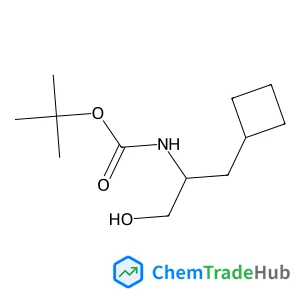
2-Methyl-2-propanyl (1-cyclobutyl-3-hydroxy-2-propanyl)carbamate
CAS Number:
816429-99-9
Molecular Formula:
C12H23NO3
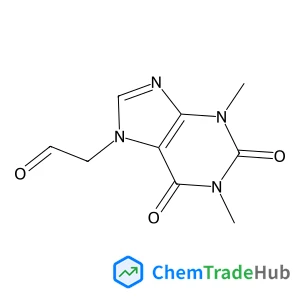
(1,3-Dimethyl-2,6-dioxo-1,2,3,6-tetrahydro-7H-purin-7-yl)acetaldehyde
CAS Number:
5614-53-9
Molecular Formula:
C9H10N4O3
Recommended Suppliers






Disclaimer
This page provides academic journal information for reference and research purposes only. We are not affiliated with any journal publishers and do not handle publication submissions. For publication-related inquiries, please contact the respective journal publishers directly.
If you notice any inaccuracies in the information displayed, please contact us at support@chemtradehub.com. We will promptly review and address your concerns.