












Intense solid-state blue emission with a small Stokes’ shift: π-stacking protection of the diphenylanthracene skeleton
Literature Information
Publication Date
2009-03-19
DOI
10.1039/B901794A
Impact Factor
6.222
Authors
Azusa Iida, Shigehiro Yamaguchi
View Original
Abstract
Intense blue emissions with a small Stokes’ shift both in solution and in the solid state were attained by introducing (pentafluorophenyl)dimethylsilyl groups to a 9,10-diphenylanthracene skeleton as the π-stacking tethers.
Related Literature
Bonding trends within ternary isocoordinate chalcogenide glasses GexAsySe1−x−y
George Opletal, Rong P. Wang, Salvy P. Russo
2013-02-13
Paper
DOI: 10.1039/C3CP43364A
Single-molecule surface-enhanced Raman spectroscopy: a perspective on the current status
Hae Mi Lee, Seung Min Jin, Hyung Min Kim, Yung Doug Suh
2013-03-11
Perspective
DOI: 10.1039/C3CP44463E
Mechanism of morphology transformation during annealing of nanostructured gold films on glass
Tanya Karakouz, Alexander B. Tesler, Takumi Sannomiya, Yishay Feldman, Alexander Vaskevich, Israel Rubinstein
2013-02-25
Paper
DOI: 10.1039/C3CP50198A
High-precision measurement-based correlation studies among atomic force microscopy, Rayleigh scattering, and surface-enhanced Raman scattering at the single-molecule level
Hae Mi Lee, Jung-Hoon Lee, Hyung Min Kim, Seung Min Jin, Hyo Sun Park, Jwa-Min Nam, Yung Doug Suh
2013-01-08
Paper
DOI: 10.1039/C3CP43817A
Understanding photosynthetic light-harvesting: a bottom up theoretical approach
Thomas Renger, Frank Müh
2013-01-14
Perspective
DOI: 10.1039/C3CP43439G
77Se solid-state NMR of As2Se3, As4Se4 and As4Se3 crystals: a combined experimental and computational study
Kateryna Sykina, Guang Yang, Claire Roiland, Laurent Le Pollès, Eric Le Fur, Chris J. Pickard, Bruno Bureau, Eric Furet
2013-03-07
Paper
DOI: 10.1039/C3CP41689E
Sensing dielectric media on the nanoscale with freely oriented gold nanorods
Frank Wackenhut, Alfred J. Meixner
2013-02-18
Paper
DOI: 10.1039/C3CP43988G
Stability, surface features, and atom leaching of palladium nanoparticles: toward prediction of catalytic functionality
Hadi Ramezani-Dakhel, Peter A. Mirau, Rajesh R. Naik, Marc R. Knecht, Hendrik Heinz
2013-03-04
Communication
DOI: 10.1039/C3CP00135K
Efficient conformational sampling of peptides adsorbed onto inorganic surfaces: insights from a quartz binding peptide
Louise B. Wright, Tiffany R. Walsh
2013-02-13
Paper
DOI: 10.1039/C3CP42921K
You might also like
Compound Q&A
How should waste containing (6-Bromo-2-naphthyl)oxy](dimethyl)(2-methyl-2-propanyl)silane be handled?
Waste containing (6-Bromo-2-naphthyl)oxy](dimethyl)(2-methyl-2-propanyl)silane (...
100751-65-3[(6-Bromo-2-naphthyl...
Compound Q&A
How is 7-Fluoro-4-isoquinolinecarboxylic acid (CAS: 1841081-40-0) typically synthesized?
7-Fluoro-4-isoquinolinecarboxylic acid can be synthesized via a multi-step proce...
1841081-40-07-Fluoro-4-isoquinol...
Compound Q&A
What are the physical and chemical properties of 2,3,5,6-Tetrabromothieno[3,2-b]thiophene (CAS: 124638-53-5)?
2,3,5,6-Tetrabromothieno[3,2-b]thiophene is a crystalline compound with a high m...
124638-53-52,3,5,6-Tetrabromoth...
Compound Q&A
Is 1-[4-(Benzylamino)-7,8-dihydro-5H-pyrano[4,3-d]pyrimidin-2-yl]-2-methyl-1H-indole-4-carboxamide (CAS: 1542705-92-9) safe?
1-[4-(Benzylamino)-7,8-dihydro-5H-pyrano[4,3-d]pyrimidin-2-yl]-2-methyl-1H-indol...
1542705-92-91-[4-(Benzylamino)-7...
Compound Q&A
What is the market or research trend for imidazo[5,1-d]-1,2,3,5-tetrazine-8-carboxylic acid, 3,4-dihydro-3-methyl-4-oxo- (CAS: 113942-30-6)?
The market for imidazo[5,1-d]-1,2,3,5-tetrazine-8-carboxylic acid, 3,4-dihydro-3...
113942-30-6Imidazo[5,1-d]-1,2,3...
Compound Q&A
What is 3-(Triisopropylsilyl)propiolaldehyde (CAS: 163271-80-5)?
3-(Triisopropylsilyl)propiolaldehyde is a synthetic organic compound with the CA...
163271-80-53-(Triisopropylsilyl...
Compound Q&A
What regulatory guidelines apply to 6-Nitro-2H-1,4-benzoxazin-3(4H)-one (CAS: 81721-87-1)?
6-Nitro-2H-1,4-benzoxazin-3(4H)-one (CAS: 81721-87-1) is subject to various regu...
81721-87-16-Nitro-2H-1,4-benzo...
Compound Q&A
How should waste containing (3-Fluorophenyl)(4-{[(2-methyl-2-propanyl)oxy]carbonyl}-1-piperazinyl)acetic acid (CAS: 885272-91-3) be handled?
Waste containing (3-Fluorophenyl)(4-{[(2-methyl-2-propanyl)oxy]carbonyl}-1-piper...
885272-91-3(3-Fluorophenyl)(4-{...
Compound Q&A
What are the physical and chemical properties of N,N'-4,4'-Biphenyldiyldiisonicotinamide (CAS: 55119-40-9)?
N,N'-4,4'-Biphenyldiyldiisonicotinamide is a white crystalline solid with a mole...
55119-40-9N,N'-4,4'-Biphenyldi...
Compound Q&A
What industries use 6-Bromo-8-fluoro-2-quinazolinol (CAS: 1036756-15-6)?
6-Bromo-8-fluoro-2-quinazolinol is primarily used in the pharmaceutical industry...
1036756-15-66-Bromo-8-fluoro-2-q...
Source Journal
Chemical Communications

CiteScore:
8.6
Self-citation Rate:
4.7%
Articles per Year:
2458
ChemComm publishes urgent research which is of outstanding significance and interest to experts in the field, while also appealing to the journal’s broad chemistry readership. Our communication format is ideally suited to short, urgent studies that are of such importance that they require accelerated publication. Our scope covers all topics in chemistry, and research at the interface of chemistry and other disciplines (such as materials science, nanoscience, physics, engineering and biology) where there is a significant novelty in the chemistry aspects. Major topic areas covered include: Analytical Chemistry Catalysis Chemical Biology and medicinal chemistry Computational Chemistry and Machine Learning Energy and sustainable chemistry Environmental Chemistry Green Chemistry Inorganic Chemistry Materials Chemistry Nanoscience Organic Chemistry Physical Chemistry Polymer Chemistry Supramolecular Chemistry
Recommended Compounds
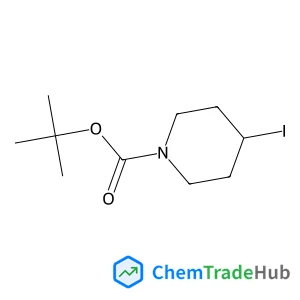
2-Methyl-2-propanyl 4-iodo-1-piperidinecarboxylate
CAS Number:
301673-14-3
Molecular Formula:
C10H18INO2

![2-{[4-(2-Methoxyethyl)phenoxy]methyl}oxirane structure](https://static.chemtradehub.com/structs/567/56718-70-8-f037.webp "2-{[4-(2-Methoxyethyl)phenoxy]methyl}oxirane structure")
Recommended Suppliers




Disclaimer
This page provides academic journal information for reference and research purposes only. We are not affiliated with any journal publishers and do not handle publication submissions. For publication-related inquiries, please contact the respective journal publishers directly.
If you notice any inaccuracies in the information displayed, please contact us at support@chemtradehub.com. We will promptly review and address your concerns.