


Caging and solvent effects on the tautomeric equilibrium of 3-pyridone/3-hydroxypyridine in the ground state: a study in cyclodextrins and binary solvents
Literature Information
Publication Date
2009-04-20
DOI
10.1039/B823405A
Impact Factor
3.676
Authors
Osama K. Abou-Zied, Othman I. K. Al-Shihi
View Original
Abstract
The tautomeric equilibrium between 3-pyridone (3Py) and 3-hydroxypyridine (3HP) shows characteristic absorption peaks for the zwitterion form of 3Py in water that may be used as a probe of the hydrophobic nature inside macromolecules such as proteins and other biologically related systems. We studied this equilibrium in the ground state in aqueous cyclodextrins (CDs) and in binary solvent mixtures of 1,4-dioxane and water by absorption spectroscopy, and by ab initio calculations. Upon the addition of α-CD or β-CD to an aqueous solution of the 3Py/3HP system, the absorbance intensity of the zwitterion tautomer decreases with a concomitant increase in the intensity of the enol tautomer of 3HP. The results reflect the nature of the tautomeric equilibrium and point to the hydrophobic environment inside the CD cavities. The effect of inclusion is noticeably less in the case of α-CD. This is attributed to the small cavity size of α-CD which sustains only partial inclusion. Upon the addition of γ-CD, the intensity of the zwitterion tautomer slightly increased over that in water which is attributed to the direct interaction between the charged sides of the tautomer with the outer primary or secondary hydroxyls of the glycopyranose units of γ-CD. This interaction is a result of the large cavity size of γ-CD which does not support a stable complex. The largest caging effect was observed in 2,6-di-O-methyl-β-CD (DMβ-CD) which is an indication of a more hydrophobic environment around the guest. The large hydrophobicity of DMβ-CD is due to the presence of the two methyl groups in the β-CD derivative which reduce the amount of water inside the cavity upon encapsulation. In the binary mixtures of 1,4-dioxane and water, the change in the absorbance intensity of the enol and the zwitterion tautomers was analyzed quantitatively and three water molecules were found to solvate the polar centers of each tautomer. Ab initio calculations of the solvation of both tautomers by two and three water molecules were performed at the MP2/6-31++G(d,p) level. The calculations show that three water molecules are necessary to solvate the polar centers of each tautomer in a water network pattern. The results presented here suggest that the 3Py/3HP system represents a potentially useful new photophysical probe for supramolecular structures, particularly those involving inclusion.
Recommended Journals

New Journal of Chemistry

Chemistry Education Research and Practice

Russian Journal of Applied Chemistry

Russian Journal of Coordination Chemistry

Nature Medicine

Journal of Saudi Chemical Society

Russian Chemical Bulletin

Organic Process Research & Development

Saudi Pharmaceutical Journal

Drug Discovery Today
Related Literature
Redox hydrogels with adjusted redox potential for improved efficiency in Z-scheme inspired biophotovoltaic cells
Volker Hartmann, Tim Kothe, Sascha Pöller, Eithar El-Mohsnawy, Marc M. Nowaczyk, Nicolas Plumeré, Wolfgang Schuhmann, Matthias Rögner
2014-03-10
Paper
DOI: 10.1039/C4CP00380B
Interplay between the ionic and electronic transport and its effects on the reaction pattern during the electrochemical conversion in an FeF2 nanoparticle
Ying Ma, Stephen H. Garofalini
2014-05-09
Paper
DOI: 10.1039/C4CP00481G
Flux-assisted synthesis of SnNb2O6 for tuning photocatalytic properties
Dalal Noureldine, Dalaver H. Anjum, Kazuhiro Takanabe
2014-04-03
Paper
DOI: 10.1039/C4CP00654B
Oxygen vacancy formation and the ion migration mechanism in layered perovskite (Sr,La)3Fe2O7−δ
Isao Kagomiya, Keigo Jimbo, Ken-ichi Kakimoto, Masanobu Nakayama, Olivier Masson
2014-04-02
Paper
DOI: 10.1039/C4CP00736K
Constructing a mixed π-conjugated bridge to effectively enhance the nonlinear optical response in the Möbius cyclacene-based systems
Liwei Chen, Guangtao Yu, Wei Chen, Chunyun Tu, Xingang Zhao, Xuri Huang
2014-04-04
Paper
DOI: 10.1039/C4CP00733F
Self-healing mechanism of metallopolymers investigated by QM/MM simulations and Raman spectroscopy
Julien Guthmuller
2014-05-15
Paper
DOI: 10.1039/C4CP00562G
Direct CO oxidation by lattice oxygen on the SnO2(110) surface: a DFT study
Zhansheng Lu, Dongwei Ma, Lin Yang, Xiaobing Wang, Guoliang Xu, Zongxian Yang
2014-04-28
Paper
DOI: 10.1039/C4CP00540F
Radical O–O coupling reaction in diferrate-mediated water oxidation studied using multireference wave function theory
Masaaki Saitow, Jakub Chalupský
2014-03-21
Paper
DOI: 10.1039/C3CP55225J
Computational investigation of structural and electronic properties of aqueous interfaces of GaN, ZnO, and a GaN/ZnO alloy
Neerav Kharche, Mark S. Hybertsen, James T. Muckerman
2014-03-24
Paper
DOI: 10.1039/C4CP00486H
Development of high power and energy density microsphere silicon carbide–MnO2 nanoneedles and thermally oxidized activated carbon asymmetric electrochemical supercapacitors
Myeongjin Kim, Jooheon Kim
2014-04-30
Paper
DOI: 10.1039/C4CP01141D
You might also like
Compound Q&A
What precautions should be taken when handling 2-Chloro-1,2-bis(4-methylphenyl)ethanone (CAS: 71193-32-3)?
When handling 2-Chloro-1,2-bis(4-methylphenyl)ethanone (CAS: 71193-32-3), it is ...
71193-32-32-Chloro-1,2-bis(4-m...
Compound Q&A
What industries use 4-Ethoxy-3-(5-methyl-4-oxo-7-propyl-1,4-dihydroimidazo[5,1-f][1,2,4]triazin-2-yl)benzenesulfonyl chloride (CAS: 224789-26-8)?
4-Ethoxy-3-(5-methyl-4-oxo-7-propyl-1,4-dihydroimidazo[5,1-f][1,2,4]triazin-2-yl...
224789-26-84-Ethoxy-3-(5-methyl...
Compound Q&A
How should Methyl 3-Oxo-4-Androsten-17-Carboxylate (CAS: 2681-55-2) be stored?
Methyl 3-Oxo-4-Androsten-17-Carboxylate (CAS: 2681-55-2) should be stored in a c...
2681-55-2Methyl 3-Oxo-4-Andro...
Compound Q&A
What are the main uses of (R)-3-Amino-4-(3-hexylphenylamino)-4-oxobutylphosphonic acid (CAS: 909725-61-7)?
(R)-3-Amino-4-(3-hexylphenylamino)-4-oxobutylphosphonic acid is primarily used i...
909725-61-7(R)-3-Amino-4-(3-hex...
Compound Q&A
What regulatory guidelines apply to 2-Methyl-2-propanyl 3-amino-3-carbamoyl-1-azetidinecarboxylate (CAS: 1254120-14-3)?
2-Methyl-2-propanyl 3-amino-3-carbamoyl-1-azetidinecarboxylate (CAS: 1254120-14-...
1254120-14-32-Methyl-2-propanyl ...
Compound Q&A
Are there alternatives to (E)-4-(tert-Butoxy)-4-oxobut-2-enoic acid (CAS: 135355-96-3) in synthesis?
There are alternative reagents that can be used in synthesis instead of (E)-4-(t...
135355-96-3(E)-4-(tert-Butoxy)-...
Compound Q&A
What are the physical and chemical properties of [2-(3-Chlorophenyl)-1,3-thiazol-4-yl]methanol (CAS: 121202-20-8)?
[2-(3-Chlorophenyl)-1,3-thiazol-4-yl]methanol (CAS: 121202-20-8) is a crystallin...
121202-20-8[2-(3-Chlorophenyl)-...
Compound Q&A
What is the market or research trend for Methyl (2S)-[(4S)-2,2-dimethyl-1,3-dioxolan-4-yl]{[(4-methylphenyl)sulfonyl]oxy}acetate (CAS: 166249-17-8)?
The market and research trends for Methyl (2S)-[(4S)-2,2-dimethyl-1,3-dioxolan-4...
166249-17-8Methyl (2S)-[(4S)-2,...
Compound Q&A
What is the market or research trend for 1-Bromo-2-isocyanatoethane (CAS: 42865-19-0)?
The market for 1-Bromo-2-isocyanatoethane (CAS: 42865-19-0) is driven by its use...
42865-19-01-Bromo-2-isocyanato...
Compound Q&A
What are the main uses of 4-Nitro-D-phenylalanine hydrochloride (CAS: 147065-06-3)?
4-Nitro-D-phenylalanine hydrochloride (CAS: 147065-06-3) is primarily used in re...
147065-06-34-Nitro-D-phenylalan...
Source Journal
Physical Chemistry Chemical Physics

CiteScore:
5.5
Self-citation Rate:
10.3%
Articles per Year:
3036
Physical Chemistry Chemical Physics (PCCP) is an international journal co-owned by 19 physical chemistry and physics societies from around the world. This journal publishes original, cutting-edge research in physical chemistry, chemical physics and biophysical chemistry. To be suitable for publication in PCCP, articles must include significant innovation and/or insight into physical chemistry; this is the most important criterion that reviewers and Editors will judge against when evaluating submissions. The journal has a broad scope and welcomes contributions spanning experiment, theory, computation and data science. Topical coverage includes spectroscopy, dynamics, kinetics, statistical mechanics, thermodynamics, electrochemistry, catalysis, surface science, quantum mechanics, quantum computing and machine learning. Interdisciplinary research areas such as polymers and soft matter, materials, nanoscience, energy, surfaces/interfaces, and biophysical chemistry are welcomed if they demonstrate significant innovation and/or insight into physical chemistry. Joined experimental/theoretical studies are particularly appreciated when complementary and based on up-to-date approaches.
Recommended Compounds
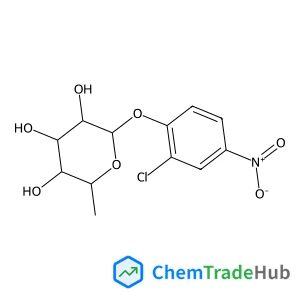
2-Chloro-4-nitrophenyl 6-deoxy-alpha-L-galactopyranoside
CAS Number:
157843-41-9
Molecular Formula:
C12H14ClNO7

Recommended Suppliers





Disclaimer
This page provides academic journal information for reference and research purposes only. We are not affiliated with any journal publishers and do not handle publication submissions. For publication-related inquiries, please contact the respective journal publishers directly.
If you notice any inaccuracies in the information displayed, please contact us at support@chemtradehub.com. We will promptly review and address your concerns.