












Time-resolved spectroscopy of dye-labeled photoactive yellow protein suggests a pathway of light-induced structural changes in the N-terminal cap
Literature Information
Publication Date
2009-03-03
DOI
10.1039/B821345C
Impact Factor
3.676
Authors
Daniel Hoersch, Harald Otto, Michael A. Cusanovich, Maarten P. Heyn
View Original
Abstract
The photoreceptor PYP responds to light activation with global conformational changes. These changes are mainly located in the N-terminal cap of the protein, which is ∼20 Å away from the chromophore binding pocket and separated from it by the central β-sheet. The question of the propagation of the structural change across the central β-sheet is of general interest for the superfamily of PAS domain proteins, for which PYP is the structural prototype. Here we measured the kinetics of the structural changes in the N-terminal cap by transient absorption spectroscopy on the ns to second timescale. For this purpose the cysteine mutants A5C and N13C were prepared and labeled with thiol reactive 5-iodoacetamidofluorescein (IAF). A5 is located close to the N-terminus, while N13 is part of helix α1 near the functionally important salt bridge E12–K110 between the N-terminal cap and the central anti-parallel β-sheet. The absorption spectrum of the dye is sensitive to its environment, and serves as a sensor for conformational changes near the labeling site. In both labeled mutants light activation results in a transient red-shift of the fluorescein absorption spectrum. To correlate the conformational changes with the photocycle intermediates of the protein, we compared the kinetics of the transient absorption signal of the dye with that of the p-hydroxycinnamoyl chromophore. While the structural change near A5 is synchronized with the rise of the I2 intermediate, which is formed in ∼200 μs, the change near N13 is delayed and rises with the next intermediate I2′, which forms in ∼2 ms. This indicates that different parts of the N-terminal cap respond to light activation with different kinetics. For the signaling pathway of photoactive yellow protein we propose a model in which the structural signal propagates from the chromophore binding pocket across the central β-sheet via the N-terminal region to helix α1, resulting in a large change in the protein conformation.
Recommended Journals
Related Literature
Design, synthesis, characterization, and fluorescent studies of the first zinc-quinolate polymer
Amy Meyers, Clint South, Marcus Weck
2004-04-27
Communication
DOI: 10.1039/B402289K
Unprecedented copper-catalyzed asymmetric conjugate addition of organometallic reagents to α,β-unsaturated lactams
Mauro Pineschi, Federica Del Moro, Adriaan J. Minnaard, Ben L. Feringa
2004-04-28
Communication
DOI: 10.1039/B403793F
A novel, stereoselective and convergent synthesis of aryltetralins
Steven M. Miles, Stephen P. Marsden, Robin J. Leatherbarrow, William J. Coates
2004-09-01
Communication
DOI: 10.1039/B409528F
Direct synthesis of hydrogen peroxide solution with palladium-loaded sulfonic acid polystyrene resins
Gema Blanco-Brieva, Encarnación Cano-Serrano, Jose M. Campos-Martin, Jose L. G. Fierro
2004-04-22
Communication
DOI: 10.1039/B402530J
Supramolecular complex composed of a covalently linked zinc porphyrin dimer and fulleropyrrolidine bearing two axially coordinating pyridine entities
Francis D'Souza, Suresh Gadde, Melvin E. Zandler, Mitsunari Itou, Yasuyuki Araki, Osamu Ito
2004-09-08
Communication
DOI: 10.1039/B407985J
Direct syntheses of functionalized mesostructured silica by using an inexpensive silica source‡
Robert J. P. Corriu, Ahmad Mehdi, Catherine Reyé, Chloé Thieuleux
2004-05-19
Communication
DOI: 10.1039/B314415A
Halide anion directed assembly of luminescent pseudorotaxanes
David Curiel, Paul D. Beer, Rowena L. Paul, Andrew Cowley, Mark R. Sambrook, Fridrich Szemes
2004-04-22
Communication
DOI: 10.1039/B401900H
Nano-complex formation of cyclodextrin and azobenzene using supercritical carbon dioxide
Min Wu, Yoshiaki Yuguchi, Takako Kumagai, Takashi Endo, Takahiro Hirotsu
2004-05-10
Communication
DOI: 10.1039/B400289J
Mechanistic and stereochemical aspects of the asymmetric cyclocarbonylation of 1,6-enynes with rhodium catalysts
Thomas M. Schmid, Giambattista Consiglio
2004-09-06
Communication
DOI: 10.1039/B407843H
Rapid cloning and expression of a fungal polyketide synthase gene involved in squalestatin biosynthesis
Russell J. Cox, Frank Glod, Deirdre Hurley, Colin M. Lazarus, Thomas. P. Nicholson, Brian A. M. Rudd, Thomas J. Simpson, Barrie Wilkinson, Ying Zhang
2004-09-24
Communication
DOI: 10.1039/B411973H
You might also like
Compound Q&A
What precautions should be taken when handling 2-Chloro-1,2-bis(4-methylphenyl)ethanone (CAS: 71193-32-3)?
When handling 2-Chloro-1,2-bis(4-methylphenyl)ethanone (CAS: 71193-32-3), it is ...
71193-32-32-Chloro-1,2-bis(4-m...
Compound Q&A
What industries use 4-Ethoxy-3-(5-methyl-4-oxo-7-propyl-1,4-dihydroimidazo[5,1-f][1,2,4]triazin-2-yl)benzenesulfonyl chloride (CAS: 224789-26-8)?
4-Ethoxy-3-(5-methyl-4-oxo-7-propyl-1,4-dihydroimidazo[5,1-f][1,2,4]triazin-2-yl...
224789-26-84-Ethoxy-3-(5-methyl...
Compound Q&A
How should Methyl 3-Oxo-4-Androsten-17-Carboxylate (CAS: 2681-55-2) be stored?
Methyl 3-Oxo-4-Androsten-17-Carboxylate (CAS: 2681-55-2) should be stored in a c...
2681-55-2Methyl 3-Oxo-4-Andro...
Compound Q&A
What are the main uses of (R)-3-Amino-4-(3-hexylphenylamino)-4-oxobutylphosphonic acid (CAS: 909725-61-7)?
(R)-3-Amino-4-(3-hexylphenylamino)-4-oxobutylphosphonic acid is primarily used i...
909725-61-7(R)-3-Amino-4-(3-hex...
Compound Q&A
What regulatory guidelines apply to 2-Methyl-2-propanyl 3-amino-3-carbamoyl-1-azetidinecarboxylate (CAS: 1254120-14-3)?
2-Methyl-2-propanyl 3-amino-3-carbamoyl-1-azetidinecarboxylate (CAS: 1254120-14-...
1254120-14-32-Methyl-2-propanyl ...
Compound Q&A
Are there alternatives to (E)-4-(tert-Butoxy)-4-oxobut-2-enoic acid (CAS: 135355-96-3) in synthesis?
There are alternative reagents that can be used in synthesis instead of (E)-4-(t...
135355-96-3(E)-4-(tert-Butoxy)-...
Compound Q&A
What are the physical and chemical properties of [2-(3-Chlorophenyl)-1,3-thiazol-4-yl]methanol (CAS: 121202-20-8)?
[2-(3-Chlorophenyl)-1,3-thiazol-4-yl]methanol (CAS: 121202-20-8) is a crystallin...
121202-20-8[2-(3-Chlorophenyl)-...
Compound Q&A
What is the market or research trend for Methyl (2S)-[(4S)-2,2-dimethyl-1,3-dioxolan-4-yl]{[(4-methylphenyl)sulfonyl]oxy}acetate (CAS: 166249-17-8)?
The market and research trends for Methyl (2S)-[(4S)-2,2-dimethyl-1,3-dioxolan-4...
166249-17-8Methyl (2S)-[(4S)-2,...
Compound Q&A
What is the market or research trend for 1-Bromo-2-isocyanatoethane (CAS: 42865-19-0)?
The market for 1-Bromo-2-isocyanatoethane (CAS: 42865-19-0) is driven by its use...
42865-19-01-Bromo-2-isocyanato...
Compound Q&A
What are the main uses of 4-Nitro-D-phenylalanine hydrochloride (CAS: 147065-06-3)?
4-Nitro-D-phenylalanine hydrochloride (CAS: 147065-06-3) is primarily used in re...
147065-06-34-Nitro-D-phenylalan...
Source Journal
Physical Chemistry Chemical Physics

CiteScore:
5.5
Self-citation Rate:
10.3%
Articles per Year:
3036
Physical Chemistry Chemical Physics (PCCP) is an international journal co-owned by 19 physical chemistry and physics societies from around the world. This journal publishes original, cutting-edge research in physical chemistry, chemical physics and biophysical chemistry. To be suitable for publication in PCCP, articles must include significant innovation and/or insight into physical chemistry; this is the most important criterion that reviewers and Editors will judge against when evaluating submissions. The journal has a broad scope and welcomes contributions spanning experiment, theory, computation and data science. Topical coverage includes spectroscopy, dynamics, kinetics, statistical mechanics, thermodynamics, electrochemistry, catalysis, surface science, quantum mechanics, quantum computing and machine learning. Interdisciplinary research areas such as polymers and soft matter, materials, nanoscience, energy, surfaces/interfaces, and biophysical chemistry are welcomed if they demonstrate significant innovation and/or insight into physical chemistry. Joined experimental/theoretical studies are particularly appreciated when complementary and based on up-to-date approaches.
Recommended Compounds
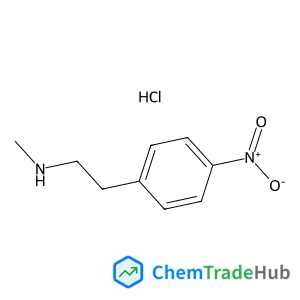
N-Methyl-2-(4-nitrophenyl)ethanamine hydrochloride (1:1)
CAS Number:
166943-39-1
Molecular Formula:
C9H13ClN2O2

Recommended Suppliers





Disclaimer
This page provides academic journal information for reference and research purposes only. We are not affiliated with any journal publishers and do not handle publication submissions. For publication-related inquiries, please contact the respective journal publishers directly.
If you notice any inaccuracies in the information displayed, please contact us at support@chemtradehub.com. We will promptly review and address your concerns.