












Structural characterization of electrodeposited copper hexacyanoferrate films by using a spectroscopic multi-technique approach
Literature Information
Publication Date
2012-02-24
DOI
10.1039/C2CP24109A
Impact Factor
3.676
Authors
Marco Giorgetti, Lorella Guadagnini, Domenica Tonelli, Marco Minicucci, Giuliana Aquilanti
View Original
Abstract
A deep structural investigation predominantly by X-ray spectroscopic techniques is conducted on films of copper hexacyanoferrate (CuHCF) deposited under different conditions, aimed at establishing structure–properties relationships. We show that the potentiodynamic electrosynthesis of CuHCF on carbon-based surfaces produces a highly disordered material, with a variable amount of Prussian Blue (PB). The subsequent Cu2+ intercalation induces the partial conversion of PB into CuHCF, which explains the improved electrocatalytic properties after the intercalation process. Both Cu and Fe K-edge data have been recorded. For the sample with the lower amount of PB, we could perform a multiple edge data analysis to determine the local atomic environment around both metal centres using the same set of structural parameters. The presence of high multiplicity Cu–N–C–Fe linear chains has allowed us to determine accurately the local environment of Fe while fitting the Cu K-edge data only. Using this approach we have retrieved structural information around Fe for those samples in which the concomitant presence of PB would have made impossible the analysis of the Fe K-edge. The Fe–C, C–N and Cu–N bond distances have been found in agreement with those of the bulk structures, but higher values of [Fe(CN)6] vacancies for the building blocks have been evidenced, reaching a value of ∼45% in one sample. XANES, Raman and SEM data agree with the model proposed for each studied electrode.
Related Literature
Dipole strength effects on the polymorphism in smectic A mesophases
2002-01-23
Paper
DOI: 10.1039/B106788E
Kinetic, infrared, and X-ray absorption studies of adsorption, desorption, and reactions of thiophene on H-ZSM5 and Co/H-ZSM5
Sara Y. Yu, Javier Garcia-Martinez, Wei Li, George D. Meitzner, Enrique Iglesia
2002-02-22
Paper
DOI: 10.1039/B108640P
Chemically induced oscillations in a pH-responsive hydrogel
Colin J. Crook, Andrew Smith, Richard A. L. Jones, Anthony J. Ryan
2002-03-18
Paper
DOI: 10.1039/B109977A
Pairing of the nucleobase guanine studied by IR–UV double-resonance spectroscopy and ab initio calculations
Christoph Janzen, Petra Imhof, Karl Kleinermanns, Mattanjah S. de Vries
2002-01-29
Paper
DOI: 10.1039/B110360C
The Dieterici alternative to the van der Waals approach for equations of state: second virial coefficients
2002-02-13
Paper
DOI: 10.1039/B108822J
Investigation of collisional quenching of CCl2( 1B1 and ã 3B1) by some inorganic molecules
Yide Gao, Changjin Hu, Qin Ran, Yang Chen, Xingxiao Ma, Congxiang Chen
2002-02-26
Paper
DOI: 10.1039/B105728F
Theoretical study of the relative reactivity of chloroethenes with atmospheric oxidants (OH, NO3, O(3P), Cl(2P) and Br(2P))
María T. Baumgartner, Raúl A. Taccone, Mariano A. Teruel, Silvia I. Lane
2002-02-14
Paper
DOI: 10.1039/B108856B
Ultrafast dynamics in the excited state of green fluorescent protein (wt) studied by frequency-resolved femtosecond pump-probe spectroscopy
Kathrin Winkler, Jörg Lindner, Vinod Subramaniam, Thomas M. Jovin, Peter Vöhringer
Paper
DOI: 10.1039/B108843B
A comparison of metallophilic attraction in (X–M–PH3)2 (M = Cu, Ag, Au; X = H, Cl)
Lilia Magnko, Marcus Schweizer, Guntram Rauhut, Martin Schütz, Hermann Stoll, Hans-Joachim Werner
2002-02-14
Paper
DOI: 10.1039/B110624D
Molecular dynamics simulations of the dielectric relaxation behavior of polymers and their solutions at high temperatures
E. Saiz, E. Riande
2002-01-15
Paper
DOI: 10.1039/B106480K
You might also like
Compound Q&A
What regulatory guidelines apply to 6-Bromo-2-methylimidazo[1,2-a]pyrimidine (CAS: 1111638-05-1)?
6-Bromo-2-methylimidazo[1,2-a]pyrimidine (CAS: 1111638-05-1) falls under various...
1111638-05-16-Bromo-2-methylimid...
Compound Q&A
Are there alternatives to 1-Pyrrolidineethanol, β-methyl-α-phenyl-, (αS,βR) (CAS: 123620-80-4) in synthesis?
While there are no direct alternatives, similar compounds like 1-Pyrrolidineetha...
123620-80-41-Pyrrolidineethanol...
Compound Q&A
Is 4-Methyl-2,6-bis(2-methyl-2-propanyl)phenyl methylcarbamate (CAS: 1918-11-2) safe?
4-Methyl-2,6-bis(2-methyl-2-propanyl)phenyl methylcarbamate (CAS: 1918-11-2) is ...
1918-11-24-Methyl-2,6-bis(2-m...
Compound Q&A
How should 2-(3-Bromo-4-fluorophenyl)-1,3-dioxolane (CAS: 77771-04-1) be stored?
2-(3-Bromo-4-fluorophenyl)-1,3-dioxolane (CAS: 77771-04-1) should be stored in a...
77771-04-12-(3-Bromo-4-fluorop...
Compound Q&A
What are the physical and chemical properties of 4,5,6,7-Tetrahydro-1H-indazole hydrochloride (CAS: 18161-11-0)?
4,5,6,7-Tetrahydro-1H-indazole hydrochloride is a white crystalline solid with a...
18161-11-04,5,6,7-Tetrahydro-1...
Compound Q&A
What is (2R)-1-Methoxy-3-phenyl-2-propanamine (CAS: 59919-07-2)?
(2R)-1-Methoxy-3-phenyl-2-propanamine is a chiral organic compound with the CAS ...
59919-07-2(2R)-1-Methoxy-3-phe...
Compound Q&A
What industries use Ethyl 1-(1-phenylethyl)-1H-imidazole-5-carboxylate (CAS: 56649-47-9)?
Ethyl 1-(1-phenylethyl)-1H-imidazole-5-carboxylate is used in various industries...
56649-47-9Ethyl 1-(1-phenyleth...
Compound Q&A
What regulatory guidelines apply to 4-[(1E,3S)-1-(4-Hydroxyphenyl)-1,4-pentadien-3-yl]phenol (CAS: 17676-24-3)?
4-[(1E,3S)-1-(4-Hydroxyphenyl)-1,4-pentadien-3-yl]phenol (CAS: 17676-24-3) falls...
17676-24-34-[(1E,3S)-1-(4-Hydr...
Compound Q&A
What industries use (S)-3-Amino-5-phenylpentanoic acid hydrochloride (CAS: 331846-97-0)?
(S)-3-Amino-5-phenylpentanoic acid hydrochloride is primarily used in the pharma...
331846-97-0(S)-3-Amino-5-phenyl...
Compound Q&A
How is 7-methoxy-1-benzothiophene-2-carboxylic acid (CAS: 88791-07-5) typically synthesized?
7-Methoxy-1-benzothiophene-2-carboxylic acid is typically synthesized by reactin...
88791-07-57-methoxy-1-benzothi...
Source Journal
Physical Chemistry Chemical Physics

CiteScore:
5.5
Self-citation Rate:
10.3%
Articles per Year:
3036
Physical Chemistry Chemical Physics (PCCP) is an international journal co-owned by 19 physical chemistry and physics societies from around the world. This journal publishes original, cutting-edge research in physical chemistry, chemical physics and biophysical chemistry. To be suitable for publication in PCCP, articles must include significant innovation and/or insight into physical chemistry; this is the most important criterion that reviewers and Editors will judge against when evaluating submissions. The journal has a broad scope and welcomes contributions spanning experiment, theory, computation and data science. Topical coverage includes spectroscopy, dynamics, kinetics, statistical mechanics, thermodynamics, electrochemistry, catalysis, surface science, quantum mechanics, quantum computing and machine learning. Interdisciplinary research areas such as polymers and soft matter, materials, nanoscience, energy, surfaces/interfaces, and biophysical chemistry are welcomed if they demonstrate significant innovation and/or insight into physical chemistry. Joined experimental/theoretical studies are particularly appreciated when complementary and based on up-to-date approaches.
Recommended Compounds

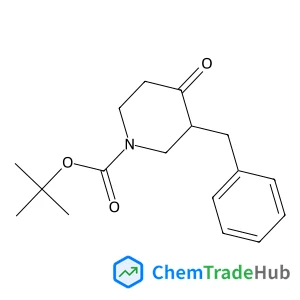
2-Methyl-2-propanyl 3-benzyl-4-oxo-1-piperidinecarboxylate
CAS Number:
193274-82-7
Molecular Formula:
C17H23NO3

Recommended Suppliers







Disclaimer
This page provides academic journal information for reference and research purposes only. We are not affiliated with any journal publishers and do not handle publication submissions. For publication-related inquiries, please contact the respective journal publishers directly.
If you notice any inaccuracies in the information displayed, please contact us at support@chemtradehub.com. We will promptly review and address your concerns.