












An NMR crystallographic approach for the determination of the hydrogen substructure of nitrogen bonded protons
Literature Information
Publication Date
2009-03-09
DOI
10.1039/B819319C
Impact Factor
3.676
Authors
Lena Seyfarth, Jürgen Senker
View Original
Abstract
We present an approach for determining the positions of the hydrogen atoms in NHx groups of crystalline materials. It is based on a combination of quantum-chemical DFT calculations and quantitative solid-state NMR measurements of N–H and H–H distances. The former provide the alignment of the NHx groups within the crystal structure whereas the latter define their internal geometry. For the model system melem (C6N7(NH2)3) the N–H and H–H distances were determined to 1.055(7) Å using a Lee–Goldburg CP experiment and to 1.79(2) Å based on homonuclear double-quantum excitation with a R1462 sequence, respectively. The thus-obtained positions of the hydrogen atoms were verified by analysing 1H–13C solid-state NMR cross-polarization build-up curves. The calculated polarization transfer rates depend on both the hetero- and the homonuclear second moments MHC2 and MHH2. Thus this experiment is highly sensitive to the positions of the hydrogen atoms within a given crystal structure. The agreement between calculated and experimentally observed transfer rate constants turned out to be poor if the calculations were based on single crystal diffraction data only. While the use of quantum chemical relaxed structure models improve the situation significantly, a satisfactory agreement could only be reached with the incorporation of the NMR distances into the optimized structure. Our results prove that the combination of DFT structure optimizations with quantitative solid-state NMR experiments is a powerful and very accurate tool for the determination of the hydrogen substructure for a known structure model of heavy atoms only. Since the localization of the hydrogen atoms is often not possible based on X-ray diffraction data, the presented approach appears to be very promising for future applications.
Related Literature
Furthering the reaction mechanism of cationic vanadium clusters towards oxygen
Haiming Wu
2019-05-03
Paper
DOI: 10.1039/C9CP01192G
Evaluation of the effect of nickel clusters on the formation of incipient soot particles from polycyclic aromatic hydrocarbons via ReaxFF molecular dynamics simulations
Sharmin Shabnam, Qian Mao, Adri C. T. van Duin
2019-04-16
Paper
DOI: 10.1039/C9CP00354A
Red-shifted delayed fluorescence at the expense of photoluminescence quantum efficiency – an intramolecular charge-transfer molecule based on a benzodithiophene-4,8-dione acceptor
Stephanie Montanaro, Alexander J. Gillett, Sascha Feldmann, Emrys W. Evans, Felix Plasser, Richard H. Friend, Iain A. Wright
2019-05-06
Paper
DOI: 10.1039/C9CP02186H
Exchange-dependent spin polarized transport and phase transition in a triple monomer molecule
Yongchen Xiong, Shijun Luo, Haiming Huang, Yanan Ma, Xiong Zhang
2019-04-25
Paper
DOI: 10.1039/C9CP01350D
Insights into how the aqueous environment influences the kinetics and mechanisms of heterogeneously-catalyzed COH* and CH3OH* dehydrogenation reactions on Pt(111)
Cameron J. Bodenschatz, Tianjun Xie, Xiaohong Zhang, Rachel B. Getman
2019-04-18
Paper
DOI: 10.1039/C9CP00824A
Efficient as-cast semi-transparent organic solar cells with efficiency over 9% and a high average visible transmittance of 27.6%
Wenyan Su, Qunping Fan, Xia Guo, Jingnan Wu, Maojie Zhang
2019-04-29
Paper
DOI: 10.1039/C9CP01101C
Non-equilibrium adatom thermal state enables rapid additive nanomanufacturing
Matthew R. Henry, Songkil Kim
2019-04-29
Paper
DOI: 10.1039/C9CP01478K
Ferroelectric field manipulated nonvolatile resistance switching in Al:ZnO/Pb(Mg1/3Nb2/3)0.7Ti0.3O3 heterostructures at room temperature‡
Shasha Liu, Chao Jin, Dongxing Zheng, Xin Pang, Yuchen Wang, Ping Wang, Wanchao Zheng, Haili Bai
2019-05-03
Paper
DOI: 10.1039/C9CP01809C
You might also like
Compound Q&A
What precautions should be taken when handling 2-Chloro-1,2-bis(4-methylphenyl)ethanone (CAS: 71193-32-3)?
When handling 2-Chloro-1,2-bis(4-methylphenyl)ethanone (CAS: 71193-32-3), it is ...
71193-32-32-Chloro-1,2-bis(4-m...
Compound Q&A
What industries use 4-Ethoxy-3-(5-methyl-4-oxo-7-propyl-1,4-dihydroimidazo[5,1-f][1,2,4]triazin-2-yl)benzenesulfonyl chloride (CAS: 224789-26-8)?
4-Ethoxy-3-(5-methyl-4-oxo-7-propyl-1,4-dihydroimidazo[5,1-f][1,2,4]triazin-2-yl...
224789-26-84-Ethoxy-3-(5-methyl...
Compound Q&A
How should Methyl 3-Oxo-4-Androsten-17-Carboxylate (CAS: 2681-55-2) be stored?
Methyl 3-Oxo-4-Androsten-17-Carboxylate (CAS: 2681-55-2) should be stored in a c...
2681-55-2Methyl 3-Oxo-4-Andro...
Compound Q&A
What are the main uses of (R)-3-Amino-4-(3-hexylphenylamino)-4-oxobutylphosphonic acid (CAS: 909725-61-7)?
(R)-3-Amino-4-(3-hexylphenylamino)-4-oxobutylphosphonic acid is primarily used i...
909725-61-7(R)-3-Amino-4-(3-hex...
Compound Q&A
What regulatory guidelines apply to 2-Methyl-2-propanyl 3-amino-3-carbamoyl-1-azetidinecarboxylate (CAS: 1254120-14-3)?
2-Methyl-2-propanyl 3-amino-3-carbamoyl-1-azetidinecarboxylate (CAS: 1254120-14-...
1254120-14-32-Methyl-2-propanyl ...
Compound Q&A
Are there alternatives to (E)-4-(tert-Butoxy)-4-oxobut-2-enoic acid (CAS: 135355-96-3) in synthesis?
There are alternative reagents that can be used in synthesis instead of (E)-4-(t...
135355-96-3(E)-4-(tert-Butoxy)-...
Compound Q&A
What are the physical and chemical properties of [2-(3-Chlorophenyl)-1,3-thiazol-4-yl]methanol (CAS: 121202-20-8)?
[2-(3-Chlorophenyl)-1,3-thiazol-4-yl]methanol (CAS: 121202-20-8) is a crystallin...
121202-20-8[2-(3-Chlorophenyl)-...
Compound Q&A
What is the market or research trend for Methyl (2S)-[(4S)-2,2-dimethyl-1,3-dioxolan-4-yl]{[(4-methylphenyl)sulfonyl]oxy}acetate (CAS: 166249-17-8)?
The market and research trends for Methyl (2S)-[(4S)-2,2-dimethyl-1,3-dioxolan-4...
166249-17-8Methyl (2S)-[(4S)-2,...
Compound Q&A
What is the market or research trend for 1-Bromo-2-isocyanatoethane (CAS: 42865-19-0)?
The market for 1-Bromo-2-isocyanatoethane (CAS: 42865-19-0) is driven by its use...
42865-19-01-Bromo-2-isocyanato...
Compound Q&A
What are the main uses of 4-Nitro-D-phenylalanine hydrochloride (CAS: 147065-06-3)?
4-Nitro-D-phenylalanine hydrochloride (CAS: 147065-06-3) is primarily used in re...
147065-06-34-Nitro-D-phenylalan...
Source Journal
Physical Chemistry Chemical Physics

CiteScore:
5.5
Self-citation Rate:
10.3%
Articles per Year:
3036
Physical Chemistry Chemical Physics (PCCP) is an international journal co-owned by 19 physical chemistry and physics societies from around the world. This journal publishes original, cutting-edge research in physical chemistry, chemical physics and biophysical chemistry. To be suitable for publication in PCCP, articles must include significant innovation and/or insight into physical chemistry; this is the most important criterion that reviewers and Editors will judge against when evaluating submissions. The journal has a broad scope and welcomes contributions spanning experiment, theory, computation and data science. Topical coverage includes spectroscopy, dynamics, kinetics, statistical mechanics, thermodynamics, electrochemistry, catalysis, surface science, quantum mechanics, quantum computing and machine learning. Interdisciplinary research areas such as polymers and soft matter, materials, nanoscience, energy, surfaces/interfaces, and biophysical chemistry are welcomed if they demonstrate significant innovation and/or insight into physical chemistry. Joined experimental/theoretical studies are particularly appreciated when complementary and based on up-to-date approaches.
Recommended Compounds
![(1R)-3-Bromo-1,7,7-trimethylbicyclo[2.2.1]heptan-2-one structure](https://static.chemtradehub.com/structs/102/10293-06-8-dd8a.webp "(1R)-3-Bromo-1,7,7-trimethylbicyclo[2.2.1]heptan-2-one structure")
(1R)-3-Bromo-1,7,7-trimethylbicyclo[2.2.1]heptan-2-one
CAS Number:
10293-06-8
Molecular Formula:
C10H15BrO
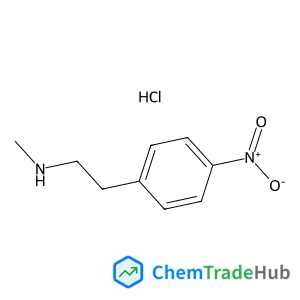
N-Methyl-2-(4-nitrophenyl)ethanamine hydrochloride (1:1)
CAS Number:
166943-39-1
Molecular Formula:
C9H13ClN2O2

2-Chloro-4-nitrophenyl 6-deoxy-alpha-L-galactopyranoside
CAS Number:
157843-41-9
Molecular Formula:
C12H14ClNO7
![4-[2-(Trichlorosilyl)ethyl]benzenesulfonyl chloride structure](https://static.chemtradehub.com/structs/797/79793-00-3-de16.webp "4-[2-(Trichlorosilyl)ethyl]benzenesulfonyl chloride structure")
4-[2-(Trichlorosilyl)ethyl]benzenesulfonyl chloride
CAS Number:
79793-00-3
Molecular Formula:
C8H8Cl4O2SSi
Recommended Suppliers



Disclaimer
This page provides academic journal information for reference and research purposes only. We are not affiliated with any journal publishers and do not handle publication submissions. For publication-related inquiries, please contact the respective journal publishers directly.
If you notice any inaccuracies in the information displayed, please contact us at support@chemtradehub.com. We will promptly review and address your concerns.