












Back cover
Literature Information
Publication Date
DOI
10.1039/B817833J
Impact Factor
6.222
Authors
View Original
Abstract
The first page of this article is displayed as the abstract.
Related Literature
Thioglycosynthases: double mutant glycosidases that serve as scaffolds for thioglycoside synthesis
Jennifer Marles, R. Antony J. Warren
2004-01-05
Communication
DOI: 10.1039/B313155F
Unexpected cleavage of tetrahydrofuran by catalytic reductive lithiation
Stéphane Streiff, Nigel Ribeiro, Laurent Désaubry
2004-01-13
Communication
DOI: 10.1039/B312972A
Nickel-catalyzed highly chemoselective cocyclotrimerization of arynes with allenes: a novel method for 10-methylene-9,10-dihydrophenanthrenes
Jen-Chieh Hsieh, Dinesh Kumar Rayabarapu, Chien-Hong Cheng
2004-02-04
Communication
DOI: 10.1039/B315795D
Inherent helicity in an extended tris-bipyridyl molecular cage
David F. Perkins, Leonard F. Lindoy, George V. Meehan, Peter Turner
2003-11-20
Communication
DOI: 10.1039/B312716H
High quality CdSeS nanocrystals synthesized by facile single injection process and their electroluminescence
Eunjoo Jang, Shinae Jun, Lyongsun Pu
2003-11-07
Communication
DOI: 10.1039/B310853H
Free energy of adsorption of water and calcium on the {10 4} calcite surface
Sebastien Kerisit, Stephen C. Parker
2003-12-02
Communication
DOI: 10.1039/B311928A
Excavations in molecular crystals
Erwan Le Fur, Eric Demers, Thierry Maris, James D. Wuest
2003-11-06
Communication
DOI: 10.1039/B308355A
Novel cofacial oxidative coupling reaction of phosphinine in the presence of Cu(i) and ClO4−
Takahiko Kojima, Yoshitaka Ishioka, Yoshihisa Matsuda
2004-01-16
Communication
DOI: 10.1039/B308892H
Disc-shaped triphenylenes in a smectic organisation
Paul H. J. Kouwer, Jahan Pourzand, Georg H. Mehl
2003-11-21
Communication
DOI: 10.1039/B311919J
Continuous synthesis of CdSe–ZnS composite nanoparticles in a microfluidic reactor
Hongzhi Wang, Xianying Li, Masato Uehara, Yoshiko Yamaguchi, Hiroyuki Nakamura, Masaya Miyazaki, Hazime Shimizu, Hideaki Maeda
2003-12-02
Communication
DOI: 10.1039/B310644F
You might also like
Compound Q&A
What are the main uses of 1H-Indazole-6-carbonitrile (CAS: 141290-59-7)?
1H-Indazole-6-carbonitrile finds applications in pharmaceuticals, where it serve...
141290-59-71H-Indazole-6-carbon...
Compound Q&A
How should waste containing Dioctyl (2E)-2-butenedioate (CAS: 2997-85-5) be handled?
Waste containing Dioctyl (2E)-2-butenedioate (CAS: 2997-85-5) should be collecte...
2997-85-5Dioctyl (2E)-2-buten...
Compound Q&A
What industries use Sodium [(1,2-benzoxazol-3-ylmethyl)sulfonyl]azanide (CAS: 68291-98-5)?
Sodium [(1,2-benzoxazol-3-ylmethyl)sulfonyl]azanide is primarily used in pharmac...
68291-98-5Sodium [(1,2-benzoxa...
Compound Q&A
Are there alternatives to Dimethyl 4-(4,4,5,5-tetramethyl-1,3,2-dioxaborolan-2-yl)-2,6-pyridinedicarboxylate (CAS: 741709-66-0) in synthesis?
Dimethyl 4-(4,4,5,5-tetramethyl-1,3,2-dioxaborolan-2-yl)-2,6-pyridinedicarboxyla...
741709-66-0Dimethyl 4-(4,4,5,5-...
Compound Q&A
How should waste containing 2-Fluoro-6-hydrazinopyridine (CAS: 80714-39-2) be handled?
Waste containing 2-Fluoro-6-hydrazinopyridine (CAS: 80714-39-2) should be manage...
80714-39-22-Fluoro-6-hydrazino...
Compound Q&A
What is 6-Formyl-2-pyridinecarboxylic acid (CAS: 499214-11-8)?
6-Formyl-2-pyridinecarboxylic acid is an organic compound with the molecular for...
499214-11-86-Formyl-2-pyridinec...
Compound Q&A
What is the market or research trend for 3-(3,4-dimethoxyphenyl)-2,5-dimethyl-N-(2-morpholin-4-ylethyl)pyrazolo[1,5-a]pyrimidin-7-amine (CAS: 900874-91-1)?
Research trends for this compound indicate a focus on its potential applications...
900874-91-13-(3,4-dimethoxyphen...
Compound Q&A
How is 9H-Tribenzo[b,d,f]azepine (CAS: 29875-73-8) typically synthesized?
9H-Tribenzo[b,d,f]azepine is typically synthesized via a multi-step process invo...
29875-73-89H-Tribenzo[b,d,f]az...
Compound Q&A
How is 1-Cyclopropyl-7-ethoxy-6-fluoro-8-methoxy-4-oxo-1,4-dihydro-3-quinolinecarboxylic acid (CAS: 1797982-51-4) typically synthesized?
1-Cyclopropyl-7-ethoxy-6-fluoro-8-methoxy-4-oxo-1,4-dihydro-3-quinolinecarboxyli...
1797982-51-41-Cyclopropyl-7-etho...
Compound Q&A
How should waste containing Methyl 3-oxo-1,2,3,4-tetrahydro-6-quinoxalinecarboxylate (CAS: 671820-52-3) be handled?
Waste containing Methyl 3-oxo-1,2,3,4-tetrahydro-6-quinoxalinecarboxylate (CAS: ...
671820-52-3Methyl 3-oxo-1,2,3,4...
Source Journal
Chemical Communications

CiteScore:
8.6
Self-citation Rate:
4.7%
Articles per Year:
2458
ChemComm publishes urgent research which is of outstanding significance and interest to experts in the field, while also appealing to the journal’s broad chemistry readership. Our communication format is ideally suited to short, urgent studies that are of such importance that they require accelerated publication. Our scope covers all topics in chemistry, and research at the interface of chemistry and other disciplines (such as materials science, nanoscience, physics, engineering and biology) where there is a significant novelty in the chemistry aspects. Major topic areas covered include: Analytical Chemistry Catalysis Chemical Biology and medicinal chemistry Computational Chemistry and Machine Learning Energy and sustainable chemistry Environmental Chemistry Green Chemistry Inorganic Chemistry Materials Chemistry Nanoscience Organic Chemistry Physical Chemistry Polymer Chemistry Supramolecular Chemistry
Recommended Compounds

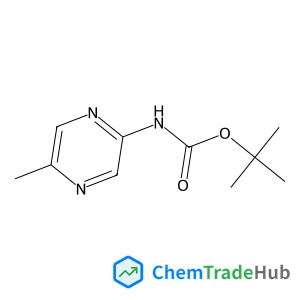

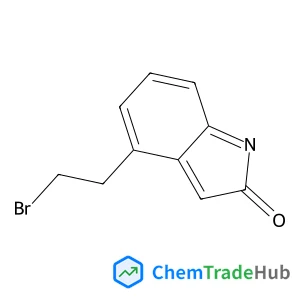
Recommended Suppliers



Disclaimer
This page provides academic journal information for reference and research purposes only. We are not affiliated with any journal publishers and do not handle publication submissions. For publication-related inquiries, please contact the respective journal publishers directly.
If you notice any inaccuracies in the information displayed, please contact us at support@chemtradehub.com. We will promptly review and address your concerns.