













“H”-shape second order NLO polymers: synthesis and characterization
Literature Information
Publication Date
2009-01-07
DOI
10.1039/B816246H
Impact Factor
3.676
Authors
Zhong’an Li, Pan Hu, Gui Yu, Wei Zhang, Zuoquan Jiang, Yunqi Liu, Cheng Ye, Jingui Qin, Zhen Li
View Original
Abstract
In this work, two “H”-shape and one “AB”-type second order nonlinear optical (NLO) polymers were prepared for the first time. The linkage positions of chromophores in the “H”-shape polymers were shoulder-to-shoulder, in which the chromophore moieties were part of the polymeric backbone. The subtle structure could be easily modified by the introduction of different isolation groups, to adjust the property of the resultant polymers. All the polymers exhibited good film-forming ability and thermal stability. The second harmonic generation (SHG) experiments demonstrated that the two “H”-shape polymers (P1 and P2) exhibited large SHG coefficients of d33 values (up to 90 pm V−1), and P2 even demonstrated relatively good long-term temporal stability.
Related Literature
Glycopeptides derived from glucosaminic acid
Ester Abtew, Abraham J. Domb, Arijit Basu
2016-06-07
Communication
DOI: 10.1039/C6PY00858E
Unanticipated bright blue fluorescence produced from novel hyperbranched polysiloxanes carrying unconjugated carbon–carbon double bonds and hydroxyl groups
2016-05-03
Paper
DOI: 10.1039/C6PY00654J
One-pot synthesis and postpolymerization functionalization of cyclic carbonate/epoxide-difunctional polycarbonates prepared by regioselective diepoxide/CO2 copolymerization
Bing Han, Li Zhang, Hongye Zhang, Huining Ding, Binyuan Liu, Xianhong Wang
2016-05-30
Communication
DOI: 10.1039/C6PY00563B
Indium-catalyzed polycyclotrimerization of diynes: a facile route to prepare regioregular hyperbranched polyarylenes
Zhe Wang, Yang Shi, Jian Wang, Lingzhi Li, Haiqiang Wu, Bicheng Yao, Jing Zhi Sun
2014-07-15
Communication
DOI: 10.1039/C4PY00859F
Nanopatterned L10-FePt nanoparticles from single-source metallopolymer precursors for potential application in ferromagnetic bit-patterned media magnetic recording
Zhengong Meng, Guijun Li, Sheung-Mei Ng, Hon-Fai Wong, Sze-Chun Yiu, Chi-Wah Leung
2016-06-01
Paper
DOI: 10.1039/C6PY00714G
Diazo transfer at polydopamine – a new way to functionalization
L. Magerusan, R. Turcu
2014-07-30
Paper
DOI: 10.1039/C4PY00670D
Thermal and living anionic polymerization of 4-vinylbenzyl piperidine
Alison R. Schultz, Chainika Jangu, Timothy E. Long
2014-07-02
Paper
DOI: 10.1039/C4PY00763H
Polycarbonate-based biodegradable copolymers for stimuli responsive targeted drug delivery
Mutyala Naidu Ganivada, Pawan Kumar, Pintu Kanjilal, Himadri Dinda, Jayasri Das Sarma, Raja Shunmugam
2016-05-25
Paper
DOI: 10.1039/C6PY00615A
Diffusion of single molecular and macromolecular probes during the free radical bulk polymerization of MMA – towards a better understanding of the Trommsdorff effect on a molecular level
Jan Martin Nölle, Sebastian Primpke, Klaus Müllen, Philipp Vana
2016-05-24
Paper
DOI: 10.1039/C6PY00590J
Theoretical simulations of nanostructures self-assembled from copolymer systems
Zhanwen Xu, Jiaping Lin, Qian Zhang, Liquan Wang, Xiaohui Tian
2016-05-05
Review Article
DOI: 10.1039/C6PY00535G
You might also like
Compound Q&A
Are there alternatives to 1-(4-Chlorophenyl)-N-hydroxymethanimine (CAS: 3848-36-0) in synthesis?
When considering alternatives to 1-(4-Chlorophenyl)-N-hydroxymethanimine (CAS: 3...
3848-36-01-(4-Chlorophenyl)-N...
Compound Q&A
How should (1R,9S,10S,12S,14E,16S,19R,20R,21S,22R)-3,9,21-Trihydroxy-5,10,12,14,16,20,22-heptamethyl-23,24-dioxatetracyclo[17.3.1.1~6,9~.0~2,7~]tetracosa-2,5,7,14-tetraen-4-one (CAS: 183202-73-5) be stored?
This compound should be stored in a cool, dry place away from direct sunlight. I...
183202-73-5(1R,9S,10S,12S,14E,1...
Compound Q&A
How is 3-(4-Bromophenyl)-5-(2-fluorophenyl)-1,2,4-oxadiazole (CAS: 419553-16-5) typically synthesized?
3-(4-Bromophenyl)-5-(2-fluorophenyl)-1,2,4-oxadiazole is synthesized through a m...
419553-16-53-(4-Bromophenyl)-5-...
Compound Q&A
How is 5-Chloro-2-(4-chlorophenyl)-4-methyl-6-[3-(1-piperidinyl)propoxy]pyrimidine (CAS: 1639220-19-1) typically synthesized?
5-Chloro-2-(4-chlorophenyl)-4-methyl-6-[3-(1-piperidinyl)propoxy]pyrimidine (CAS...
1639220-19-15-Chloro-2-(4-chloro...
Compound Q&A
What industries use 2-Chloro-4-(difluoromethoxy)pyridine (CAS: 1206978-15-5)?
2-Chloro-4-(difluoromethoxy)pyridine is used in the pharmaceutical industry for ...
1206978-15-52-Chloro-4-(difluoro...
Compound Q&A
What regulatory guidelines apply to 3-Chloro-6-methylpyridazine (CAS: 1121-79-5)?
3-Chloro-6-methylpyridazine (CAS: 1121-79-5) is classified under the Globally Ha...
1121-79-53-Chloro-6-methylpyr...
Compound Q&A
Are there alternatives to Methyl 4,5-dimethyl-2-nitrobenzoate in synthesis?
Several alternatives can be used in the synthesis of Methyl 4,5-dimethyl-2-nitro...
90922-74-0Methyl 4,5-dimethyl-...
Compound Q&A
Are there alternatives to (2E,2'E)-3,3'-(1,4-Phenylene)bisacrylaldehyde in synthesis?
Alternatives to (2E,2'E)-3,3'-(1,4-Phenylene)bisacrylaldehyde include other acry...
63405-68-5(2E,2'E)-3,3'-(1,4-P...
Compound Q&A
What is 3-Amino-5-chloropyridin-2-ol hydrochloride (CAS: 1261906-29-9)?
3-Amino-5-chloropyridin-2-ol hydrochloride is an organic compound with the CAS n...
1261906-29-93-Amino-5-chloropyri...
Compound Q&A
What precautions should be taken when handling 6,7-Difluoro-2,3-dihydro-4H-chromen-4-one (CAS: 1092349-93-3)?
When handling 6,7-Difluoro-2,3-dihydro-4H-chromen-4-one, it is essential to wear...
1092349-93-36,7-Difluoro-2,3-dih...
Source Journal
Physical Chemistry Chemical Physics

CiteScore:
5.5
Self-citation Rate:
10.3%
Articles per Year:
3036
Physical Chemistry Chemical Physics (PCCP) is an international journal co-owned by 19 physical chemistry and physics societies from around the world. This journal publishes original, cutting-edge research in physical chemistry, chemical physics and biophysical chemistry. To be suitable for publication in PCCP, articles must include significant innovation and/or insight into physical chemistry; this is the most important criterion that reviewers and Editors will judge against when evaluating submissions. The journal has a broad scope and welcomes contributions spanning experiment, theory, computation and data science. Topical coverage includes spectroscopy, dynamics, kinetics, statistical mechanics, thermodynamics, electrochemistry, catalysis, surface science, quantum mechanics, quantum computing and machine learning. Interdisciplinary research areas such as polymers and soft matter, materials, nanoscience, energy, surfaces/interfaces, and biophysical chemistry are welcomed if they demonstrate significant innovation and/or insight into physical chemistry. Joined experimental/theoretical studies are particularly appreciated when complementary and based on up-to-date approaches.
Recommended Compounds

![2-{[(1R,2S)-2-Aminocyclohexyl]amino}-4-{[3-(2H-1,2,3-triazol-2-yl)phenyl]amino}-5-pyrimidinecarboxamide structure](https://static.chemtradehub.com/structs/137/1370261-96-3-40df.webp "2-{[(1R,2S)-2-Aminocyclohexyl]amino}-4-{[3-(2H-1,2,3-triazol-2-yl)phenyl]amino}-5-pyrimidinecarboxamide structure")
2-{[(1R,2S)-2-Aminocyclohexyl]amino}-4-{[3-(2H-1,2,3-triazol-2-yl)phenyl]amino}-5-pyrimidinecarboxamide
CAS Number:
1370261-96-3
Molecular Formula:
C19H23N9O
![6-Bromo-2,3-dihydro-1H-pyrido[2,3-b][1,4]oxazine structure](https://static.chemtradehub.com/structs/120/1203499-17-5-b4d1.webp "6-Bromo-2,3-dihydro-1H-pyrido[2,3-b][1,4]oxazine structure")
6-Bromo-2,3-dihydro-1H-pyrido[2,3-b][1,4]oxazine
CAS Number:
1203499-17-5
Molecular Formula:
C7H7BrN2O
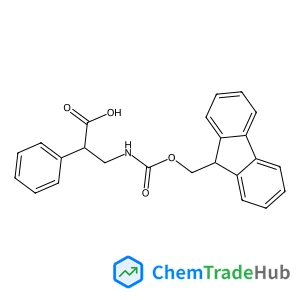
(S)-3-((((9H-Fluoren-9-yl)methoxy)carbonyl)amino)-2-phenylpropanoic acid
CAS Number:
1217663-60-9
Molecular Formula:
C24H21NO4
Recommended Suppliers




Disclaimer
This page provides academic journal information for reference and research purposes only. We are not affiliated with any journal publishers and do not handle publication submissions. For publication-related inquiries, please contact the respective journal publishers directly.
If you notice any inaccuracies in the information displayed, please contact us at support@chemtradehub.com. We will promptly review and address your concerns.