












Electronic and electrochemical properties of Li-doped carbon nanotube–zeolite complex
Literature Information
Publication Date
2008-10-29
DOI
10.1039/B813716A
Impact Factor
3.676
Authors
Y. W. Wen, H. J. Liu, L. Miao, L. Pan, J. Shi
View Original
Abstract
The electronic and electrochemical properties of Li-doped carbon nanotube–zeolite complex are studied by first-principles calculations. There are four possible sites for Li to be doped and the reactions are all exothermic. The corresponding energy band structures follow a rigid band picture and there are charge transfers from Li to the nanotube and/or zeolite. The Li capacity of the complex can be reached to 386 mAh g−1 with only a slight increase in the cell volume, and the complex may be of good cyclic stability during the charge and discharge process. Moreover, a higher voltage of about 4 V can be obtained if the complex is used in an Li-ion battery.
Related Literature
Theoretical simulations of nanostructures self-assembled from copolymer systems
Zhanwen Xu, Jiaping Lin, Qian Zhang, Liquan Wang, Xiaohui Tian
2016-05-05
Review Article
DOI: 10.1039/C6PY00535G
Z-type and R-type macro-RAFT agents in RAFT dispersion polymerization – another mechanism perspective on PISA
Mingguang Yu, Jianbo Tan
2016-05-02
Paper
DOI: 10.1039/C6PY00605A
Polycarbonate-based biodegradable copolymers for stimuli responsive targeted drug delivery
Mutyala Naidu Ganivada, Pawan Kumar, Pintu Kanjilal, Himadri Dinda, Jayasri Das Sarma, Raja Shunmugam
2016-05-25
Paper
DOI: 10.1039/C6PY00615A
Limonene induced chiroptical generation and inversion during aggregation of achiral polyfluorene analogs: structure-dependence and mechanism
Laibing Wang, Nozomu Suzuki, Jiangfei Liu, Takashi Matsuda, Nor Azura Abdul Rahim, Wei Zhang, Michiya Fujiki, Zhengbiao Zhang, Nianchen Zhou, Xiulin Zhu
2014-07-31
Paper
DOI: 10.1039/C4PY00865K
Probing the dendritic architecture through AIE: challenges and successes
Mathieu Arseneault, Nelson L. C. Leung, Lai Tsz Fung, Rongrong Hu, Jean-François Morin
2014-07-04
Paper
DOI: 10.1039/C4PY00817K
Synthesis and multi-responsiveness of poly(N-vinylcaprolactam-co-acrylic acid) core–shell microgels via miniemulsion polymerization
Shen Tan, Zhengquan Lu, Jing Zhao, Jianan Zhang, Mingyuan Wu, Qingyun Wu, Jianjun Yang
2016-05-24
Paper
DOI: 10.1039/C6PY00544F
POSS containing organometallic polymers: synthesis, characterization and solid-state pyrolysis behavior
Zhijun Ruan, Wenhui Rong, Xuejun Zhan, Qianqian Li, Zhen Li
2014-06-23
Paper
DOI: 10.1039/C4PY00555D
You might also like
Compound Q&A
Are there alternatives to 1-(4-Chlorophenyl)-N-hydroxymethanimine (CAS: 3848-36-0) in synthesis?
When considering alternatives to 1-(4-Chlorophenyl)-N-hydroxymethanimine (CAS: 3...
3848-36-01-(4-Chlorophenyl)-N...
Compound Q&A
How should (1R,9S,10S,12S,14E,16S,19R,20R,21S,22R)-3,9,21-Trihydroxy-5,10,12,14,16,20,22-heptamethyl-23,24-dioxatetracyclo[17.3.1.1~6,9~.0~2,7~]tetracosa-2,5,7,14-tetraen-4-one (CAS: 183202-73-5) be stored?
This compound should be stored in a cool, dry place away from direct sunlight. I...
183202-73-5(1R,9S,10S,12S,14E,1...
Compound Q&A
How is 3-(4-Bromophenyl)-5-(2-fluorophenyl)-1,2,4-oxadiazole (CAS: 419553-16-5) typically synthesized?
3-(4-Bromophenyl)-5-(2-fluorophenyl)-1,2,4-oxadiazole is synthesized through a m...
419553-16-53-(4-Bromophenyl)-5-...
Compound Q&A
How is 5-Chloro-2-(4-chlorophenyl)-4-methyl-6-[3-(1-piperidinyl)propoxy]pyrimidine (CAS: 1639220-19-1) typically synthesized?
5-Chloro-2-(4-chlorophenyl)-4-methyl-6-[3-(1-piperidinyl)propoxy]pyrimidine (CAS...
1639220-19-15-Chloro-2-(4-chloro...
Compound Q&A
What industries use 2-Chloro-4-(difluoromethoxy)pyridine (CAS: 1206978-15-5)?
2-Chloro-4-(difluoromethoxy)pyridine is used in the pharmaceutical industry for ...
1206978-15-52-Chloro-4-(difluoro...
Compound Q&A
What regulatory guidelines apply to 3-Chloro-6-methylpyridazine (CAS: 1121-79-5)?
3-Chloro-6-methylpyridazine (CAS: 1121-79-5) is classified under the Globally Ha...
1121-79-53-Chloro-6-methylpyr...
Compound Q&A
Are there alternatives to Methyl 4,5-dimethyl-2-nitrobenzoate in synthesis?
Several alternatives can be used in the synthesis of Methyl 4,5-dimethyl-2-nitro...
90922-74-0Methyl 4,5-dimethyl-...
Compound Q&A
Are there alternatives to (2E,2'E)-3,3'-(1,4-Phenylene)bisacrylaldehyde in synthesis?
Alternatives to (2E,2'E)-3,3'-(1,4-Phenylene)bisacrylaldehyde include other acry...
63405-68-5(2E,2'E)-3,3'-(1,4-P...
Compound Q&A
What is 3-Amino-5-chloropyridin-2-ol hydrochloride (CAS: 1261906-29-9)?
3-Amino-5-chloropyridin-2-ol hydrochloride is an organic compound with the CAS n...
1261906-29-93-Amino-5-chloropyri...
Compound Q&A
What precautions should be taken when handling 6,7-Difluoro-2,3-dihydro-4H-chromen-4-one (CAS: 1092349-93-3)?
When handling 6,7-Difluoro-2,3-dihydro-4H-chromen-4-one, it is essential to wear...
1092349-93-36,7-Difluoro-2,3-dih...
Source Journal
Physical Chemistry Chemical Physics

CiteScore:
5.5
Self-citation Rate:
10.3%
Articles per Year:
3036
Physical Chemistry Chemical Physics (PCCP) is an international journal co-owned by 19 physical chemistry and physics societies from around the world. This journal publishes original, cutting-edge research in physical chemistry, chemical physics and biophysical chemistry. To be suitable for publication in PCCP, articles must include significant innovation and/or insight into physical chemistry; this is the most important criterion that reviewers and Editors will judge against when evaluating submissions. The journal has a broad scope and welcomes contributions spanning experiment, theory, computation and data science. Topical coverage includes spectroscopy, dynamics, kinetics, statistical mechanics, thermodynamics, electrochemistry, catalysis, surface science, quantum mechanics, quantum computing and machine learning. Interdisciplinary research areas such as polymers and soft matter, materials, nanoscience, energy, surfaces/interfaces, and biophysical chemistry are welcomed if they demonstrate significant innovation and/or insight into physical chemistry. Joined experimental/theoretical studies are particularly appreciated when complementary and based on up-to-date approaches.
Recommended Compounds
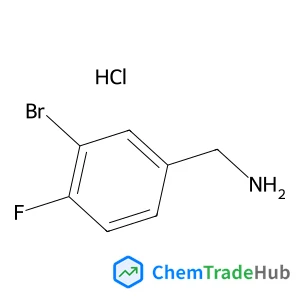
1-(3-Bromo-4-fluorophenyl)methanamine hydrochloride (1:1)
CAS Number:
202865-68-7
Molecular Formula:
C7H8BrClFN
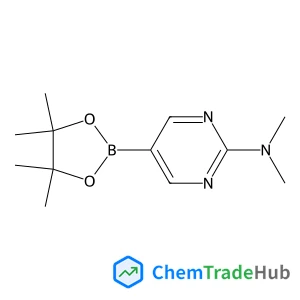
N,N-Dimethyl-5-(4,4,5,5-tetramethyl-1,3,2-dioxaborolan-2-yl)-2-pyrimidinamine
CAS Number:
1032759-30-0
Molecular Formula:
C12H20BN3O2
Recommended Suppliers








Disclaimer
This page provides academic journal information for reference and research purposes only. We are not affiliated with any journal publishers and do not handle publication submissions. For publication-related inquiries, please contact the respective journal publishers directly.
If you notice any inaccuracies in the information displayed, please contact us at support@chemtradehub.com. We will promptly review and address your concerns.