












![5-Bromo-3-isopropyl-1H-pyrrolo[2,3-b]pyridine structure](https://static.chemtradehub.com/structs/125/1256819-54-1-8620.webp "5-Bromo-3-isopropyl-1H-pyrrolo[2,3-b]pyridine structure")
Surgery of fullerenes
Literature Information
Publication Date
2008-09-11
DOI
10.1039/B811738A
Impact Factor
6.222
Authors
Michihisa Murata, Koichi Komatsu
View Original
Abstract
Recent attempts at the synthesis of endohedral fullerenes by organic reactions, so-called “molecular surgery” methods, are surveyed. The creation of an opening on the surface of fullerene cages allowed insertion of He, H2, H2O, or CO within the cages. An effective route to “suture” an opening was established to realize a new endohedral fullerene, H2@C60. Further development of this operation as well as the properties and reactions of H2@C60 are summarized. Also the application of the encapsulated H2 molecule as an NMR probe for the study of aromaticity of ionic fullerenes is described.
Recommended Journals
Related Literature
Critical roles of key domains in complete adsorption of Aβ peptide on single-walled carbon nanotubes: insights with point mutations and MD simulations
Asis K. Jana, Jaya C. Jose, Neelanjana Sengupta
2012-11-12
Paper
DOI: 10.1039/C2CP42933K
Do anions influence the polarity of protic ionic liquids?
Shashi Kant Shukla, Nageshwar D. Khupse, Anil Kumar
2011-12-23
Paper
DOI: 10.1039/C2CP23256A
HERFD XAS/ATR-FTIR batch reactor cell
Martin Makosch, Christiane Kartusch, Jacinto Sá, Renata Bessa Duarte, Kristina Kvashnina, Pieter Glatzel, Daniel L. A. Fernandes, Maarten Nachtegaal, Jakub Szlachetko, Bobby Neuhold, Konrad Hungerbühler
2011-09-12
Paper
DOI: 10.1039/C1CP21933B
A theoretical study of the two binding modes between lysozyme and tri-NAG with an explicit solvent model based on the fragment molecular orbital method
2013-01-21
Paper
DOI: 10.1039/C3CP42761G
Atmospheric oxidation mechanism of naphthalene initiated by OH radical. A theoretical study
Zhijie Zhang, Ling Lin, Liming Wang
2011-12-07
Paper
DOI: 10.1039/C2CP23271E
A large sample volume magic angle spinning nuclear magnetic resonance probe for in situ investigations with constant flow of reactants
Jian Zhi Hu, Jesse A. Sears, Hardeep S. Mehta, Joseph J. Ford, Ja Hun Kwak, Kake Zhu, Yong Wang, Jun Liu, David W. Hoyt, Charles H. F. Peden
2011-10-24
Paper
DOI: 10.1039/C1CP22692D
Specific ion effects on the electrochemical properties of cytochromec
Andrea Salis, Edmond Magner
2011-12-22
Paper
DOI: 10.1039/C2CP23401G
Sodium–oxygen batteries with alkyl-carbonate and ether based electrolytes
Jinsoo Kim, Hee-Dae Lim, Hyeokjo Gwon, Kisuk Kang
2013-01-08
Paper
DOI: 10.1039/C3CP43225D
You might also like
Compound Q&A
How should 2-Methylbenzene-1,4-diamine dihydrochloride (CAS: 615-45-2) be stored?
2-Methylbenzene-1,4-diamine dihydrochloride (CAS: 615-45-2) should be stored in ...
615-45-22-Methylbenzene-1,4-...
Compound Q&A
Is (1S,4S)-2,5-Diazabicyclo[2.2.1]heptane dihydrobromide (CAS: 132747-20-7) safe?
(1S,4S)-2,5-Diazabicyclo[2.2.1]heptane dihydrobromide is generally considered sa...
132747-20-7(1S,4S)-2,5-Diazabic...
Compound Q&A
What industries use (6-Chloropyridazin-3-YL)methanamine (CAS: 871826-15-2)?
(6-Chloropyridazin-3-YL)methanamine finds applications in the pharmaceutical ind...
871826-15-2(6-Chloropyridazin-3...
Compound Q&A
What are the main uses of 2-Fluoro-3-methylphenol (CAS: 77772-72-6)?
2-Fluoro-3-methylphenol is primarily used in the synthesis of pharmaceuticals, p...
77772-72-62-Fluoro-3-methylphe...
Compound Q&A
What precautions should be taken when handling 3-Methoxy-4-nitrobenzonitrile (CAS: 177476-75-4)?
When handling 3-Methoxy-4-nitrobenzonitrile, it is important to wear appropriate...
177476-75-43-Methoxy-4-nitroben...
Compound Q&A
What precautions should be taken when handling 1,3-Oxazolo[4,5-b]pyridine-2(3H)-thione (CAS: 211949-57-4)?
When handling 1,3-Oxazolo[4,5-b]pyridine-2(3H)-thione (CAS: 211949-57-4), it is ...
211949-57-4[1,3]Oxazolo[4,5-b]p...
Compound Q&A
What regulatory guidelines apply to 4-Ethynylbenzamide (CAS: 90347-86-7)?
4-Ethynylbenzamide (CAS: 90347-86-7) falls under various regulatory guidelines i...
90347-86-74-Ethynylbenzamide
Compound Q&A
What are the main uses of 3-(2-Ethylphenyl)-2-thioxo-4-imidazolidinone (CAS: 186822-57-1)?
3-(2-Ethylphenyl)-2-thioxo-4-imidazolidinone is primarily used as an intermediat...
186822-57-13-(2-Ethylphenyl)-2-...
Compound Q&A
What is (2-Fluoro-6-methoxyphenyl)acetic acid (CAS: 500912-19-6)?
(2-Fluoro-6-methoxyphenyl)acetic acid, also known as 4-fluoro-3-methoxybenzoic a...
500912-19-6(2-Fluoro-6-methoxyp...
Compound Q&A
What is the market or research trend for 2-[4-(Hydroxymethyl)phenoxy]ethanol (CAS: 102196-18-9)?
Market trends for 2-[4-(Hydroxymethyl)phenoxy]ethanol (CAS: 102196-18-9) indicat...
102196-18-92-[4-(Hydroxymethyl)...
Source Journal
Chemical Communications

CiteScore:
8.6
Self-citation Rate:
4.7%
Articles per Year:
2458
ChemComm publishes urgent research which is of outstanding significance and interest to experts in the field, while also appealing to the journal’s broad chemistry readership. Our communication format is ideally suited to short, urgent studies that are of such importance that they require accelerated publication. Our scope covers all topics in chemistry, and research at the interface of chemistry and other disciplines (such as materials science, nanoscience, physics, engineering and biology) where there is a significant novelty in the chemistry aspects. Major topic areas covered include: Analytical Chemistry Catalysis Chemical Biology and medicinal chemistry Computational Chemistry and Machine Learning Energy and sustainable chemistry Environmental Chemistry Green Chemistry Inorganic Chemistry Materials Chemistry Nanoscience Organic Chemistry Physical Chemistry Polymer Chemistry Supramolecular Chemistry
Recommended Compounds
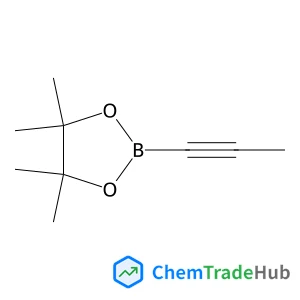
4,4,5,5-Tetramethyl-2-(1-propyn-1-YL)-1,3,2-dioxaborolane
CAS Number:
347389-75-7
Molecular Formula:
C9H15BO2
Recommended Suppliers





Disclaimer
This page provides academic journal information for reference and research purposes only. We are not affiliated with any journal publishers and do not handle publication submissions. For publication-related inquiries, please contact the respective journal publishers directly.
If you notice any inaccuracies in the information displayed, please contact us at support@chemtradehub.com. We will promptly review and address your concerns.