


Spectroscopic signatures for planar equilibrium geometries in methyl-substituted oligothiophenes
Literature Information
Publication Date
2008-12-12
DOI
10.1039/B810915J
Impact Factor
3.676
Authors
Giorgio Macchi, Massimo Zambianchi, Riccardo Tubino, Jérôme Cornil, Giovanna Barbarella, Francesco Meinardi
View Original
Abstract
In recent studies it was demonstrated that temperature-dependent optical spectroscopy is a valuable tool for revealing the differences in the geometries of flexible molecules like oligothiophenes (OTs) in the ground (S0) and first excited (S1) electronic states, by examining the symmetry relations between the absorption and emission spectra: while at low temperature the spectra show mirror symmetry, pointing to planar geometries in S0 and S1, the symmetry relation breaks down at ambient temperature due to thermal population of torsional modes. In the present joint spectroscopic and theoretical study, we demonstrate that this behavior is also observed for di- and tetramethyl-substituted OTs, suggesting an essentially planar equilibrium geometry not only in S1 but also in S0, despite the increasing sterical hindrance which is imposed by the substituents. This rather surprising result is rationalized by the softness of the carbon–sulfur bond, which is able to adapt to the geometrical constraints.
Recommended Journals

Kinetics and Catalysis

Science

Helvetica Chimica Acta

Pure and Applied Chemistry

Israel Journal of Chemistry

Proceedings of the National Academy of Sciences of the United States of America

Pharmacological Reviews

Journal of Medicinal Chemistry

Molecular Pharmacology

Organic Preparations and Procedures International
Related Literature
Influence of the spacer and molecular weight on the phase behavior of side-chain liquid crystalline polymers containing triphenylene discotic mesogen units as side groups
Jianfeng Ban, Sheng Chen, Cheng Li, Xingzhu Wang, Hailiang Zhang
2014-07-21
Paper
DOI: 10.1039/C4PY00788C
The effect of different chalcogenophenes in isoindigo-based conjugated copolymers on photovoltaic properties
Eui Hyuk Jung, Seunghwan Bae, Tae Woong Yoo, Won Ho Jo
2014-07-29
Paper
DOI: 10.1039/C4PY00791C
Dicyanovinyl-functionalized fluorescent hyperbranched conjugated polymer nanoparticles for sensitive naked-eye cyanide ion detection
Xiaofu Wu, Hui Tong, Lixiang Wang
2014-06-13
Paper
DOI: 10.1039/C4PY00592A
The unusual volume phase transition behavior of the poly(N-isopropylacrylamide)–poly(2-hydroxyethyl methacrylate) interpenetrating polymer network microgel: different roles in different stages
Bo Zhang, Hui Tang, Peiyi Wu
2014-06-19
Paper
DOI: 10.1039/C4PY00653D
Synthesis, optoelectronic properties and photovoltaic performances of wide band-gap copolymers based on dibenzosilole and quinoxaline units, rivals to P3HT
P. Chávez, P. Lévêque, N. Leclerc
2016-05-13
Paper
DOI: 10.1039/C6PY00370B
A coacervate-forming biodegradable polyester with elevated LCST based on bis-(2-methoxyethyl)amine
J. P. Swanson, M. R. Martinez, M. A. Cruz, S. G. Mankoci, P. J. Costanzo, A. Joy
2016-06-01
Paper
DOI: 10.1039/C6PY00814C
You might also like
Compound Q&A
Are there alternatives to 1-(4-Chlorophenyl)-N-hydroxymethanimine (CAS: 3848-36-0) in synthesis?
When considering alternatives to 1-(4-Chlorophenyl)-N-hydroxymethanimine (CAS: 3...
3848-36-01-(4-Chlorophenyl)-N...
Compound Q&A
How should (1R,9S,10S,12S,14E,16S,19R,20R,21S,22R)-3,9,21-Trihydroxy-5,10,12,14,16,20,22-heptamethyl-23,24-dioxatetracyclo[17.3.1.1~6,9~.0~2,7~]tetracosa-2,5,7,14-tetraen-4-one (CAS: 183202-73-5) be stored?
This compound should be stored in a cool, dry place away from direct sunlight. I...
183202-73-5(1R,9S,10S,12S,14E,1...
Compound Q&A
How is 3-(4-Bromophenyl)-5-(2-fluorophenyl)-1,2,4-oxadiazole (CAS: 419553-16-5) typically synthesized?
3-(4-Bromophenyl)-5-(2-fluorophenyl)-1,2,4-oxadiazole is synthesized through a m...
419553-16-53-(4-Bromophenyl)-5-...
Compound Q&A
How is 5-Chloro-2-(4-chlorophenyl)-4-methyl-6-[3-(1-piperidinyl)propoxy]pyrimidine (CAS: 1639220-19-1) typically synthesized?
5-Chloro-2-(4-chlorophenyl)-4-methyl-6-[3-(1-piperidinyl)propoxy]pyrimidine (CAS...
1639220-19-15-Chloro-2-(4-chloro...
Compound Q&A
What industries use 2-Chloro-4-(difluoromethoxy)pyridine (CAS: 1206978-15-5)?
2-Chloro-4-(difluoromethoxy)pyridine is used in the pharmaceutical industry for ...
1206978-15-52-Chloro-4-(difluoro...
Compound Q&A
What regulatory guidelines apply to 3-Chloro-6-methylpyridazine (CAS: 1121-79-5)?
3-Chloro-6-methylpyridazine (CAS: 1121-79-5) is classified under the Globally Ha...
1121-79-53-Chloro-6-methylpyr...
Compound Q&A
Are there alternatives to Methyl 4,5-dimethyl-2-nitrobenzoate in synthesis?
Several alternatives can be used in the synthesis of Methyl 4,5-dimethyl-2-nitro...
90922-74-0Methyl 4,5-dimethyl-...
Compound Q&A
Are there alternatives to (2E,2'E)-3,3'-(1,4-Phenylene)bisacrylaldehyde in synthesis?
Alternatives to (2E,2'E)-3,3'-(1,4-Phenylene)bisacrylaldehyde include other acry...
63405-68-5(2E,2'E)-3,3'-(1,4-P...
Compound Q&A
What is 3-Amino-5-chloropyridin-2-ol hydrochloride (CAS: 1261906-29-9)?
3-Amino-5-chloropyridin-2-ol hydrochloride is an organic compound with the CAS n...
1261906-29-93-Amino-5-chloropyri...
Compound Q&A
What precautions should be taken when handling 6,7-Difluoro-2,3-dihydro-4H-chromen-4-one (CAS: 1092349-93-3)?
When handling 6,7-Difluoro-2,3-dihydro-4H-chromen-4-one, it is essential to wear...
1092349-93-36,7-Difluoro-2,3-dih...
Source Journal
Physical Chemistry Chemical Physics

CiteScore:
5.5
Self-citation Rate:
10.3%
Articles per Year:
3036
Physical Chemistry Chemical Physics (PCCP) is an international journal co-owned by 19 physical chemistry and physics societies from around the world. This journal publishes original, cutting-edge research in physical chemistry, chemical physics and biophysical chemistry. To be suitable for publication in PCCP, articles must include significant innovation and/or insight into physical chemistry; this is the most important criterion that reviewers and Editors will judge against when evaluating submissions. The journal has a broad scope and welcomes contributions spanning experiment, theory, computation and data science. Topical coverage includes spectroscopy, dynamics, kinetics, statistical mechanics, thermodynamics, electrochemistry, catalysis, surface science, quantum mechanics, quantum computing and machine learning. Interdisciplinary research areas such as polymers and soft matter, materials, nanoscience, energy, surfaces/interfaces, and biophysical chemistry are welcomed if they demonstrate significant innovation and/or insight into physical chemistry. Joined experimental/theoretical studies are particularly appreciated when complementary and based on up-to-date approaches.
Recommended Compounds
![6-Bromo-2,3-dihydro-1H-pyrido[2,3-b][1,4]oxazine structure](https://static.chemtradehub.com/structs/120/1203499-17-5-b4d1.webp "6-Bromo-2,3-dihydro-1H-pyrido[2,3-b][1,4]oxazine structure")
6-Bromo-2,3-dihydro-1H-pyrido[2,3-b][1,4]oxazine
CAS Number:
1203499-17-5
Molecular Formula:
C7H7BrN2O
![4-[(3-Chloro-2-fluorophenyl)amino]-7-methoxy-6-quinazolinyl acetate structure](https://static.chemtradehub.com/structs/740/740081-22-5-f58f.webp "4-[(3-Chloro-2-fluorophenyl)amino]-7-methoxy-6-quinazolinyl acetate structure")
4-[(3-Chloro-2-fluorophenyl)amino]-7-methoxy-6-quinazolinyl acetate
CAS Number:
740081-22-5
Molecular Formula:
C17H13ClFN3O3
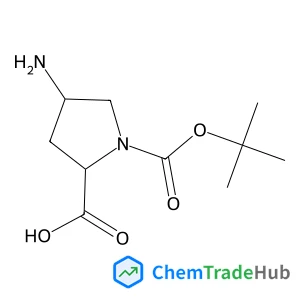
(2R,4R)-1-Boc-4-Aminopyrrolidine-2-carboxylic acid
CAS Number:
132622-98-1
Molecular Formula:
C10H18N2O4
Recommended Suppliers







Disclaimer
This page provides academic journal information for reference and research purposes only. We are not affiliated with any journal publishers and do not handle publication submissions. For publication-related inquiries, please contact the respective journal publishers directly.
If you notice any inaccuracies in the information displayed, please contact us at support@chemtradehub.com. We will promptly review and address your concerns.