![(2S)-2-{[(9H-Fluoren-9-ylmethoxy)carbonyl]amino}-4-(methylselanyl)butanoic acid structure](https://static.chemtradehub.com/structs/121/1217852-49-7-f252.webp "(2S)-2-{[(9H-Fluoren-9-ylmethoxy)carbonyl]amino}-4-(methylselanyl)butanoic acid structure")
(2S)-2-{[(9H-Fluoren-9-ylmethoxy)carbonyl]amino}-4-(methylselanyl)butanoic acid
CAS Number:
1217852-49-7
Molecular Formula:
C20H21NO4Se
P. Chávez, P. Lévêque, N. Leclerc
Three π-conjugated alternating copolymers, based on dibenzosilole as an electron-rich unit and fluorinated or non-fluorinated quinoxaline as an electron-withdrawing unit, connected through thiazole or thiophene moieties, have been synthesized, fully characterized and applied as donors in polymer solar cells (PSCs). The three copolymers, namely PDBS-TQx, PDBS-TQxF and PDBS-TzQx, belong to the wide band-gap semiconductor materials family, and they show an absorption edge in the visible region close to 650 nm. In order to tune the position of the polymer energy levels, and in particular to decrease their HOMO energy level, we compare the use of a thiazole spacer sandwiching the electron-deficient moiety as an alternative way to the popular backbone fluorination. PSCs based on a blend of PDBS-TQx and [6,6]-phenyl-C71-butyric acid methylester (PC71BM) as an active layer have shown the best device performances with a maximum power conversion efficiency (PCE) of 5.14% for the active area of 0.28 cm2 (under standard illumination of AM 1.5G, 1000 W m−2). Interestingly this polymer outperforms P3HT:(PC61BM) solar cells used as a reference material in this work. In addition to the thorough characterization data, including among other spectroscopy techniques, XRD, OFET, AFM and nc-AFM, we discuss in detail the relationship between the chemical structures of the three polymers, their optoelectronic properties, the phase separation in blends with PC71BM and their photovoltaic performances.
DOI: 10.1039/D0AN00142B
DOI: 10.1039/A903908B
Xin-Yue Chen, Wei Ha, Xiao-Jie Jin, Yan-Ping Shi
DOI: 10.1039/D0AN01460E
Alicia D. Powers, Bi Liu, Andrew G. Lee, Sean P. Palecek
DOI: 10.1039/C2AN35464K
Andrew S. Brown, Richard J. C. Brown, Rod A. Robinson
DOI: 10.1039/B707924A
When considering alternatives to 1-(4-Chlorophenyl)-N-hydroxymethanimine (CAS: 3...
This compound should be stored in a cool, dry place away from direct sunlight. I...
3-(4-Bromophenyl)-5-(2-fluorophenyl)-1,2,4-oxadiazole is synthesized through a m...
5-Chloro-2-(4-chlorophenyl)-4-methyl-6-[3-(1-piperidinyl)propoxy]pyrimidine (CAS...
2-Chloro-4-(difluoromethoxy)pyridine is used in the pharmaceutical industry for ...
3-Chloro-6-methylpyridazine (CAS: 1121-79-5) is classified under the Globally Ha...
Several alternatives can be used in the synthesis of Methyl 4,5-dimethyl-2-nitro...
Alternatives to (2E,2'E)-3,3'-(1,4-Phenylene)bisacrylaldehyde include other acry...
3-Amino-5-chloropyridin-2-ol hydrochloride is an organic compound with the CAS n...
When handling 6,7-Difluoro-2,3-dihydro-4H-chromen-4-one, it is essential to wear...

Polymer Chemistry welcomes submissions in all areas of polymer science that have a strong focus on macromolecular chemistry. Manuscripts may cover a broad range of fields, yet no direct application focus is required.
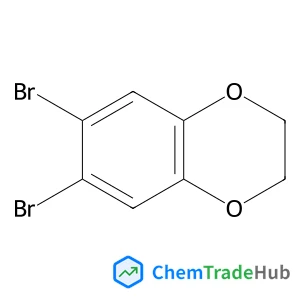
![6-Bromo-2,3-dihydro-1H-pyrido[2,3-b][1,4]oxazine structure](https://static.chemtradehub.com/structs/120/1203499-17-5-b4d1.webp "6-Bromo-2,3-dihydro-1H-pyrido[2,3-b][1,4]oxazine structure")