












![(1R,5R)-3-{[(2-Methyl-2-propanyl)oxy]carbonyl}-3-azabicyclo[3.1.0]hexane-1-carboxylic acid structure](https://static.chemtradehub.com/structs/116/1165450-63-4-bfe1.webp "(1R,5R)-3-{[(2-Methyl-2-propanyl)oxy]carbonyl}-3-azabicyclo[3.1.0]hexane-1-carboxylic acid structure")
(1R,5R)-3-{[(2-Methyl-2-propanyl)oxy]carbonyl}-3-azabicyclo[3.1.0]hexane-1-carboxylic acid
CAS Number:
1165450-63-4
Molecular Formula:
C11H17NO4
Ismael AL Mulla, John P. Lowry, Pier Andrea Serra, Robert D. O'Neill
The established stability of carbon-paste electrodes (CPEs) in brain extracellular fluid was exploited to develop a voltammetric technique to monitor the dopamine metabolite, homovanillic acid (HVA), at 10 s intervals. At the scan rates needed for this time resolution, 3,4-dihydroxyphenylacetic acid (DOPAC), electrogenerated as a result of HVA oxidation, was observed in the cyclic staircase voltammograms, and this interfered with the straightforward reliable quantification of HVA. However, correction of the HVA signal, recorded in mixtures, with currents from the DOPAC and ascorbate regions of the voltammogram allowed the reproducible construction of well behaved HVA calibration plots. These showed good linearity, LOD values, selectivity and stability during six days of continuous CPE exposure to a lipid medium, which served as an in-vitro model of CPE implantation in brain tissue for future applications.
Bingfeng Shi, Jianhua Lü, Ying Liu, Yang Xiao, Changli Lü
DOI: 10.1039/D1PY00308A
Mathieu A. Ayer, Cheyenne H. Liu, Christoph Weder
DOI: 10.1039/D1PY00420D
Simone Lazar, Ruiqing Shen, Yufeng Quan, Bethany Palen, Qingsheng Wang, Christopher J. Ellison
DOI: 10.1039/D1PY00111F
Tianwen Zhu, Qiaoxi Yu, Weiwen Zheng, Runxin Bei, Wenhui Wang, Minming Wu, Siwei Liu, Zhenguo Chi, Yi Zhang, Jiarui Xu
DOI: 10.1039/D1PY00084E
Brian J. Ree, Yusuke Satoh, Takuya Isono, Toshifumi Satoh
DOI: 10.1039/D1PY00421B
Jacob J. Lessard, Georg M. Scheutz, Angie B. Korpusik, Rebecca A. Olson, C. Adrian Figg, Brent S. Sumerlin
DOI: 10.1039/D1PY00208B
Raita Goseki, Shogo Miyai, Satoshi Uchida, Takashi Ishizone
DOI: 10.1039/D1PY00500F
When handling lithium chloride hydrate (1:1:1) (CAS: 16712-20-2), it is importan...
4-(4H-1,2,4-Triazol-4-yl)piperidine is generally considered safe for use in phar...
Waste containing 1,3-Thiazole-2-carboxamide (CAS: 16733-85-0) should be collecte...
5-(Difluoromethyl)-2-fluorobenzonitrile (CAS: 934175-58-3) is subject to regulat...
Methyl 3-acetamido-2-thiophenecarboxylate can be synthesized by the reaction of ...
4-Isoquinolinecarbonitrile is a chemical compound with the CAS number 34846-65-6...
Store Methyl 1H-1,2,3-triazole-4-carboxylate (CAS: 877309-59-6) in a cool, dry p...
6-Bromo[1,3]thiazolo[5,4-b]pyridin-2-amine (CAS: 1160791-13-8) is subject to the...
(2S,3S)-2-Ammonio-3-(3,4-dihydroxyphenyl)-3-hydroxypropanoate (CAS: 23651-95-8) ...
7-Bromo-3-methyl-3,4-dihydroquinazolin-4-one is a solid with a crystalline form....

Analyst publishes analytical and bioanalytical research that reports premier fundamental discoveries and inventions, and the applications of those discoveries, unconfined by traditional discipline barriers.
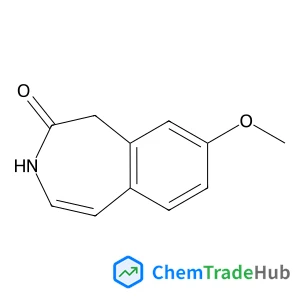
![Benzeneacetic acid, 2-bromo-α-[[(1,1-dimethylethoxy)carbonyl]amino]-, (αS)- structure](https://static.chemtradehub.com/structs/122/1228547-87-2-f296.webp "Benzeneacetic acid, 2-bromo-α-[[(1,1-dimethylethoxy)carbonyl]amino]-, (αS)- structure")
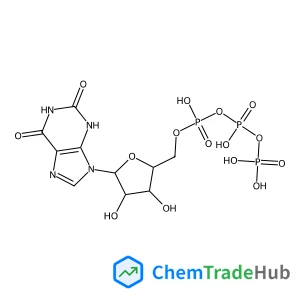
![6-(Benzyloxy)-8-(2-bromoacetyl)-2H-benzo[b][1,4]oxazin-3(4H)-one structure](https://static.chemtradehub.com/structs/926/926319-53-1-2287.webp "6-(Benzyloxy)-8-(2-bromoacetyl)-2H-benzo[b][1,4]oxazin-3(4H)-one structure")




