












Free energies for biological electron transfer from QM/MM calculation: method, application and critical assessment
Literature Information
Publication Date
2008-08-11
DOI
10.1039/B807444E
Impact Factor
3.676
Authors
Jochen Blumberger
View Original
Abstract
Computer simulations of biological electron transfer reactions are reviewed with a focus on the calculation of reaction free energy (driving force) and reorganization free energy. Then a mixed quantum mechanical/molecular mechanical (QM/MM) approach is described which is designed for computation of these quantities for pure electron transfer reactions with large donor–acceptor separation distances. The method is applied to intra-protein electron transfer in Ru(bpy)2(im)His33 cytochrome c and the results compared to experimental data. Several modeling aspects which are important for successful calculation of free energies with QM/MM are discussed in detail.
Related Literature
Interaction between ionic liquid cation and water: infrared predissociation study of [bmim]+·(H2O)n clusters
Jonathan M. Voss, Brett M. Marsh, Jia Zhou, Etienne Garand
2016-06-29
Paper
DOI: 10.1039/C6CP02730J
CO chemisorption at vacancies of supported graphene films: a candidate for a sensor?
M. Smerieri, L. Savio
2016-06-29
Communication
DOI: 10.1039/C6CP02999J
The nature of photogenerated charge separation among different crystal facets of BiVO4 studied by density functional theory
Xin Zhou, Michel Dupuis, Can Li
2015-08-07
Paper
DOI: 10.1039/C5CP04299B
Selective detection and complete identification of triglycerides in cortical bone by high-resolution 1H MAS NMR spectroscopy
Peizhi Zhu, Michael D. Morris
2016-06-29
Communication
DOI: 10.1039/C6CP03506J
Unusual distance dependences of electron transfer rates
Martin Kuss-Petermann, Oliver S. Wenger
2016-06-29
Perspective
DOI: 10.1039/C6CP03124B
Precipitation and surface adsorption of metal complexes during electropolishing. Theory and characterization with X-ray nanotomography and surface tension isotherms
Maryana I. Nave, Yu-chen Karen Chen-Wiegart, Jun Wang, Konstantin G. Kornev
2015-08-17
Paper
DOI: 10.1039/C5CP03431K
The spectral relaxation dynamics and the molecular crowding effect of silver nanoclusters synthesized in the polymer scaffold
Kai-Hung Wang, Chih-Wei Chang
2015-08-07
Paper
DOI: 10.1039/C5CP03175C
Phase separation and crystallization in sodium lanthanum phosphate glasses induced by electrochemical substitution of sodium ions with protons
Keiga Kawaguchi, Takuya Yamaguchi, Takahisa Omata, Toshiharu Yamashita, Hiroshi Kawazoe, Junji Nishii
2015-08-06
Paper
DOI: 10.1039/C5CP04132E
Fullerenol C60(OH)16 prevents amyloid fibrillization of Aβ40 – in vitro and in silico approach
Maria-Magdalena Mocanu, Diana Fedunova, Mai Suan Li
2016-06-20
Paper
DOI: 10.1039/C6CP00901H
You might also like
Compound Q&A
What precautions should be taken when handling 4-(2-Furylmethyl)thiomorpholine 1,1-dioxide (CAS: 79206-94-3)?
When handling 4-(2-Furylmethyl)thiomorpholine 1,1-dioxide (CAS: 79206-94-3), it ...
79206-94-34-(2-Furylmethyl)thi...
Compound Q&A
What precautions should be taken when handling 4-Chloro-N-[2-(4-morpholinyl)ethyl]benzamide (CAS: 71320-77-9)?
When handling 4-Chloro-N-[2-(4-morpholinyl)ethyl]benzamide (CAS: 71320-77-9), it...
71320-77-94-Chloro-N-[2-(4-mor...
Compound Q&A
How should waste containing 2-[2-(2-Methoxyethoxy)ethoxy]ethyl 4-methylbenzenesulfonate (CAS: 62921-74-8) be handled?
Waste containing this compound (CAS: 62921-74-8) should be handled according to ...
62921-74-82-[2-(2-Methoxyethox...
Compound Q&A
How should waste containing (S)-Methyl 2-amino-3-cyclohexylpropanoate be handled?
Waste containing (S)-Methyl 2-amino-3-cyclohexylpropanoate should be collected i...
40056-18-6(S)-Methyl 2-amino-3...
Compound Q&A
How is 5-({4-[(2S,4R)-4-Hydroxy-2-methyltetrahydro-2H-pyran-4-yl]-2-thienyl}sulfanyl)-1-methyl-1,3-dihydro-2H-indol-2-one (CAS: 166882-70-8) typically synthesized?
This compound can be synthesized using a multi-step process involving the conjug...
166882-70-85-({4-[(2S,4R)-4-Hyd...
Compound Q&A
Are there alternatives to (2E)-3-(3,4-Dichlorophenyl)acrylic acid (CAS: 7312-27-8) in synthesis?
There are several alternatives to (2E)-3-(3,4-Dichlorophenyl)acrylic acid in syn...
7312-27-8(2E)-3-(3,4-Dichloro...
Compound Q&A
How should Ethyl 6-(2-nitrophenyl)imidazo[2,1-b][1,3]thiazole-3-carboxylate (CAS: 925437-84-9) be stored?
Ethyl 6-(2-nitrophenyl)imidazo[2,1-b][1,3]thiazole-3-carboxylate (CAS: 925437-84...
925437-84-9Ethyl 6-(2-nitrophen...
Compound Q&A
How should waste containing 2-(1,3-Thiazol-2-yl)ethanamine (CAS: 18453-07-1) be handled?
Waste containing 2-(1,3-Thiazol-2-yl)ethanamine (CAS: 18453-07-1) should be coll...
18453-07-12-(1,3-Thiazol-2-yl)...
Compound Q&A
How is Methyl 5-iodo-2-methylbenzoate (CAS: 103440-54-6) typically synthesized?
Methyl 5-iodo-2-methylbenzoate can be synthesized through the iodination of meth...
103440-54-6Methyl 5-iodo-2-meth...
Compound Q&A
How is 5-Chloro[1,2,4]triazolo[1,5-a]pyridine (CAS: 1427399-34-5) typically synthesized?
5-Chloro[1,2,4]triazolo[1,5-a]pyridine is commonly synthesized via the condensat...
1427399-34-55-Chloro[1,2,4]triaz...
Source Journal
Physical Chemistry Chemical Physics

CiteScore:
5.5
Self-citation Rate:
10.3%
Articles per Year:
3036
Physical Chemistry Chemical Physics (PCCP) is an international journal co-owned by 19 physical chemistry and physics societies from around the world. This journal publishes original, cutting-edge research in physical chemistry, chemical physics and biophysical chemistry. To be suitable for publication in PCCP, articles must include significant innovation and/or insight into physical chemistry; this is the most important criterion that reviewers and Editors will judge against when evaluating submissions. The journal has a broad scope and welcomes contributions spanning experiment, theory, computation and data science. Topical coverage includes spectroscopy, dynamics, kinetics, statistical mechanics, thermodynamics, electrochemistry, catalysis, surface science, quantum mechanics, quantum computing and machine learning. Interdisciplinary research areas such as polymers and soft matter, materials, nanoscience, energy, surfaces/interfaces, and biophysical chemistry are welcomed if they demonstrate significant innovation and/or insight into physical chemistry. Joined experimental/theoretical studies are particularly appreciated when complementary and based on up-to-date approaches.
Recommended Compounds

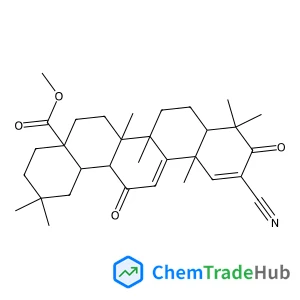
Methyl 2-cyano-3,12-dioxooleana-1,9(11)-dien-28-oate
CAS Number:
218600-53-4
Molecular Formula:
C32H43NO4
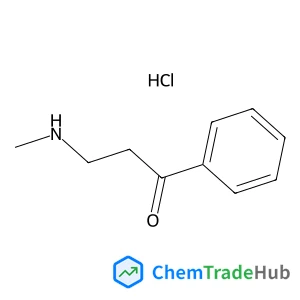
3-(Methylamino)-1-phenyl-1-propanone hydrochloride (1:1)
CAS Number:
2538-50-3
Molecular Formula:
C10H14ClNO
Recommended Suppliers







Disclaimer
This page provides academic journal information for reference and research purposes only. We are not affiliated with any journal publishers and do not handle publication submissions. For publication-related inquiries, please contact the respective journal publishers directly.
If you notice any inaccuracies in the information displayed, please contact us at support@chemtradehub.com. We will promptly review and address your concerns.