












Back cover
Literature Information
Publication Date
DOI
10.1039/B806463F
Impact Factor
6.222
Authors
View Original
Abstract
The first page of this article is displayed as the abstract.
Related Literature
Non-vertical energy transfer to oximes: role of structural changes
Jacques Lalevée, Xavier Allonas, Frédéric Louërat, Jean-Pierre Fouassier, Hideki Tachi, Akihito Izumitani, Masamitsu Shirai, Masahiro Tsunooka
2001-06-19
Communication
DOI: 10.1039/B104163K
Dielectric properties of dehydrated NaA zeolite, analyses and calculation of dielectric spectra
Tatsuo Ohgushi, Kazushi Ishimaru
2001-07-12
Paper
DOI: 10.1039/B102331B
Intramolecular hydrogen bonding in 2′-deoxyribonucleosides: an AIM topological study of the electronic density
2001-07-11
Paper
DOI: 10.1039/B101781K
Infrared laser spectroscopy and rovibrational analysis of the ν5 fundamental of cis-1-chloro-2-fluoroethylene
P. Stoppa, A. Pietropolli Charmet, S. Giorgianni, S. Ghersetti
2000-03-24
Paper
DOI: 10.1039/A910320L
Flexible multipole models for hydrogen fluoride
Matthew P. Hodges, Richard J. Wheatley
2000-03-24
Paper
DOI: 10.1039/A910293K
Antimony and bismuth oxide cluster ions
Jörg Opitz-Coutureau, André Fielicke, Bernhard Kaiser, Klaus Rademann
2001-07-02
Paper
DOI: 10.1039/B103009B
Aqueous mesophases of block copolymers of ethylene oxide and 1,2-butylene oxide
Ian W. Hamley, Shao-Min Mai, Anthony J. Ryan, J. Patrick A. Fairclough, Colin Booth
2001-07-11
Invited Article
DOI: 10.1039/B102782B
Supramolecular aggregates formed by L-glutamic acid-oligomers: SANS and SAXS studies of the hydrogen bonded self-assembly
M. Ishida, M. Takai, H. Okabayashi, H. Masuda, M. Furusaka, C. J. O'Connor
2001-07-12
Paper
DOI: 10.1039/B100717N
Solvent effect on monomer–dimer equilibrium in supercritical fluid: Spectroscopic and thermodynamic studies
Paper
DOI: 10.1039/A808298G
O 1D quantum yields from O3 photolysis in the near UV region between 305 and 375 nm
Dieter Bauer, Luca D'Ottone, Anthony J. Hynes
2000-03-10
Paper
DOI: 10.1039/B000159G
You might also like
Compound Q&A
How is Ethyl 4-chlorothieno[2,3-b]pyridine-5-carboxylate (CAS: 59713-58-5) typically synthesized?
Ethyl 4-chlorothieno[2,3-b]pyridine-5-carboxylate (CAS: 59713-58-5) can be synth...
59713-58-5Ethyl 4-chlorothieno...
Compound Q&A
What regulatory guidelines apply to 5-Methyl-1H-indole-3-carbaldehyde (CAS: 52562-50-2)?
5-Methyl-1H-indole-3-carbaldehyde (CAS: 52562-50-2) is subject to various regula...
52562-50-25-Methyl-1H-indole-3...
Compound Q&A
What are the physical and chemical properties of (1,3-Dimethyl-2,4-dioxo-1,2,3,4-tetrahydro-5-pyrimidinyl)boronic acid (CAS: 223418-73-3)?
(1,3-Dimethyl-2,4-dioxo-1,2,3,4-tetrahydro-5-pyrimidinyl)boronic acid is a white...
223418-73-3(1,3-Dimethyl-2,4-di...
Compound Q&A
How should waste containing Sulfocostunolide A (CAS: 1016983-51-9) be handled?
Waste containing Sulfocostunolide A (CAS: 1016983-51-9) should be handled with c...
1016983-51-9Sulfocostunolide A
Compound Q&A
What precautions should be taken when handling Murraxocin (CAS: 88478-44-8)?
When handling Murraxocin (CAS: 88478-44-8), ensure proper personal protective eq...
88478-44-8Murraxocin
Compound Q&A
What are the physical and chemical properties of Formvar (CAS: 63148-64-1)?
Formvar (CAS: 63148-64-1) is an alkyd resin characterized by a high molecular we...
63148-64-1Formvar(R)
Compound Q&A
Is (S)-4-benzyl-2-((benzyloxy)methyl)morpholine (CAS: 205242-66-6) safe?
(S)-4-benzyl-2-((benzyloxy)methyl)morpholine is generally safe when handled with...
205242-66-6(S)-4-benzyl-2-((ben...
Compound Q&A
What industries use Methyl 1-(5-bromo-2-pyrimidinyl)cyclopropanecarboxylate (CAS: 1447607-69-3)?
Methyl 1-(5-bromo-2-pyrimidinyl)cyclopropanecarboxylate (CAS: 1447607-69-3) is p...
1447607-69-3Methyl 1-(5-bromo-2-...
Compound Q&A
Is 2-Methyl-1-phenyl-1-propanamine hydrochloride (CAS: 24290-47-9) safe?
2-Methyl-1-phenyl-1-propanamine hydrochloride (CAS: 24290-47-9) is generally con...
24290-47-92-Methyl-1-phenyl-1-...
Compound Q&A
How is 3-(4-Bromophenyl)-2-methylpropanoic acid (CAS: 66735-01-1) typically synthesized?
3-(4-Bromophenyl)-2-methylpropanoic acid is synthesized through a multi-step pro...
66735-01-13-(4-Bromophenyl)-2-...
Source Journal
Chemical Communications

CiteScore:
8.6
Self-citation Rate:
4.7%
Articles per Year:
2458
ChemComm publishes urgent research which is of outstanding significance and interest to experts in the field, while also appealing to the journal’s broad chemistry readership. Our communication format is ideally suited to short, urgent studies that are of such importance that they require accelerated publication. Our scope covers all topics in chemistry, and research at the interface of chemistry and other disciplines (such as materials science, nanoscience, physics, engineering and biology) where there is a significant novelty in the chemistry aspects. Major topic areas covered include: Analytical Chemistry Catalysis Chemical Biology and medicinal chemistry Computational Chemistry and Machine Learning Energy and sustainable chemistry Environmental Chemistry Green Chemistry Inorganic Chemistry Materials Chemistry Nanoscience Organic Chemistry Physical Chemistry Polymer Chemistry Supramolecular Chemistry
Recommended Compounds
![4-[(1-Methyl-1H-pyrrol-2-yl)methylene]-1,3(2H,4H)-isoquinolinedione structure](https://static.chemtradehub.com/structs/110/1104546-89-5-a600.webp "4-[(1-Methyl-1H-pyrrol-2-yl)methylene]-1,3(2H,4H)-isoquinolinedione structure")
4-[(1-Methyl-1H-pyrrol-2-yl)methylene]-1,3(2H,4H)-isoquinolinedione
CAS Number:
1104546-89-5
Molecular Formula:
C15H12N2O2
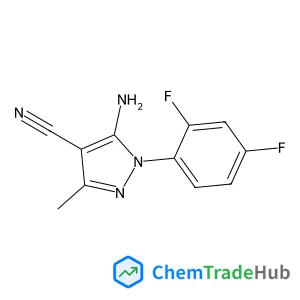
5-Amino-1-(2,4-difluorophenyl)-3-methyl-1H-pyrazole-4-carbonitrile
CAS Number:
1020057-92-4
Molecular Formula:
C11H8F2N4
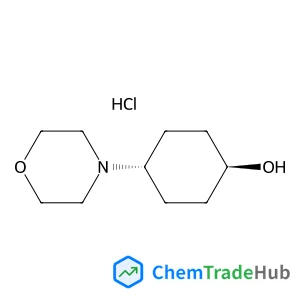
trans-4-(4-Morpholinyl)cyclohexanol hydrochloride (1:1)
CAS Number:
1588441-09-1
Molecular Formula:
C10H20ClNO2
Recommended Suppliers



Disclaimer
This page provides academic journal information for reference and research purposes only. We are not affiliated with any journal publishers and do not handle publication submissions. For publication-related inquiries, please contact the respective journal publishers directly.
If you notice any inaccuracies in the information displayed, please contact us at support@chemtradehub.com. We will promptly review and address your concerns.