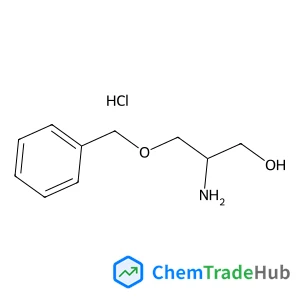
(R)-2-amino-3-(benzyloxy)propan-1-ol hydrochloride
CAS Number:
58577-95-0
Molecular Formula:
C10H16ClNO2
The theoretical analysis of the energy of the conformers of 2′-deoxyribonucleosides presents some subtle but significant differences depending on the nature of the base linked to the sugar. In particular, 2′-deoxycytidine behaves uniquely. Among the structural parameters invoked to explain this phenomenon, one of the most intriguing is the C–H···O intramolecular hydrogen bond in which the donor atom is H6 (H8) in the pyrimidine (purine) base and the acceptor atom is O5′ of the sugar. In the present work, the network of intramolecular weak bonds is thoroughly investigated for every 2′-deoxynucleoside in both the North (C3′-endo/anti) and South (C2′-endo/anti) conformations. In this respect, we use Bader's atoms in molecules (AIM) theory to perform a topological study of the electronic density, emphasizing the weak bonding in the nucleosides. Criteria for hydrogen bonding are comprehensively reviewed for each hydrogen bond revealed, and the concept of “improper” hydrogen bonding is addressed. The AIM analysis thus allows us to gain insight into the intrinsic reasons for the strange conformational behaviour of 2′-deoxycytidine.
Lingzhi Cao, Guangshun Wang, Wenjia Ji, Hailiang Nie, Chunliu Yang, Xiaoling Zhang
DOI: 10.1039/C9AY01555H
Lina Zou, Ying Xu, Peili Luo, Shusheng Zhang, Baoxian Ye
DOI: 10.1039/C1AN15720E
Meena Adhikari, Sagar Dhamane, Anna E. V. Hagström, Gavin Garvey, Wen-Hsiang Chen, Katerina Kourentzi, Ulrich Strych
DOI: 10.1039/C3AN00891F
Rui Gusmão, Cristina Ariño, José Manuel Díaz-Cruz, Miquel Esteban
DOI: 10.1039/B918293D
Raimundo R. Gamela, Marco A. Sperança, Daniel F. Andrade, Edenir R. Pereira-Filho
DOI: 10.1039/C9AY01916B
Naoya Jinno, Mari Murakami, Kiyoshi Mizohata, Masahiko Hashimoto, Kazuhiko Tsukagoshi
DOI: 10.1039/C0AN00820F
Wuping Liu, Jingjing Xu, Tao Dai, Guiping Shen, Jianghua Feng
DOI: 10.1039/D1AY00821H
Xichuan Wei, Haizhu Zhang, Ming Niu, Dingkun Zhang
DOI: 10.1039/C9AY01310E
Hanye Zheng, Kefeng Xu, Linguang Luo, Yibiao Song, Zhenyu Lin, Longhua Guo, Bin Qiu, Guonan Chen
DOI: 10.1039/C3AN01194A
Stuart T. Read, Garth Wells, Michael Jacobs, Scott M. Rosendahl, Sven Achenbach, Ian J. Burgess
DOI: 10.1039/C9AY02248A
Ethyl 4-chlorothieno[2,3-b]pyridine-5-carboxylate (CAS: 59713-58-5) can be synth...
5-Methyl-1H-indole-3-carbaldehyde (CAS: 52562-50-2) is subject to various regula...
(1,3-Dimethyl-2,4-dioxo-1,2,3,4-tetrahydro-5-pyrimidinyl)boronic acid is a white...
Waste containing Sulfocostunolide A (CAS: 1016983-51-9) should be handled with c...
When handling Murraxocin (CAS: 88478-44-8), ensure proper personal protective eq...
Formvar (CAS: 63148-64-1) is an alkyd resin characterized by a high molecular we...
(S)-4-benzyl-2-((benzyloxy)methyl)morpholine is generally safe when handled with...
Methyl 1-(5-bromo-2-pyrimidinyl)cyclopropanecarboxylate (CAS: 1447607-69-3) is p...
2-Methyl-1-phenyl-1-propanamine hydrochloride (CAS: 24290-47-9) is generally con...
3-(4-Bromophenyl)-2-methylpropanoic acid is synthesized through a multi-step pro...

Physical Chemistry Chemical Physics (PCCP) is an international journal co-owned by 19 physical chemistry and physics societies from around the world. This journal publishes original, cutting-edge research in physical chemistry, chemical physics and biophysical chemistry. To be suitable for publication in PCCP, articles must include significant innovation and/or insight into physical chemistry; this is the most important criterion that reviewers and Editors will judge against when evaluating submissions. The journal has a broad scope and welcomes contributions spanning experiment, theory, computation and data science. Topical coverage includes spectroscopy, dynamics, kinetics, statistical mechanics, thermodynamics, electrochemistry, catalysis, surface science, quantum mechanics, quantum computing and machine learning. Interdisciplinary research areas such as polymers and soft matter, materials, nanoscience, energy, surfaces/interfaces, and biophysical chemistry are welcomed if they demonstrate significant innovation and/or insight into physical chemistry. Joined experimental/theoretical studies are particularly appreciated when complementary and based on up-to-date approaches.
![2-Methyl-2-propanyl 1,6-diazaspiro[3.4]octane-6-carboxylate structure](https://static.chemtradehub.com/structs/115/1158749-79-1-81ee.webp "2-Methyl-2-propanyl 1,6-diazaspiro[3.4]octane-6-carboxylate structure")