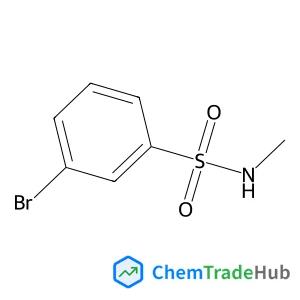
![2-(Methylsulfonyl)-2,4,5,6-tetrahydropyrrolo[3,4-c]pyrazole structure](https://static.chemtradehub.com/structs/122/1226781-80-1-09d5.webp "2-(Methylsulfonyl)-2,4,5,6-tetrahydropyrrolo[3,4-c]pyrazole structure")
2-(Methylsulfonyl)-2,4,5,6-tetrahydropyrrolo[3,4-c]pyrazole
CAS Number:
1226781-80-1
Molecular Formula:
C6H9N3O2S
Tatsuo Ohgushi, Kazushi Ishimaru
Dielectric spectra (ε′, ε″ and tan δ) of dehydrated NaA zeolite were measured in the temperature range 330–510 K and analyzed in detail to determine the characteristic values (εs, ε∞, β and peak frequency) of the dielectric relaxations. Two relaxations caused by Na+ ion as an exchangeable cation were measured in the spectra and the relaxations on the lower and higher frequency sides had activation energies of 60 and 49 kJ mol−1, respectively. By using the optimum characteristic values determined, the spectra of ε′, ε″ and tan δ at each temperature were calculated, and each calculated spectrum was in good agreement with the measured spectrum. The temperature dependences of all characteristic values were determined and hence it was possible to calculate the spectra at various temperatures. The characteristic values were also estimated by plotting the measured data on the Cole–Cole plane and separating the Cole–Cole curve separated into three parts including two circular arcs. The characteristic values estimated by this method were not in agreement with those determined by the former method. The limitations of the latter method are discussed.

Chemistry Education Research and Practice

Journal of Saudi Chemical Society

Current Opinion in Colloid & Interface Science

Russian Journal of General Chemistry

New Journal of Chemistry

Russian Journal of Applied Chemistry

Nature Medicine

Russian Journal of Coordination Chemistry

Organic Process Research & Development

Chemical Communications
Priscila M. Lalli, Gustavo B. Sanvido, Jerusa S. Garcia, Renato Haddad, Ricardo G. Cosso, Denison R. J. Maia, Jorge J. Zacca, Adriano O. Maldaner, Marcos N. Eberlin
DOI: 10.1039/B923398A
Yang Hu, Jinlong Wang
DOI: 10.1039/C9AY01506J
Lina Zou, Ying Xu, Peili Luo, Shusheng Zhang, Baoxian Ye
DOI: 10.1039/C1AN15720E
Naoya Jinno, Mari Murakami, Kiyoshi Mizohata, Masahiko Hashimoto, Kazuhiko Tsukagoshi
DOI: 10.1039/C0AN00820F
Weijia Leng, Kimberly Evans, Michael G. Roper
DOI: 10.1039/C9AY01758E
Xinwei Wei, Yuxiang Pan, Tao Liang, Ying Gan, Keqiang Gao, Yong Qiu
DOI: 10.1039/C9AY01592B
Fred. P. M. Jjunju, Anyin Li, Abraham Badu-Tawiah, Pu Wei, Linfan Li, Zheng Ouyang, Iman S. Roqan, R. Graham Cooks
DOI: 10.1039/C3AN00249G
Guanghui Cheng, Jiangli Fan, Wen Sun, Kun Sui, Xin Jin, Jingyun Wang, Xiaojun Peng
DOI: 10.1039/C3AN01152F
Ethyl 4-chlorothieno[2,3-b]pyridine-5-carboxylate (CAS: 59713-58-5) can be synth...
5-Methyl-1H-indole-3-carbaldehyde (CAS: 52562-50-2) is subject to various regula...
(1,3-Dimethyl-2,4-dioxo-1,2,3,4-tetrahydro-5-pyrimidinyl)boronic acid is a white...
Waste containing Sulfocostunolide A (CAS: 1016983-51-9) should be handled with c...
When handling Murraxocin (CAS: 88478-44-8), ensure proper personal protective eq...
Formvar (CAS: 63148-64-1) is an alkyd resin characterized by a high molecular we...
(S)-4-benzyl-2-((benzyloxy)methyl)morpholine is generally safe when handled with...
Methyl 1-(5-bromo-2-pyrimidinyl)cyclopropanecarboxylate (CAS: 1447607-69-3) is p...
2-Methyl-1-phenyl-1-propanamine hydrochloride (CAS: 24290-47-9) is generally con...
3-(4-Bromophenyl)-2-methylpropanoic acid is synthesized through a multi-step pro...

Physical Chemistry Chemical Physics (PCCP) is an international journal co-owned by 19 physical chemistry and physics societies from around the world. This journal publishes original, cutting-edge research in physical chemistry, chemical physics and biophysical chemistry. To be suitable for publication in PCCP, articles must include significant innovation and/or insight into physical chemistry; this is the most important criterion that reviewers and Editors will judge against when evaluating submissions. The journal has a broad scope and welcomes contributions spanning experiment, theory, computation and data science. Topical coverage includes spectroscopy, dynamics, kinetics, statistical mechanics, thermodynamics, electrochemistry, catalysis, surface science, quantum mechanics, quantum computing and machine learning. Interdisciplinary research areas such as polymers and soft matter, materials, nanoscience, energy, surfaces/interfaces, and biophysical chemistry are welcomed if they demonstrate significant innovation and/or insight into physical chemistry. Joined experimental/theoretical studies are particularly appreciated when complementary and based on up-to-date approaches.
![Imidazo[1,5-a]pyrazine structure](https://static.chemtradehub.com/structs/274/274-49-7-d749.webp "Imidazo[1,5-a]pyrazine structure")