













Chloroalkylsulfonate ionic liquids by ring opening of sultones with organic chloride salts
Literature Information
Publication Date
2008-06-24
DOI
10.1039/B805444D
Impact Factor
6.222
Authors
Natalia Paape, Wei Wei, Andreas Bösmann, Claudia Kolbeck, Florian Maier, Hans-Peter Steinrück, Peter Wasserscheid, Peter Steffen Schulz
View Original
Abstract
An efficient route to prepare ionic liquids with chloroalkylsulfonate anions is presented; the synthesis proceeds in a one-step ring-opening reaction of sultones with an organic chloride salt and provides a very attractive access to new anion functionalised ionic liquids.
Related Literature
Insights into the multi-functional lithium difluoro(oxalate)borate additive in boosting the Li-ion reaction kinetics for Li3VO4 anodes
Miaomiao Zhang, Cunyuan Pei, Qiqi Xiang, Lintao Liu, Zhongxu Dai, Huijuan Ma, Shibing Ni
2023-12-06
Paper
DOI: 10.1039/D3CP04952C
Reaction mechanism of the ethynylation of formaldehyde on copper terminated Cu2O(100) surfaces: a DFT study
2023-11-29
Paper
DOI: 10.1039/D3CP03903J
H2 formation from the E2–E4 states of nitrogenase
Hao Jiang, Ulf Ryde
2023-12-08
Paper
DOI: 10.1039/D3CP05181A
Reinforcement learning-based control for the thermal management of the battery and occupant compartments of electric vehicles
Jianglu Huang, Donggang Zhao, Yu Zhao
2024-01-03
Paper
DOI: 10.1039/D3SE01403G
Top-ranked efficiency under indoor light of DSSCs enabled by iodide-based DES-like solvent electrolyte
Chiara Liliana Boldrini, Andrea Francesca Quivelli, Filippo Maria Perna, Paolo Biagini, Vito Capriati, Alessandro Abbotto, Norberto Manfredi
2023-12-11
Paper
DOI: 10.1039/D3SE00949A
Theoretical investigation on the ligands constructed from phenanthroline and five-membered N-heterocyclic rings for bonding and separation properties of Am(iii) and Eu(iii)
Shouqiang Wu, An Yong Li
2023-12-12
Paper
DOI: 10.1039/D3CP05101C
HER catalytic activity and regulation of a transition metal atom-anchored BC3 monolayer: a first-principles study
Liying Pan, Xuxin Kang
2023-11-25
Paper
DOI: 10.1039/D3CP04660E
The controlled engineering of surface oxygen defects on Bi2Zr2O7 compounds for catalytic soot combustion by adjusting the preparation methods
Shijing Zhang, Xiaohui Feng, Zekai Xu, Yuting Li, Ping Wang, Jiating Shen, Junwei Xu, Xianglan Xu, Xiuzhong Fang, Xiang Wang
2023-11-24
Paper
DOI: 10.1039/D3CP04104B
You might also like
Compound Q&A
Are there alternatives to 1-(4-Chlorophenyl)-N-hydroxymethanimine (CAS: 3848-36-0) in synthesis?
When considering alternatives to 1-(4-Chlorophenyl)-N-hydroxymethanimine (CAS: 3...
3848-36-01-(4-Chlorophenyl)-N...
Compound Q&A
How should (1R,9S,10S,12S,14E,16S,19R,20R,21S,22R)-3,9,21-Trihydroxy-5,10,12,14,16,20,22-heptamethyl-23,24-dioxatetracyclo[17.3.1.1~6,9~.0~2,7~]tetracosa-2,5,7,14-tetraen-4-one (CAS: 183202-73-5) be stored?
This compound should be stored in a cool, dry place away from direct sunlight. I...
183202-73-5(1R,9S,10S,12S,14E,1...
Compound Q&A
How is 3-(4-Bromophenyl)-5-(2-fluorophenyl)-1,2,4-oxadiazole (CAS: 419553-16-5) typically synthesized?
3-(4-Bromophenyl)-5-(2-fluorophenyl)-1,2,4-oxadiazole is synthesized through a m...
419553-16-53-(4-Bromophenyl)-5-...
Compound Q&A
How is 5-Chloro-2-(4-chlorophenyl)-4-methyl-6-[3-(1-piperidinyl)propoxy]pyrimidine (CAS: 1639220-19-1) typically synthesized?
5-Chloro-2-(4-chlorophenyl)-4-methyl-6-[3-(1-piperidinyl)propoxy]pyrimidine (CAS...
1639220-19-15-Chloro-2-(4-chloro...
Compound Q&A
What industries use 2-Chloro-4-(difluoromethoxy)pyridine (CAS: 1206978-15-5)?
2-Chloro-4-(difluoromethoxy)pyridine is used in the pharmaceutical industry for ...
1206978-15-52-Chloro-4-(difluoro...
Compound Q&A
What regulatory guidelines apply to 3-Chloro-6-methylpyridazine (CAS: 1121-79-5)?
3-Chloro-6-methylpyridazine (CAS: 1121-79-5) is classified under the Globally Ha...
1121-79-53-Chloro-6-methylpyr...
Compound Q&A
Are there alternatives to Methyl 4,5-dimethyl-2-nitrobenzoate in synthesis?
Several alternatives can be used in the synthesis of Methyl 4,5-dimethyl-2-nitro...
90922-74-0Methyl 4,5-dimethyl-...
Compound Q&A
Are there alternatives to (2E,2'E)-3,3'-(1,4-Phenylene)bisacrylaldehyde in synthesis?
Alternatives to (2E,2'E)-3,3'-(1,4-Phenylene)bisacrylaldehyde include other acry...
63405-68-5(2E,2'E)-3,3'-(1,4-P...
Compound Q&A
What is 3-Amino-5-chloropyridin-2-ol hydrochloride (CAS: 1261906-29-9)?
3-Amino-5-chloropyridin-2-ol hydrochloride is an organic compound with the CAS n...
1261906-29-93-Amino-5-chloropyri...
Compound Q&A
What precautions should be taken when handling 6,7-Difluoro-2,3-dihydro-4H-chromen-4-one (CAS: 1092349-93-3)?
When handling 6,7-Difluoro-2,3-dihydro-4H-chromen-4-one, it is essential to wear...
1092349-93-36,7-Difluoro-2,3-dih...
Source Journal
Chemical Communications

CiteScore:
8.6
Self-citation Rate:
4.7%
Articles per Year:
2458
ChemComm publishes urgent research which is of outstanding significance and interest to experts in the field, while also appealing to the journal’s broad chemistry readership. Our communication format is ideally suited to short, urgent studies that are of such importance that they require accelerated publication. Our scope covers all topics in chemistry, and research at the interface of chemistry and other disciplines (such as materials science, nanoscience, physics, engineering and biology) where there is a significant novelty in the chemistry aspects. Major topic areas covered include: Analytical Chemistry Catalysis Chemical Biology and medicinal chemistry Computational Chemistry and Machine Learning Energy and sustainable chemistry Environmental Chemistry Green Chemistry Inorganic Chemistry Materials Chemistry Nanoscience Organic Chemistry Physical Chemistry Polymer Chemistry Supramolecular Chemistry
Recommended Compounds

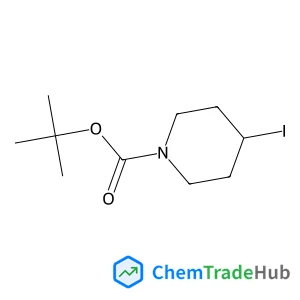
2-Methyl-2-propanyl 4-iodo-1-piperidinecarboxylate
CAS Number:
301673-14-3
Molecular Formula:
C10H18INO2

Recommended Suppliers




Disclaimer
This page provides academic journal information for reference and research purposes only. We are not affiliated with any journal publishers and do not handle publication submissions. For publication-related inquiries, please contact the respective journal publishers directly.
If you notice any inaccuracies in the information displayed, please contact us at support@chemtradehub.com. We will promptly review and address your concerns.