













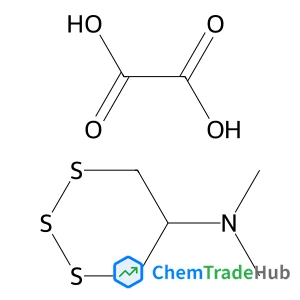
Oxalic acid compound with cyclohexylsulfamothioic O-acid (11)
CAS Number:
31895-22-4
Molecular Formula:
C7H13NO4S3
Chiara Liliana Boldrini, Andrea Francesca Quivelli, Filippo Maria Perna, Paolo Biagini, Vito Capriati, Alessandro Abbotto, Norberto Manfredi
This work presents the next paradigm shift in solar energy technology in which a novel iodide-based DES-like mixture has been first investigated as an active electrolyte solvent in dye-sensitized solar cells (DSSCs) in the absence of any co-solvent and any external iodide source. The optimization of the cell design jointly with a bespoke dye functionalized with a hydrophobic chain, properly positioned along the molecular backbone, ensures (a) one of the highest power conversion efficiencies (PCEs) up to 4% for DSSCs based on non-VOC solvents, and (b) a remarkable temporal stability of nearly 95% over a period longer than 2 months. Higher power conversion efficiency values (up to 8.0%) than those reported in the literature with traditional sensitizers and environmentally friendly electrolytes (e.g., water-based electrolytes) have been achieved under low-light illumination. These results are very promising for the realization of next-generation nature-inspired low-cost and high-performing DSSC devices for indoor and outdoor applications.
DOI: 10.1039/B101725J
Jacques Lalevée, Xavier Allonas, Frédéric Louërat, Jean-Pierre Fouassier, Hideki Tachi, Akihito Izumitani, Masamitsu Shirai, Masahiro Tsunooka
DOI: 10.1039/B104163K
Katsuhiko Ariga, Keizo Tanaka, Kiyofumi Katagiri, Jun-ichi Kikuchi, Hisashi Shimakoshi, Eiji Ohshima, Yoshio Hisaeda
DOI: 10.1039/B100974P
Laura Bussotti, Cristina Gellini, Laura Moroni, Pier Remigio Salvi
DOI: 10.1039/B103114G
Minoru Yamaji, Shin-ichi Ueda, Haruo Shizuka, Seiji Tobita
DOI: 10.1039/B103026B
Claude Schweitzer, Zahra Mehrdad, Farokh Shafii, Reinhard Schmidt
DOI: 10.1039/B102621F
Susan Troutman Lee, Elizabeth Richards O'Grady, Michael A. Carpenter, James M. Farrar
DOI: 10.1039/A906996H
George Law, Philip R. Watson, Adrian J. Carmichael, Kenneth R. Seddon
DOI: 10.1039/B101952J
M. Ishida, M. Takai, H. Okabayashi, H. Masuda, M. Furusaka, C. J. O'Connor
DOI: 10.1039/B100717N
When considering alternatives to 1-(4-Chlorophenyl)-N-hydroxymethanimine (CAS: 3...
This compound should be stored in a cool, dry place away from direct sunlight. I...
3-(4-Bromophenyl)-5-(2-fluorophenyl)-1,2,4-oxadiazole is synthesized through a m...
5-Chloro-2-(4-chlorophenyl)-4-methyl-6-[3-(1-piperidinyl)propoxy]pyrimidine (CAS...
2-Chloro-4-(difluoromethoxy)pyridine is used in the pharmaceutical industry for ...
3-Chloro-6-methylpyridazine (CAS: 1121-79-5) is classified under the Globally Ha...
Several alternatives can be used in the synthesis of Methyl 4,5-dimethyl-2-nitro...
Alternatives to (2E,2'E)-3,3'-(1,4-Phenylene)bisacrylaldehyde include other acry...
3-Amino-5-chloropyridin-2-ol hydrochloride is an organic compound with the CAS n...
When handling 6,7-Difluoro-2,3-dihydro-4H-chromen-4-one, it is essential to wear...
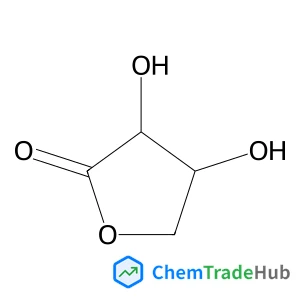
![2-{[4-(2-Methoxyethyl)phenoxy]methyl}oxirane structure](https://static.chemtradehub.com/structs/567/56718-70-8-f037.webp "2-{[4-(2-Methoxyethyl)phenoxy]methyl}oxirane structure")
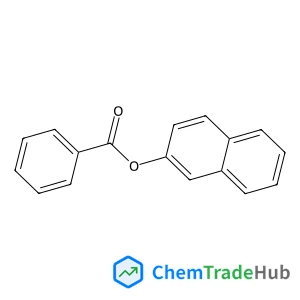
![N-[(E)-Phenylmethylene]benzenesulfonamide structure](https://static.chemtradehub.com/structs/139/13909-34-7-8167.webp "N-[(E)-Phenylmethylene]benzenesulfonamide structure")




