












SERS-activating effect of chlorides on borate-stabilized silver nanoparticles: formation of new reduced adsorption sites and induced nanoparticle fusion
Literature Information
Publication Date
2008-03-03
DOI
10.1039/B718178G
Impact Factor
3.676
Authors
Karolína Šišková, Blanka Vlčková, Josef Štěpánek
View Original
Abstract
Changes in morphology, surface reactivity and surface-enhancement of Raman scattering induced by modification of borate-stabilized Ag nanoparticles by adsorbed chlorides have been explored using TEM, EDX analysis and SERS spectra of probing adsorbate 2,2′-bipyridine (bpy) excited at 514.5 nm and evaluated by factor analysis. At fractional coverages of the parent Ag nanoparticles by adsorbed chlorides <0.6, the Ag colloid/Cl−/bpy systems were found to be constituted by fractal aggregates of Ag nanoparticles fairly uniform in size (10 ± 2 nm) and SERS spectra of Ag+-bpy surface species were detected. The latter result was interpreted in terms of the presence of oxidized Ag+ and/or Agn+ adsorption sites, which have been encountered also in systems with the chemically untreated Ag nanoparticles. At chloride coverages >0.6, a fusion of fractal aggregates into the compact aggregates of touching and/or interpenetrating Ag nanoparticles has been observed and found to be accompanied by the formation of another surface species, Ag-bpy, as well as by the increase of the overall SERS enhancement of bpy by factor of 40. The same Ag-bpy surface species has been detected under the strongly reducing conditions of reduction of silver nitrate by sodium borohydride in the presence of bpy. The formation of Ag-bpy is thus interpreted in terms of the stabilization of reduced Ag(0) adsorption sites by adsorbed bpy. The formation of reduced adsorption sites on Ag nanoparticle surfaces at chloride coverages >0.6 is discussed in terms of local changes in the work function of Ag. Finally, the SERS spectral detection of Ag-bpy species is proposed as a tool for probing the presence of reduced Ag(0) adsorption sites in systems with chemically modified Ag nanoparticles.
Related Literature
Revealing tunnelling details by normalized differential conductance analysis of transport across molecular junctions
2017-09-27
Communication
DOI: 10.1039/C7CP05536F
Prediction of superconducting ternary hydride MgGeH6: from divergent high-pressure formation routes
Yanbin Ma, Defang Duan, Ziji Shao, Da Li, Liyuan Wang, Hongyu Yu, Fubo Tian, Hui Xie, Bingbing Liu, Tian Cui
2017-09-18
Paper
DOI: 10.1039/C7CP05267G
The ionic versus metallic nature of 2D electrides: a density-functional description
Stephen G. Dale, Erin R. Johnson
2017-09-26
Paper
DOI: 10.1039/C7CP04825D
Vacuum ultraviolet photoabsorption spectroscopy of crystalline and amorphous benzene
Anita Dawes, Søren V. Hoffmann, Nykola C. Jones, Nigel J. Mason
2017-09-28
Paper
DOI: 10.1039/C7CP05319C
Laser cooling of the OH− molecular anion in a theoretical investigation
Ming-jie Wan, Duo-hui Huang, You Yu, Yun-guang Zhang
2017-09-18
Paper
DOI: 10.1039/C7CP04393G
Catalytic CVD synthesis of boron nitride and carbon nanomaterials – synergies between experiment and theory
Ben McLean, Clothilde A. Eveleens, Izaac Mitchell, Grant B. Webber, Alister J. Page
2017-08-21
Perspective
DOI: 10.1039/C7CP03835F
Shallow trapping vs. deep polarons in a hybrid lead halide perovskite, CH3NH3PbI3
Byungkyun Kang, Koushik Biswas
2017-08-16
Paper
DOI: 10.1039/C7CP04417H
Dynamic encapsulation of corannulene molecules into a single-walled carbon nanotube
Y. Joko, R. Sasaki, K. Shintani
2017-10-02
Paper
DOI: 10.1039/C7CP05542K
An efficient algorithm for extracting the magnitude of the measurement error for fractional dynamics
G. Sikora, E. Kepten, A. Weron, M. Balcerek, K. Burnecki
2017-09-14
Paper
DOI: 10.1039/C7CP04464J
You might also like
Compound Q&A
What industries use (1R,3S)-1,3-Cyclopentanediol (CAS: 16326-97-9)?
(1R,3S)-1,3-Cyclopentanediol finds applications in various industries. In the ph...
16326-97-9(1R,3S)-1,3-Cyclopen...
Compound Q&A
What precautions should be taken when handling N'-[4-(Dimethylamino)phenyl]-N,N-dimethyl-1,4-benzenediamine (CAS: 637-31-0)?
When handling N'-[4-(Dimethylamino)phenyl]-N,N-dimethyl-1,4-benzenediamine, it i...
637-31-0N'-[4-(Dimethylamino...
Compound Q&A
Are there alternatives to 5-(2,4-Difluorophenyl)-2-methoxypyrimidine (CAS: 1352318-16-1) in synthesis?
There are several alternatives to 5-(2,4-Difluorophenyl)-2-methoxypyrimidine in ...
1352318-16-15-(2,4-Difluoropheny...
Compound Q&A
What regulatory guidelines apply to 1-(3-Methoxyphenoxy)propan-2-ol (CAS: 382141-68-6)?
1-(3-Methoxyphenoxy)propan-2-ol (CAS: 382141-68-6) must comply with the Globally...
382141-68-61-(3-Methoxyphenoxy)...
Compound Q&A
Is Tetrodotoxin Citrate (CAS: 18660-81-6) safe?
Tetrodotoxin Citrate is extremely dangerous and should be handled with extreme c...
18660-81-6Tetrodotoxin Citrate
Compound Q&A
What are the main uses of 2-Methyl-2-propanyl [(1R,3S)-3-hydroxycyclopentyl]carbamate (CAS: 225641-84-9)?
2-Methyl-2-propanyl [(1R,3S)-3-hydroxycyclopentyl]carbamate (CAS: 225641-84-9) i...
225641-84-92-Methyl-2-propanyl ...
Compound Q&A
How should waste containing 4-(2-Hydroxyhexafluoroisopropyl)Benzoic Acid (CAS: 16261-80-6) be handled?
Waste containing 4-(2-Hydroxyhexafluoroisopropyl)Benzoic Acid (CAS: 16261-80-6) ...
16261-80-64-(2-Hydroxyhexafluo...
Compound Q&A
How is 2-Methyl-2-proanyl {(2S)-1-[(benzyloxy)amino]-3-hydroxy-3-methyl-1-oxo-2-butanyl}carbamate (CAS: 102507-19-7) typically synthesized?
2-Methyl-2-proanyl {(2S)-1-[(benzyloxy)amino]-3-hydroxy-3-methyl-1-oxo-2-butanyl...
102507-19-72-Methyl-2-propanyl ...
Compound Q&A
What is Benzeneethanamine, α-ethyl-, hydrochloride (1:1) (CAS: 20735-15-3)?
Benzeneethanamine, α-ethyl-, hydrochloride (1:1) is an organic compound with the...
20735-15-3Benzeneethanamine, α...
Compound Q&A
Are there alternatives to 3-{(E)-[4-(Dimethylamino)phenyl]diazenyl}benzoic acid (CAS: 20691-84-3) in synthesis?
In the synthesis of compounds similar to 3-{(E)-[4-(Dimethylamino)phenyl]diazeny...
20691-84-33-{(E)-[4-(Dimethyla...
Source Journal
Physical Chemistry Chemical Physics

CiteScore:
5.5
Self-citation Rate:
10.3%
Articles per Year:
3036
Physical Chemistry Chemical Physics (PCCP) is an international journal co-owned by 19 physical chemistry and physics societies from around the world. This journal publishes original, cutting-edge research in physical chemistry, chemical physics and biophysical chemistry. To be suitable for publication in PCCP, articles must include significant innovation and/or insight into physical chemistry; this is the most important criterion that reviewers and Editors will judge against when evaluating submissions. The journal has a broad scope and welcomes contributions spanning experiment, theory, computation and data science. Topical coverage includes spectroscopy, dynamics, kinetics, statistical mechanics, thermodynamics, electrochemistry, catalysis, surface science, quantum mechanics, quantum computing and machine learning. Interdisciplinary research areas such as polymers and soft matter, materials, nanoscience, energy, surfaces/interfaces, and biophysical chemistry are welcomed if they demonstrate significant innovation and/or insight into physical chemistry. Joined experimental/theoretical studies are particularly appreciated when complementary and based on up-to-date approaches.
Recommended Compounds
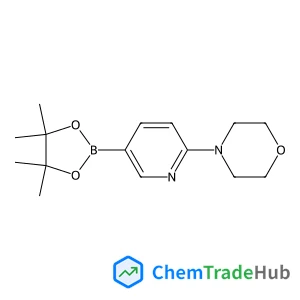
4-(5-(4,4,5,5-tetramethyl-1,3,2-dioxaborolan-2-yl)pyridin-2-yl)morpholine
CAS Number:
485799-04-0
Molecular Formula:
C15H23BN2O3
![N,N'-1,2-Ethanediylbis[2-(vinylsulfonyl)acetamide] structure](https://static.chemtradehub.com/structs/667/66710-66-5-b556.webp "N,N'-1,2-Ethanediylbis[2-(vinylsulfonyl)acetamide] structure")
N,N'-1,2-Ethanediylbis[2-(vinylsulfonyl)acetamide]
CAS Number:
66710-66-5
Molecular Formula:
C10H16N2O6S2
Recommended Suppliers








Disclaimer
This page provides academic journal information for reference and research purposes only. We are not affiliated with any journal publishers and do not handle publication submissions. For publication-related inquiries, please contact the respective journal publishers directly.
If you notice any inaccuracies in the information displayed, please contact us at support@chemtradehub.com. We will promptly review and address your concerns.