












Enantiopurevs. racemic metalloligands: impact on metal–organic framework structure and synthesis
Literature Information
Publication Date
2007-09-25
DOI
10.1039/B712118K
Impact Factor
6.222
Authors
Sergio J. Garibay, Jay R. Stork, Zhenqiang Wang, Seth M. Cohen, Shane G. Telfer
View Original
Abstract
Carboxylate-decorated tris(dipyrrinato) cobalt(III) complexes have been used to construct 2-D and 3-D metal–organic frameworks with infinite and trinuclear zinc secondary-building units.
Related Literature
Theoretical and experimental studies of water interaction in acetate based ionic liquids
Krishnan Damodaran, Hunaid B. Nulwala, David R. Luebke
2012-10-08
Paper
DOI: 10.1039/C2CP42975F
Double-chain planar D2h B4H2, C2h B8H2, and C2h B12H2: conjugated aromatic borenes
Yan-Bo Wu, Hai-Gang Lu
2012-05-17
Paper
DOI: 10.1039/C2CP40902J
D3h CN3Be3+ and CO3Li3+: viable planar hexacoordinate carbon prototypes
Yan-Bo Wu, Yan Duan, Gang Lu, Hai-Gang Lu, Pin Yang, Paul von Ragué Schleyer, Gabriel Merino, Zhi-Xiang Wang
2012-07-17
Communication
DOI: 10.1039/C2CP41822C
Solute–solvent hydrogen-bonding in room temperature ionic liquids studied by Raman spectroscopy
Akira Kobayashi, Koji Osawa, Masahide Terazima, Yoshifumi Kimura
2012-08-16
Paper
DOI: 10.1039/C2CP41567D
A spectroscopic investigation on the interaction of a magnetic ferrofluid with a model plasma protein: effect on the conformation and activity of the protein
Bijan Kumar Paul, Kaustav Bhattacharjee, Subhrangsu Bose, Nikhil Guchhait
2012-09-25
Paper
DOI: 10.1039/C2CP42415K
Electronic fluxes during large amplitude vibrations of single, double and triple bonds
Timm Bredtmann, Beate Paulus
2012-09-27
Paper
DOI: 10.1039/C2CP42494K
Transient IR spectroscopy and ab initio calculations on ESIPT in 3-hydroxyflavone solvated in acetonitrile
Katharina Chevalier, Matthias M. N. Wolf, Andreas Funk, Marko Andres, Markus Gerhards, Rolf Diller
2012-09-07
Paper
DOI: 10.1039/C2CP41077J
A metastable He–O bond inside a ferroelectric molecular cavity: (HeO)(LiF)2‡
2012-10-04
Paper
DOI: 10.1039/C2CP42321A
Surface orientation effects in crystalline–amorphous silicon interfaces
Michael Nolan, Merid Legesse, Giorgos Fagas
2012-09-25
Paper
DOI: 10.1039/C2CP42679J
A DFT+U study of the lattice oxygen reactivity toward direct CO oxidation on the CeO2(111) and (110) surfaces
Fendy Chen, Di Liu, Jie Zhang, P. Hu, Xue-Qing Gong, Guanzhong Lu
2012-07-13
Paper
DOI: 10.1039/C2CP41281K
You might also like
Compound Q&A
What precautions should be taken when handling 4-Methyl-6-(trifluoromethyl)quinoline (CAS: 40716-16-3)?
When handling 4-Methyl-6-(trifluoromethyl)quinoline (CAS: 40716-16-3), safety go...
40716-16-34-Methyl-6-(trifluor...
Compound Q&A
What is 4-(3,5-Difluorophenyl)aniline (CAS: 405058-00-6)?
4-(3,5-Difluorophenyl)aniline is an aromatic organic compound with the CAS numbe...
405058-00-64-(3,5-Difluoropheny...
Compound Q&A
How is 5-{[4-(Trifluoromethyl)phenyl]sulfanyl}-1,2,3-thiadiazole-4-carboxylic acid (CAS: 338982-07-3) typically synthesized?
5-{[4-(Trifluoromethyl)phenyl]sulfanyl}-1,2,3-thiadiazole-4-carboxylic acid can ...
338982-07-35-{[4-(Trifluorometh...
Compound Q&A
What is the market or research trend for 4-Benzylaniline hydrochloride (CAS: 6317-57-3)?
The market for 4-Benzylaniline hydrochloride (CAS: 6317-57-3) is steadily growin...
6317-57-34-Benzylaniline hydr...
Compound Q&A
Is [3-(Diethylsulfamoyl)phenyl]boronic acid (CAS: 871329-58-7) safe?
[3-(Diethylsulfamoyl)phenyl]boronic acid is generally considered safe when handl...
871329-58-7[3-(Diethylsulfamoyl...
Compound Q&A
What are the main uses of 3-Bromo-2,5-dimethoxyaniline (CAS: 115929-62-9)?
3-Bromo-2,5-dimethoxyaniline is mainly used in the pharmaceutical and chemical i...
115929-62-93-Bromo-2,5-dimethox...
Compound Q&A
What regulatory guidelines apply to N-Methyl-1-(5-methyl-1H-indol-3-yl)methanamine (CAS: 915922-67-7)?
N-Methyl-1-(5-methyl-1H-indol-3-yl)methanamine (CAS: 915922-67-7) is subject to ...
915922-67-7N-Methyl-1-(5-methyl...
Compound Q&A
What industries use Carbamic acid, N-[(5S)-5,6-diamino-6-oxohexyl]-, 1,1-dimethylethyl ester (CAS: 24828-96-4)?
This compound is primarily used in the pharmaceutical industry for the synthesis...
24828-96-4Carbamic acid, N-[(5...
Compound Q&A
How should 2-Methyl-2-propanyl [(1S,3R)-3-aminocyclohexyl]carbamate (CAS: 1298101-47-9) be stored?
2-Methyl-2-propanyl [(1S,3R)-3-aminocyclohexyl]carbamate (CAS: 1298101-47-9) sho...
1298101-47-92-Methyl-2-propanyl ...
Compound Q&A
What industries use Ethyl 2-bromo-4,4,4-trifluorobutanoate (CAS: 367-33-9)?
Ethyl 2-bromo-4,4,4-trifluorobutanoate (CAS: 367-33-9) is utilized in the pharma...
367-33-9Ethyl 2-bromo-4,4,4-...
Source Journal
Chemical Communications

CiteScore:
8.6
Self-citation Rate:
4.7%
Articles per Year:
2458
ChemComm publishes urgent research which is of outstanding significance and interest to experts in the field, while also appealing to the journal’s broad chemistry readership. Our communication format is ideally suited to short, urgent studies that are of such importance that they require accelerated publication. Our scope covers all topics in chemistry, and research at the interface of chemistry and other disciplines (such as materials science, nanoscience, physics, engineering and biology) where there is a significant novelty in the chemistry aspects. Major topic areas covered include: Analytical Chemistry Catalysis Chemical Biology and medicinal chemistry Computational Chemistry and Machine Learning Energy and sustainable chemistry Environmental Chemistry Green Chemistry Inorganic Chemistry Materials Chemistry Nanoscience Organic Chemistry Physical Chemistry Polymer Chemistry Supramolecular Chemistry
Recommended Compounds
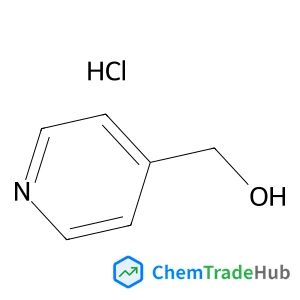
![[3-(2,6-Dichlorophenyl)-5-isopropyl-1,2-oxazol-4-yl]methanol structure](https://static.chemtradehub.com/structs/278/278597-30-1-5c79.webp "[3-(2,6-Dichlorophenyl)-5-isopropyl-1,2-oxazol-4-yl]methanol structure")
[3-(2,6-Dichlorophenyl)-5-isopropyl-1,2-oxazol-4-yl]methanol
CAS Number:
278597-30-1
Molecular Formula:
C13H13Cl2NO2
Recommended Suppliers






Disclaimer
This page provides academic journal information for reference and research purposes only. We are not affiliated with any journal publishers and do not handle publication submissions. For publication-related inquiries, please contact the respective journal publishers directly.
If you notice any inaccuracies in the information displayed, please contact us at support@chemtradehub.com. We will promptly review and address your concerns.