













A discrete Fe18 ‘molecular chain’
Literature Information
Publication Date
2007-07-23
DOI
10.1039/B708783G
Impact Factor
6.222
Authors
Rashmi Bagai, Khalil A. Abboud, George Christou
View Original
Abstract
The use of a new O,N,N,O chelate has led to two new Fe6 and Fe18 molecular compounds, the latter with an unusual double-headed serpentine chain structure.
Related Literature
Cationic tungsten imido alkylidene N-heterocyclic carbene complexes for stereospecific ring-opening metathesis polymerization of norbornene derivatives
Janis V. Musso, Mathis Benedikter, Paul Gebel, Vincent Gramm, Dongren Wang, Roman Schowner
2021-09-27
Paper
DOI: 10.1039/D1PY01158H
Amphiphilic diblock copolymers of poly(glycidol) with biodegradable polyester/polycarbonate. organocatalytic one-pot ROP and self-assembling property
Tingyu He, Atsushi Narumi, Yanqiu Wang, Liang Xu, Shin-ichiro Sato
2021-09-16
Paper
DOI: 10.1039/D1PY01026C
Unlocking the potential of furan-based poly(ester amide)s: an investigation of crystallization, molecular dynamics and degradation kinetics of novel poly(ester amide)s based on renewable poly(propylene furanoate)
Lazaros Papadopoulos, Panagiotis A. Klonos, Marcel Kluge, Alexandra Zamboulis, Zoi Terzopoulou, Dimitra Kourtidou, Andreas Magaziotis, Konstantinos Chrissafis, Apostolos Kyritsis, Dimitrios N. Bikiaris, Tobias Robert
2021-09-08
Paper
DOI: 10.1039/D1PY00713K
Poly(para-phenylene) ionomer membranes: effect of methyl and trifluoromethyl substituents
Fanghua Liu, Jinju Ahn, Junpei Miyake
2021-09-15
Paper
DOI: 10.1039/D1PY01141C
Multi-responsive, injectable, and self-healing hydrogels based on benzoxaborole–tannic acid complexation
Yi-Yang Peng, Qiuli Cheng, Wenda Wang, Meng Wu, Diana Diaz-Dussan, Piyush Kumar, Ravin Narain
2021-08-31
Paper
DOI: 10.1039/D1PY00692D
Design, synthesis, and characterization of vinyl-addition polynorbornenes with tunable thermal properties
Xinyi Wang, Yewon L. Jeong, Christopher Love, Holly A. Stretz, Gila E. Stein, Brian K. Long
2021-09-22
Paper
DOI: 10.1039/D1PY01050F
Design, synthesis and characterization of fused bithiazole- and dithiophene-based low bandgap thienylenevinylene copolymers
Dhananjaya Patra, Marc Comí, Xianhe Zhang, Gururaj P. Kini, Malsha Udayakantha, Alexander J. Kalin, Sarbajit Banerjee, Lei Fang, Xugang Guo, Mohammed Al-Hashimi
2021-09-30
Paper
DOI: 10.1039/D1PY00773D
You might also like
Compound Q&A
How should waste containing (6-Bromo-2-naphthyl)oxy](dimethyl)(2-methyl-2-propanyl)silane be handled?
Waste containing (6-Bromo-2-naphthyl)oxy](dimethyl)(2-methyl-2-propanyl)silane (...
100751-65-3[(6-Bromo-2-naphthyl...
Compound Q&A
How is 7-Fluoro-4-isoquinolinecarboxylic acid (CAS: 1841081-40-0) typically synthesized?
7-Fluoro-4-isoquinolinecarboxylic acid can be synthesized via a multi-step proce...
1841081-40-07-Fluoro-4-isoquinol...
Compound Q&A
What are the physical and chemical properties of 2,3,5,6-Tetrabromothieno[3,2-b]thiophene (CAS: 124638-53-5)?
2,3,5,6-Tetrabromothieno[3,2-b]thiophene is a crystalline compound with a high m...
124638-53-52,3,5,6-Tetrabromoth...
Compound Q&A
Is 1-[4-(Benzylamino)-7,8-dihydro-5H-pyrano[4,3-d]pyrimidin-2-yl]-2-methyl-1H-indole-4-carboxamide (CAS: 1542705-92-9) safe?
1-[4-(Benzylamino)-7,8-dihydro-5H-pyrano[4,3-d]pyrimidin-2-yl]-2-methyl-1H-indol...
1542705-92-91-[4-(Benzylamino)-7...
Compound Q&A
What is the market or research trend for imidazo[5,1-d]-1,2,3,5-tetrazine-8-carboxylic acid, 3,4-dihydro-3-methyl-4-oxo- (CAS: 113942-30-6)?
The market for imidazo[5,1-d]-1,2,3,5-tetrazine-8-carboxylic acid, 3,4-dihydro-3...
113942-30-6Imidazo[5,1-d]-1,2,3...
Compound Q&A
What is 3-(Triisopropylsilyl)propiolaldehyde (CAS: 163271-80-5)?
3-(Triisopropylsilyl)propiolaldehyde is a synthetic organic compound with the CA...
163271-80-53-(Triisopropylsilyl...
Compound Q&A
What regulatory guidelines apply to 6-Nitro-2H-1,4-benzoxazin-3(4H)-one (CAS: 81721-87-1)?
6-Nitro-2H-1,4-benzoxazin-3(4H)-one (CAS: 81721-87-1) is subject to various regu...
81721-87-16-Nitro-2H-1,4-benzo...
Compound Q&A
How should waste containing (3-Fluorophenyl)(4-{[(2-methyl-2-propanyl)oxy]carbonyl}-1-piperazinyl)acetic acid (CAS: 885272-91-3) be handled?
Waste containing (3-Fluorophenyl)(4-{[(2-methyl-2-propanyl)oxy]carbonyl}-1-piper...
885272-91-3(3-Fluorophenyl)(4-{...
Compound Q&A
What are the physical and chemical properties of N,N'-4,4'-Biphenyldiyldiisonicotinamide (CAS: 55119-40-9)?
N,N'-4,4'-Biphenyldiyldiisonicotinamide is a white crystalline solid with a mole...
55119-40-9N,N'-4,4'-Biphenyldi...
Compound Q&A
What industries use 6-Bromo-8-fluoro-2-quinazolinol (CAS: 1036756-15-6)?
6-Bromo-8-fluoro-2-quinazolinol is primarily used in the pharmaceutical industry...
1036756-15-66-Bromo-8-fluoro-2-q...
Source Journal
Chemical Communications

CiteScore:
8.6
Self-citation Rate:
4.7%
Articles per Year:
2458
ChemComm publishes urgent research which is of outstanding significance and interest to experts in the field, while also appealing to the journal’s broad chemistry readership. Our communication format is ideally suited to short, urgent studies that are of such importance that they require accelerated publication. Our scope covers all topics in chemistry, and research at the interface of chemistry and other disciplines (such as materials science, nanoscience, physics, engineering and biology) where there is a significant novelty in the chemistry aspects. Major topic areas covered include: Analytical Chemistry Catalysis Chemical Biology and medicinal chemistry Computational Chemistry and Machine Learning Energy and sustainable chemistry Environmental Chemistry Green Chemistry Inorganic Chemistry Materials Chemistry Nanoscience Organic Chemistry Physical Chemistry Polymer Chemistry Supramolecular Chemistry
Recommended Compounds

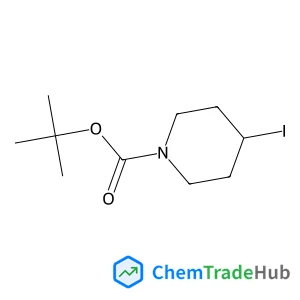
2-Methyl-2-propanyl 4-iodo-1-piperidinecarboxylate
CAS Number:
301673-14-3
Molecular Formula:
C10H18INO2
Recommended Suppliers






Disclaimer
This page provides academic journal information for reference and research purposes only. We are not affiliated with any journal publishers and do not handle publication submissions. For publication-related inquiries, please contact the respective journal publishers directly.
If you notice any inaccuracies in the information displayed, please contact us at support@chemtradehub.com. We will promptly review and address your concerns.