












Quantitative assessment of human whole blood RNA as a potential biomarker for infectious disease
Literature Information
Publication Date
2007-10-31
DOI
10.1039/B707122C
Impact Factor
4.616
Authors
Paul Dickinson, Thorsten Forster, Mizanur Khondoker, Marie Craigon, Alan Ross, Petter Storm, Stewart Burgess, Paul Lacaze, Benjamin J. Stenson, Peter Ghazal
View Original
Abstract
Infection remains a significant cause of morbidity and mortality especially in newborn infants. Analytical methods for diagnosing infection are severely limited in terms of sensitivity and specificity and require relatively large samples. It is proposed that stringent regulation of the human transcriptome affords a new molecular diagnostic approach based on measuring a highly specific systemic inflammatory response to infection, detectable at the RNA level. This proposition raises a number of as yet poorly characterised technical and biological variation issues that urgently need to be addressed. Here we report a quantitative assessment of methodological approaches for processing and extraction of RNA from small samples of infant whole blood and applying analysis of variation from biochip measurements. On the basis of testing and selection from a battery of assays we show that sufficient high quality RNA for analysis using multiplex array technology can be obtained from small neonatal samples. These findings formed the basis of implementing a set of robust clinical and experimental standard operating procedures for whole blood RNA samples from 58 infants. Modelling and analysis of variation between samples revealed significant sources of variation from the point of sample collection to processing and signal generation. These experiments further permitted power calculations to be run indicating the tractability and requirements of using changes in RNAexpression profiles to detect different states between patient groups. Overall the results of our investigation provide an essential first step toward facilitating an alternative way for diagnosing infection from very small neonatal blood samples, providing methods and requirements for future chip-based studies.
Related Literature
Unimolecular decay of the Cl−···CH3Cl complex: Influence of symmetry breaking
S. Schmatz, P. Botschwina
2001-04-27
Paper
DOI: 10.1039/B009879P
Di(2-picolyl)amine-functionalized poly(ethylene glycol) hydrogels with tailorable metal–ligand coordination crosslinking
Cheng-Hsuan Yu, Pei-Yu Chiang, Yi-Cheun Yeh
2021-11-05
Paper
DOI: 10.1039/D1PY01325D
Kinetics of the reactions of OH(X2Π) radicals with 1,3-dioxolane and selected dialkoxy methanes
Carlos M. Freitas Dinis, Harald Geiger, Peter Wiesen
2001-06-12
Paper
DOI: 10.1039/B100181G
The UV-photodissociation of jet-cooled nitrosobenzene studied by fluorescence excitation spectroscopy of the NO fragment
Angela Keßler, Alkwin Slenczka, Reinhold Seiler, Bernhard Dick
2001-06-20
Paper
DOI: 10.1039/B009655P
T,p Dependence of intradiffusion in binary fluid mixtures with carbon dioxide as one component
Thomas Groß, Liuping Chen, Johannes Buchhauser, Hans-Dietrich Lüdemann
2001-06-15
Paper
DOI: 10.1039/B102965G
Post-polymerization ‘click’ end-capping of polyglyoxylate self-immolative polymers
Peter G. Maschmeyer, Xiaoli Liang, Allison Hung, Oksana Ahmadzai, Annmaree L. Kenny, Yuan C. Luong, Timothy N. Forder, Haoxiang Zeng
2021-10-26
Paper
DOI: 10.1039/D1PY01169C
Isolated-alkene-linked porous organic polymers (BIT-POPs): facile synthesis via ROMP and distinguishing overlapping signals in solid-state 13C NMR
Zhi-Hao Zhang, Shan-Qing Peng, Shumeng Chi, Hanyuan Chen, Lei Fan, Yan Liu, Xiaohua Ma, Mu-Hua Huang
2021-11-03
Paper
DOI: 10.1039/D1PY01120K
Nuclear dynamics in quantum clusters
Andreas Heidenreich, Isidore Last, Uzi Even, Joshua Jortner
2001-05-18
Paper
DOI: 10.1039/B100550M
You might also like
Compound Q&A
How should waste containing (6-Bromo-2-naphthyl)oxy](dimethyl)(2-methyl-2-propanyl)silane be handled?
Waste containing (6-Bromo-2-naphthyl)oxy](dimethyl)(2-methyl-2-propanyl)silane (...
100751-65-3[(6-Bromo-2-naphthyl...
Compound Q&A
How is 7-Fluoro-4-isoquinolinecarboxylic acid (CAS: 1841081-40-0) typically synthesized?
7-Fluoro-4-isoquinolinecarboxylic acid can be synthesized via a multi-step proce...
1841081-40-07-Fluoro-4-isoquinol...
Compound Q&A
What are the physical and chemical properties of 2,3,5,6-Tetrabromothieno[3,2-b]thiophene (CAS: 124638-53-5)?
2,3,5,6-Tetrabromothieno[3,2-b]thiophene is a crystalline compound with a high m...
124638-53-52,3,5,6-Tetrabromoth...
Compound Q&A
Is 1-[4-(Benzylamino)-7,8-dihydro-5H-pyrano[4,3-d]pyrimidin-2-yl]-2-methyl-1H-indole-4-carboxamide (CAS: 1542705-92-9) safe?
1-[4-(Benzylamino)-7,8-dihydro-5H-pyrano[4,3-d]pyrimidin-2-yl]-2-methyl-1H-indol...
1542705-92-91-[4-(Benzylamino)-7...
Compound Q&A
What is the market or research trend for imidazo[5,1-d]-1,2,3,5-tetrazine-8-carboxylic acid, 3,4-dihydro-3-methyl-4-oxo- (CAS: 113942-30-6)?
The market for imidazo[5,1-d]-1,2,3,5-tetrazine-8-carboxylic acid, 3,4-dihydro-3...
113942-30-6Imidazo[5,1-d]-1,2,3...
Compound Q&A
What is 3-(Triisopropylsilyl)propiolaldehyde (CAS: 163271-80-5)?
3-(Triisopropylsilyl)propiolaldehyde is a synthetic organic compound with the CA...
163271-80-53-(Triisopropylsilyl...
Compound Q&A
What regulatory guidelines apply to 6-Nitro-2H-1,4-benzoxazin-3(4H)-one (CAS: 81721-87-1)?
6-Nitro-2H-1,4-benzoxazin-3(4H)-one (CAS: 81721-87-1) is subject to various regu...
81721-87-16-Nitro-2H-1,4-benzo...
Compound Q&A
How should waste containing (3-Fluorophenyl)(4-{[(2-methyl-2-propanyl)oxy]carbonyl}-1-piperazinyl)acetic acid (CAS: 885272-91-3) be handled?
Waste containing (3-Fluorophenyl)(4-{[(2-methyl-2-propanyl)oxy]carbonyl}-1-piper...
885272-91-3(3-Fluorophenyl)(4-{...
Compound Q&A
What are the physical and chemical properties of N,N'-4,4'-Biphenyldiyldiisonicotinamide (CAS: 55119-40-9)?
N,N'-4,4'-Biphenyldiyldiisonicotinamide is a white crystalline solid with a mole...
55119-40-9N,N'-4,4'-Biphenyldi...
Compound Q&A
What industries use 6-Bromo-8-fluoro-2-quinazolinol (CAS: 1036756-15-6)?
6-Bromo-8-fluoro-2-quinazolinol is primarily used in the pharmaceutical industry...
1036756-15-66-Bromo-8-fluoro-2-q...
Source Journal
Analyst

CiteScore:
7.8
Self-citation Rate:
5.6%
Articles per Year:
653
Analyst publishes analytical and bioanalytical research that reports premier fundamental discoveries and inventions, and the applications of those discoveries, unconfined by traditional discipline barriers.
Recommended Compounds
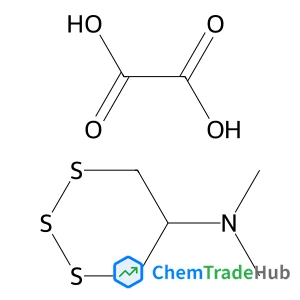
Oxalic acid compound with cyclohexylsulfamothioic O-acid (11)
CAS Number:
31895-22-4
Molecular Formula:
C7H13NO4S3
![2,9-Dichloro-5,12-dihydroquinolino[2,3-b]acridine-7,14-dione structure](https://static.chemtradehub.com/structs/308/3089-17-6-750b.webp "2,9-Dichloro-5,12-dihydroquinolino[2,3-b]acridine-7,14-dione structure")
2,9-Dichloro-5,12-dihydroquinolino[2,3-b]acridine-7,14-dione
CAS Number:
3089-17-6
Molecular Formula:
C20H10Cl2N2O2
Recommended Suppliers





Disclaimer
This page provides academic journal information for reference and research purposes only. We are not affiliated with any journal publishers and do not handle publication submissions. For publication-related inquiries, please contact the respective journal publishers directly.
If you notice any inaccuracies in the information displayed, please contact us at support@chemtradehub.com. We will promptly review and address your concerns.