












Nucleophilic aromatic substitution using Et3SiH/cat. t-Bu-P4 as a system for nucleophile activation
Literature Information
Publication Date
2007-02-28
DOI
10.1039/B700140A
Impact Factor
6.222
Authors
Masahiro Ueno, Misato Yonemoto, Masahiro Hashimoto, Andrew E. H. Wheatley, Hiroshi Naka, Yoshinori Kondo
View Original
Abstract
A novel type of deprotonative arylation of nucleophiles was conducted using Et3SiH/cat. t-Bu-P4 and the powerful SNAr reactions of aryl fluorides were accomplished using alcohols and malonates as nucleophiles.
Related Literature
First acid dissociation at an aqueous H2SO4 interface with sum frequency generation spectroscopy
Takayuki Miyamae, Yukio Ouchi
2008-02-19
Communication
DOI: 10.1039/B719496J
Electronic quenching of OH A 2Σ+ radicals in single collision events with H2 and D2: a comprehensive quantum state distribution of the OH X 2Π products
Logan P. Dempsey, Craig Murray, Patricia A. Cleary, Marsha I. Lester
2007-11-30
Paper
DOI: 10.1039/B715611A
Chiral signatures in angle-resolved valence photoelectron spectroscopy of pure glycidol enantiomers
Gustavo A. Garcia, Laurent Nahon, Chris J. Harding, Ivan Powis
2008-01-31
Paper
DOI: 10.1039/B714095A
Formation of a Criegee intermediate in the low-temperature oxidation of dimethyl sulfoxide
Rubik Asatryan, Joseph W. Bozzelli
2008-02-19
Paper
DOI: 10.1039/B716179D
Long-lasting dashed waves in a reactive microemulsion
Pablo Taboada, Victor Mosquera, Vladimir K. Vanag, Irving R. Epstein
2008-01-10
Communication
DOI: 10.1039/B714705H
Quantum mechanical limits to the control of atom–diatom chemical reactions through the polarisation of the reactants
Jesús Aldegunde, F. Javier Aoiz, Marcelo P. de Miranda
2007-12-21
Paper
DOI: 10.1039/B716482C
Species with negative electron affinity and standard DFT methods. Finding the valence anions
Marcelo Puiatti, D. Mariano A. Vera, Adriana B. Pierini
2008-01-28
Communication
DOI: 10.1039/B716625G
You might also like
Compound Q&A
What regulatory guidelines apply to 4-Amino-3-bromophenol (CAS: 74440-80-5)?
4-Amino-3-bromophenol (CAS: 74440-80-5) falls under the classification of a haza...
74440-80-54-Amino-3-bromopheno...
Compound Q&A
How should (17beta)-3-Oxoestr-4-en-17-yl acetate (CAS: 1425-10-1) be stored?
(17beta)-3-Oxoestr-4-en-17-yl acetate should be stored in a cool, dry place away...
1425-10-1(17beta)-3-Oxoestr-4...
Compound Q&A
What are the physical and chemical properties of 2-[(2,2-Diethoxyethyl)disulfanyl]-1,1-diethoxyethane (CAS: 76505-71-0)?
2-[(2,2-Diethoxyethyl)disulfanyl]-1,1-diethoxyethane (CAS: 76505-71-0) is a colo...
76505-71-02-[(2,2-Diethoxyethy...
Compound Q&A
What is the market or research trend for 1-(β-D-ribofuranosyl)-1H-imidazo[4,5-c]pyridin-4-amine?
The market and research for 1-(β-D-ribofuranosyl)-1H-imidazo[4,5-c]pyridin-4-ami...
6736-58-91-(beta-D-Ribofurano...
Compound Q&A
How should waste containing Conjugated Estrogen (CAS: 12126-59-9) be handled?
Waste containing Conjugated Estrogen (CAS: 12126-59-9) should be collected and d...
12126-59-9Conjugated Estrogen
Compound Q&A
What is the market or research trend for Bis(2,2,2-trifluoroethyl) (methoxycarbonylmethyl)phosphonate?
The market for Bis(2,2,2-trifluoroethyl) (methoxycarbonylmethyl)phosphonate (CAS...
88738-78-7Bis(2,2,2-trifluoroe...
Compound Q&A
Are there alternatives to 3,4'-Di-O-methylellagic acid (CAS: 57499-59-9) in synthesis?
There are several alternatives to 3,4'-Di-O-methylellagic acid (CAS: 57499-59-9)...
57499-59-93,4'-Di-O-methylella...
Compound Q&A
What regulatory guidelines apply to 2-Chloro-N,N-dimethylpyridin-4-amine (CAS: 59047-70-0)?
2-Chloro-N,N-dimethylpyridin-4-amine (CAS: 59047-70-0) is regulated under the Gl...
59047-70-02-Chloro-N,N-dimethy...
Compound Q&A
What is cerium(3+);oxygen(2-);vanadium(5+) (CAS: 13597-19-8)?
Cerium(3+);oxygen(2-);vanadium(5+) (CAS: 13597-19-8) is a complex inorganic comp...
13597-19-8cerium(3+);oxygen(2-...
Compound Q&A
Is 7-Chloro-1-iodoisoquinoline (CAS: 1203579-27-4) safe?
7-Chloro-1-iodoisoquinoline (CAS: 1203579-27-4) is generally considered safe whe...
1203579-27-47-Chloro-1-iodoisoqu...
Source Journal
Chemical Communications

CiteScore:
8.6
Self-citation Rate:
4.7%
Articles per Year:
2458
ChemComm publishes urgent research which is of outstanding significance and interest to experts in the field, while also appealing to the journal’s broad chemistry readership. Our communication format is ideally suited to short, urgent studies that are of such importance that they require accelerated publication. Our scope covers all topics in chemistry, and research at the interface of chemistry and other disciplines (such as materials science, nanoscience, physics, engineering and biology) where there is a significant novelty in the chemistry aspects. Major topic areas covered include: Analytical Chemistry Catalysis Chemical Biology and medicinal chemistry Computational Chemistry and Machine Learning Energy and sustainable chemistry Environmental Chemistry Green Chemistry Inorganic Chemistry Materials Chemistry Nanoscience Organic Chemistry Physical Chemistry Polymer Chemistry Supramolecular Chemistry
Recommended Compounds
![(2S)-2-({N-[(2S)-2-Ammonio-4-methylpentanoyl]glycyl}amino)-3-phenylpropanoate structure](https://static.chemtradehub.com/structs/429/4294-25-1-0842.webp "(2S)-2-({N-[(2S)-2-Ammonio-4-methylpentanoyl]glycyl}amino)-3-phenylpropanoate structure")
(2S)-2-({N-[(2S)-2-Ammonio-4-methylpentanoyl]glycyl}amino)-3-phenylpropanoate
CAS Number:
4294-25-1
Molecular Formula:
C17H25N3O4
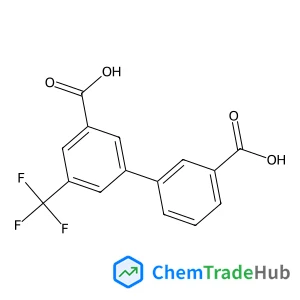
3-(3-Carboxyphenyl)-5-(trifluoromethyl)benzoic acid
CAS Number:
1261930-96-4
Molecular Formula:
C15H9F3O4
Recommended Suppliers





Disclaimer
This page provides academic journal information for reference and research purposes only. We are not affiliated with any journal publishers and do not handle publication submissions. For publication-related inquiries, please contact the respective journal publishers directly.
If you notice any inaccuracies in the information displayed, please contact us at support@chemtradehub.com. We will promptly review and address your concerns.