


Effect of epoxy monomer structure on the curing process and thermo-mechanical characteristics of tri-functional epoxy/amine systems: a methodology combining atomistic molecular simulation with experimental analyses
Literature Information
Publication Date
2017-02-10
DOI
10.1039/C7PY00063D
Impact Factor
5.582
Authors
Liang Gao, Qingjie Zhang, Hao Li, Siruo Yu, Weihong Zhong, Gang Sui, Xiaoping Yang
View Original
Abstract
The curing kinetics and thermo-mechanical characteristics of two kinds of high-performance amine cured tri-functional epoxy resin compounds, including diglycidyl-4,5-epoxycyclohexane-1,2-dicarboxylate and N,N-diglycidyl-4-glycidyloxyaniline, were systematically studied herein. Different to the simple bi-functional epoxy resins studied before, the increase in epoxy functionality and resultant asymmetric monomer structure made the whole curing behaviour more difficult to analyse. Nevertheless, there is an urgent demand to provide a thorough understanding of the tri-functional epoxy resin/amine system in order to obtain the desired macro-performance. In this paper, a methodology, which combines atomistic molecular simulation with experimental research, was established to expound the effect of the asymmetric epoxy monomer structure on the reaction kinetics and ultimate performance of the tri-functional epoxy/amine system. It can be utilized to efficiently analyse the cross-linking procedure and the microstructure–property relationships of epoxy resin with poly-functionality and asymmetric monomer structures, thereby serving as guidance to design high-performance polymer matrices for advanced composites.
Recommended Journals

Chemical Communications

Russian Journal of General Chemistry

Russian Journal of Organic Chemistry

Current Opinion in Colloid & Interface Science

Current Opinion in Solid State & Materials Science

Journal of Peptide Science

Russian Journal of Applied Chemistry

Saudi Pharmaceutical Journal

Acta Materialia

Journal of Natural Medicines
Related Literature
New insights into HER catalysis: the effect of nano-silica support on catalysis by silver nanoparticles
Gifty Sara Rolly, Guy Yardeni, Ronen Bar-Ziv, Tomer Zidki
2020-03-02
Paper
DOI: 10.1039/C9CP06820A
Correction: Thermodynamics, kinetics and electronic properties of point defects in β-FeSi2
Chen Ming, Pengfei Qiu, Yi-Yang Sun, Lidong Chen
2019-09-25
Correction
DOI: 10.1039/C9CP90237F
Enhanced carrier mobility and tunable electronic properties in α-tellurene monolayer via an α-tellurene and h-BN heterostructure
Xingtao Jia, Yujin Liu, Weiyang Yu, Baoji Wang, Xuefeng Yang, Qin Wang
2020-02-26
Paper
DOI: 10.1039/D0CP00269K
Molecular mechanisms for thermal degradation of CO2-loaded aqueous monoethanolamine solution: a first-principles study
Bohak Yoon, Haley M. Stowe
2019-09-25
Paper
DOI: 10.1039/C9CP04518J
On the linear geometry of lanthanide hydroxide (Ln-OH, Ln = La–Lu)
Hassan Harb, Lee M. Thompson, Hrant P. Hratchian
2019-09-20
Paper
DOI: 10.1039/C9CP01560D
Length-scale dependence of protein hydration-shell density
Andrea Amadei, Isabella Daidone
2020-03-23
Paper
DOI: 10.1039/C9CP06214A
H/D solvent isotope effects on the photoracemization reaction of enantiomeric the tris(2,2′-bipyridine)ruthenium(ii) complex and its analogues
Masahiro Asahara, Haruhiko Kurimoto, Masato Nakamizu, Shingo Hattori, Kazuteru Shinozaki
2020-03-02
Paper
DOI: 10.1039/C9CP06758B
Optimizing the orbital occupation in the multiple minima problem of magnetic materials from the metaheuristic firefly algorithm
Adam Payne, Guillermo Avedaño-Franco, Xu He, Eric Bousquet, Aldo H. Romero
2019-09-17
Paper
DOI: 10.1039/C9CP03618K
You might also like
Compound Q&A
What are the main uses of 4-Nitrophenyl phosphate disodium salt hexahydrate (CAS: 333338-18-4)?
4-Nitrophenyl phosphate disodium salt hexahydrate is primarily used as a substra...
333338-18-44-Nitrophenyl phosph...
Compound Q&A
What are the main uses of 2-(Trifluoromethyl)-1,3-oxazole-4-carboxylic Acid (CAS: 1060816-01-4)?
2-(Trifluoromethyl)-1,3-oxazole-4-carboxylic Acid (CAS: 1060816-01-4) is widely ...
1060816-01-42-(Trifluoromethyl)-...
Compound Q&A
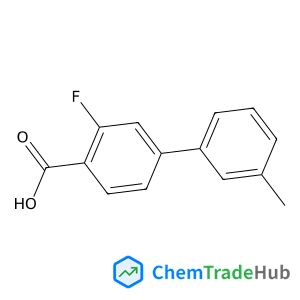
How should 2-Fluoro-4-biphenylcarboxylic acid (CAS: 137045-30-8) be stored?
2-Fluoro-4-biphenylcarboxylic acid should be stored in a cool, dry place at room...
137045-30-82-Fluoro-4-biphenylc...
Compound Q&A
What industries use Prednisolone-21-Carboxylic Acid (CAS: 61549-70-0)?
Prednisolone-21-Carboxylic Acid is primarily used in the pharmaceutical industry...
61549-70-0Prednisolone-21-Carb...
Compound Q&A
How should 4-(Hydrazinomethyl)-1,2,3-benzenetriol (CAS: 3614-72-0) be stored?
4-(Hydrazinomethyl)-1,2,3-benzenetriol (CAS: 3614-72-0) should be stored in a co...
3614-72-04-(Hydrazinomethyl)-...
Compound Q&A
What industries use 4-Amino-1-methyl-1H-pyrazole-5-carboxylic acid hydrochloride (CAS: 92534-70-8)?
4-Amino-1-methyl-1H-pyrazole-5-carboxylic acid hydrochloride (CAS: 92534-70-8) i...
92534-70-84-Amino-1-methyl-1H-...
Compound Q&A
What regulatory guidelines apply to dehydropachymic acid (CAS: 77012-31-8)?
Dehydropachymic acid (CAS: 77012-31-8) is regulated by various agencies. It fall...
77012-31-8Dehydropachymic acid
Compound Q&A
What is the market or research trend for 6-[(2,2-Dimethylpropanoyl)amino]nicotinic acid (CAS: 898561-66-5)?
The market and research trends for 6-[(2,2-Dimethylpropanoyl)amino]nicotinic aci...
898561-66-56-[(2,2-Dimethylprop...
Compound Q&A
How should 1,10-Phenanthroline-2,9-dicarbaldehyde (CAS: 57709-62-3) be stored?
1,10-Phenanthroline-2,9-dicarbaldehyde should be stored in a cool, dry place awa...
57709-62-31,10-Phenanthroline-...
Compound Q&A
How is 5-Carbamoyl-11-oxo-10,11-dihydro-5H-dibenzo[b,f]azepin-10-yl acetate (CAS: 113952-21-9) typically synthesized?
5-Carbamoyl-11-oxo-10,11-dihydro-5H-dibenzo[b,f]azepin-10-yl acetate can be synt...
113952-21-95-Carbamoyl-11-oxo-1...
Source Journal
Polymer Chemistry

CiteScore:
8.6
Self-citation Rate:
7.3%
Articles per Year:
457
Polymer Chemistry welcomes submissions in all areas of polymer science that have a strong focus on macromolecular chemistry. Manuscripts may cover a broad range of fields, yet no direct application focus is required.
Recommended Compounds
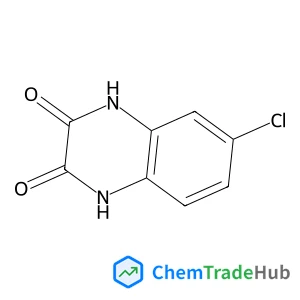
6-CHLORO-2,3-DIOXO-1,2,3,4-TETRAHYDROQUINOXALINE, 97
CAS Number:
169-14-2
Molecular Formula:
C8H5ClN2O2
Recommended Suppliers





Disclaimer
This page provides academic journal information for reference and research purposes only. We are not affiliated with any journal publishers and do not handle publication submissions. For publication-related inquiries, please contact the respective journal publishers directly.
If you notice any inaccuracies in the information displayed, please contact us at support@chemtradehub.com. We will promptly review and address your concerns.