












Front cover
Literature Information
Publication Date
DOI
10.1039/B607309N
Impact Factor
6.222
Authors
View Original
Abstract
The first page of this article is displayed as the abstract.
Recommended Journals
Related Literature
The intramolecular Baylis–Hillman reaction: easy preparation of versatile substrates, facile reactions, and synthetic applications
Jung Eun Yeo, Xiuling Yang, Hee Jin Kim, Sangho Koo
2003-11-10
Communication
DOI: 10.1039/B311951C
Electrospray mass spectrometry of undiluted ionic liquids
Glen P. Jackson, Douglas C. Duckworth
2004-01-27
Communication
DOI: 10.1039/B314754A
Free energy of adsorption of water and calcium on the {10 4} calcite surface
Sebastien Kerisit, Stephen C. Parker
2003-12-02
Communication
DOI: 10.1039/B311928A
Recycling of the homogeneous Co-Jacobsen catalyst through solvent-resistent nanofiltration (SRNF)
H. Weyten, A. Buekenhoudt, L. E. M. Gevers, I. F. J. Vankelecom, P. A. Jacobs
2004-02-16
Communication
DOI: 10.1039/B312580G
A powerful route to C-functionalised tetraazamacrocycles
Frédéric Boschetti, Franck Denat, Enrique Espinosa, Jean-Marie Lagrange, Roger Guilard
2004-02-03
Communication
DOI: 10.1039/B315285E
Amine elimination synthesis of a titanium(IV) N-heterocyclic carbene complex with short intramolecular Cl⋯Ccarbene contacts
Colin D. Abernethy
2004-01-15
Communication
DOI: 10.1039/B314558A
Ns strategies: a highly versatile synthetic method for amines
Toshiyuki Kan, Tohru Fukuyama
2003-11-25
Feature Article
DOI: 10.1039/B311203A
Insights into the reactivity and structure of silylene phosphonium ions
Rudolf Pietschnig
2004-01-30
Communication
DOI: 10.1039/B315001A
Template-free synthesis of single-crystalline cadmium nanotubes
Pingàn Hu, Yunqi Liu, Lei Fu, Lingchao Cao, Daoben Zhu
2004-02-04
Communication
DOI: 10.1039/B312708G
Cooperative C–F⋯Si interaction in optically active helical polysilanes
Sun-Young Kim, Giseop Kwak, Yusuke Kawakami
2004-01-27
Communication
DOI: 10.1039/B314723A
You might also like
Compound Q&A
How should waste containing 2-Ethyl-4-Methyl-1H-Imidazole-5-Carbaldehyde (CAS: 88634-80-4) be handled?
Waste containing 2-Ethyl-4-Methyl-1H-Imidazole-5-Carbaldehyde (CAS: 88634-80-4) ...
88634-80-42-Ethyl-4-Methyl-1H-...
Compound Q&A
What industries use Triethoxy(octyl)silane (CAS: 1385031-14-0)?
Triethoxy(octyl)silane (CAS: 1385031-14-0) is widely used in the pharmaceuticals...
1385031-14-0Triethoxy(octyl)sila...
Compound Q&A
Are there alternatives to 3-iodo-7-nitro-1H-indazole (CAS: 864724-64-1) in synthesis?
Several alternatives to 3-iodo-7-nitro-1H-indazole (CAS: 864724-64-1) exist in t...
864724-64-13-iodo-7-nitro-1H-in...
Compound Q&A
Are there alternatives to Benzene, bis[(trimethoxysilyl)ethyl] (CAS: 266317-71-9) in synthesis?
Yes, there are alternatives to Benzene, bis[(trimethoxysilyl)ethyl] (CAS: 266317...
266317-71-9Benzene, bis[(trimet...
Compound Q&A
Is Isothiazole-3-carbonitrile (CAS: 1452-17-1) safe?
Isothiazole-3-carbonitrile (CAS: 1452-17-1) is generally considered safe when us...
1452-17-1Isothiazole-3-carbon...
Compound Q&A
Is (3-Chlorophenyl)methanol (CAS: 873-63-2) safe?
(3-Chlorophenyl)methanol (CAS: 873-63-2) is considered low to moderately toxic. ...
873-63-2(3-Chlorophenyl)meth...
Compound Q&A
How is (2S,3S)-2-Hydroxy-3-({[(2-methyl-2-propanyl)oxy]carbonyl}amino)-3-(2-naphthyl)propanoic acid (CAS: 959583-98-3) typically synthesized?
(2S,3S)-2-Hydroxy-3-({[(2-methyl-2-propanyl)oxy]carbonyl}amino)-3-(2-naphthyl)pr...
959583-98-3(2S,3S)-2-Hydroxy-3-...
Compound Q&A
What precautions should be taken when handling Methyl 2-(bromomethyl)-5-methoxybenzoate (CAS: 788081-99-2)?
Proper handling of methyl 2-(bromomethyl)-5-methoxybenzoate requires the use of ...
788081-99-2Methyl 2-(bromomethy...
Compound Q&A
What is 6,8-Dibromoimidazo[1,2-a]pyridine-2-carboxylic acid (CAS: 904805-36-3)?
6,8-Dibromoimidazo[1,2-a]pyridine-2-carboxylic acid (CAS: 904805-36-3) is an aro...
904805-36-36,8-Dibromoimidazo[1...
Compound Q&A
Is 3-Amino-5-bromo-2-pyridinecarbonitrile (CAS: 573675-27-1) safe?
3-Amino-5-bromo-2-pyridinecarbonitrile is considered safe when handled under pro...
573675-27-13-Amino-5-bromo-2-py...
Source Journal
Chemical Communications

CiteScore:
8.6
Self-citation Rate:
4.7%
Articles per Year:
2458
ChemComm publishes urgent research which is of outstanding significance and interest to experts in the field, while also appealing to the journal’s broad chemistry readership. Our communication format is ideally suited to short, urgent studies that are of such importance that they require accelerated publication. Our scope covers all topics in chemistry, and research at the interface of chemistry and other disciplines (such as materials science, nanoscience, physics, engineering and biology) where there is a significant novelty in the chemistry aspects. Major topic areas covered include: Analytical Chemistry Catalysis Chemical Biology and medicinal chemistry Computational Chemistry and Machine Learning Energy and sustainable chemistry Environmental Chemistry Green Chemistry Inorganic Chemistry Materials Chemistry Nanoscience Organic Chemistry Physical Chemistry Polymer Chemistry Supramolecular Chemistry
Recommended Compounds
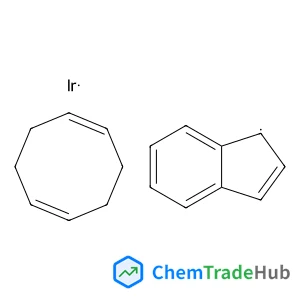
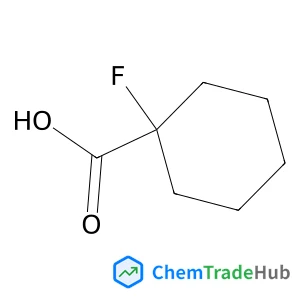
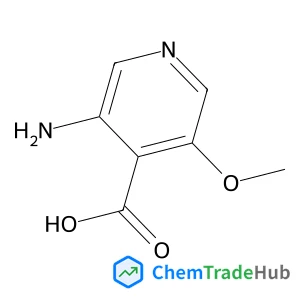
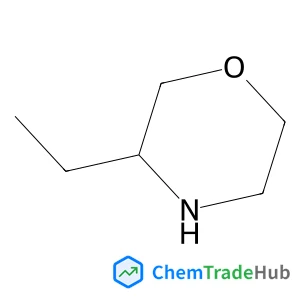
![4-Nitrophenyl N-{[(2-methyl-2-propanyl)oxy]carbonyl}-L-isoleucinate structure](https://static.chemtradehub.com/structs/169/16948-38-2-c88f.webp "4-Nitrophenyl N-{[(2-methyl-2-propanyl)oxy]carbonyl}-L-isoleucinate structure")
4-Nitrophenyl N-{[(2-methyl-2-propanyl)oxy]carbonyl}-L-isoleucinate
CAS Number:
16948-38-2
Molecular Formula:
C17H24N2O6
Recommended Suppliers



Disclaimer
This page provides academic journal information for reference and research purposes only. We are not affiliated with any journal publishers and do not handle publication submissions. For publication-related inquiries, please contact the respective journal publishers directly.
If you notice any inaccuracies in the information displayed, please contact us at support@chemtradehub.com. We will promptly review and address your concerns.