











Anion binding inhibition of the formation of a helical organogel
Literature Information
Publication Date
2006-06-22
DOI
10.1039/B606373J
Impact Factor
6.222
Authors
Claire E. Stanley, Nigel Clarke, Kirsty M. Anderson, Judith A. Elder, Joseph T. Lenthall, Jonathan W. Steed
View Original
Abstract
A chiral tris(urea) organogelator gels dmso–water and methanol–water mixtures at low weight percent. The formation of the helical gel fibres is partially inhibited by addition of chloride, which is bound by the gelator, resulting in fully crystalline material characterised by X-ray crystallography
Recommended Journals
Related Literature
Tetrameric molecular bowl assembled from glycoluril building blocks
Neng-Fang She, Xiang-Gao Meng, Meng Gao, An-Xin Wu, Lyle Isaacs
2008-04-04
Communication
DOI: 10.1039/B800785C
1,3-Diindolylureas: high affinity dihydrogen phosphate receptors
Claudia Caltagirone, Philip A. Gale, Jennifer R. Hiscock, Simon J. Brooks, Michael B. Hursthouse, Mark E. Light
2008-05-29
Communication
DOI: 10.1039/B806238B
Cyclic ureas as novel building blocks for bent-core liquid crystals
Benjamin Glettner, Sara Hein, R. Amaranatha Reddy, Ute Baumeister, Carsten Tschierske
2007-04-12
Communication
DOI: 10.1039/B703907G
s-Block metal complexes of a bulky, donor-functionalized allyl ligand
Sophia A. Solomon, Christopher A. Muryn, Richard A. Layfield
2008-05-12
Communication
DOI: 10.1039/B803364A
Copper-containing monodisperse mesoporous silica nanospheres by a smart one-step approach
Gaëlle Derrien, Clarence Charnay, Jerzy Zajac, Deborah J. Jones, Jacques Rozière
2008-06-09
Communication
DOI: 10.1039/B804593C
Rhodium-catalyzed enantioselective desymmetrization of bicyclic hydrazines with alkynylboronic esters
Stefano Crotti, Ferruccio Bertolini, Franco Macchia, Mauro Pineschi
2008-05-08
Communication
DOI: 10.1039/B803693D
Asymmetric multifunctional organocatalytic Michael addition of nitroalkanes to α,β-unsaturated ketones
Pengfei Li, Yongcan Wang, Jinxing Ye
2008-05-16
Communication
DOI: 10.1039/B804540B
Polymerization of an optically active phenylacetylene derivative bearing an azide residue by click reaction and reaction with a rhodium catalyst
Shinzo Kobayashi, Ken Itomi, Kazuhide Morino, Hiroki Iida, Eiji Yashima
2008-06-06
Communication
DOI: 10.1039/B806343E
Self-assembled perpendicular growth of organic nanoneedles via simple vapor-phase deposition: one-step fabrication of a superhydrophobic surface
Jong Won Chung, Byeong-Kwan An, Ji Whan Kim, Jang-Joo Kim, Soo Young Park
2008-05-13
Communication
DOI: 10.1039/B802749H
Novel neutral imidazole-lipophosphoramides for transfection assays
Mathieu Mével, Cécile Neveu, Cristine Gonçalves, Jean-Jacques Yaouanc, Chantal Pichon, Paul-Alain Jaffrès, Patrick Midoux
2008-06-16
Communication
DOI: 10.1039/B805226C
You might also like
Compound Q&A
Are there alternatives to 1-(4-Chlorophenyl)-N-hydroxymethanimine (CAS: 3848-36-0) in synthesis?
When considering alternatives to 1-(4-Chlorophenyl)-N-hydroxymethanimine (CAS: 3...
3848-36-01-(4-Chlorophenyl)-N...
Compound Q&A
How should (1R,9S,10S,12S,14E,16S,19R,20R,21S,22R)-3,9,21-Trihydroxy-5,10,12,14,16,20,22-heptamethyl-23,24-dioxatetracyclo[17.3.1.1~6,9~.0~2,7~]tetracosa-2,5,7,14-tetraen-4-one (CAS: 183202-73-5) be stored?
This compound should be stored in a cool, dry place away from direct sunlight. I...
183202-73-5(1R,9S,10S,12S,14E,1...
Compound Q&A
How is 3-(4-Bromophenyl)-5-(2-fluorophenyl)-1,2,4-oxadiazole (CAS: 419553-16-5) typically synthesized?
3-(4-Bromophenyl)-5-(2-fluorophenyl)-1,2,4-oxadiazole is synthesized through a m...
419553-16-53-(4-Bromophenyl)-5-...
Compound Q&A
How is 5-Chloro-2-(4-chlorophenyl)-4-methyl-6-[3-(1-piperidinyl)propoxy]pyrimidine (CAS: 1639220-19-1) typically synthesized?
5-Chloro-2-(4-chlorophenyl)-4-methyl-6-[3-(1-piperidinyl)propoxy]pyrimidine (CAS...
1639220-19-15-Chloro-2-(4-chloro...
Compound Q&A
What industries use 2-Chloro-4-(difluoromethoxy)pyridine (CAS: 1206978-15-5)?
2-Chloro-4-(difluoromethoxy)pyridine is used in the pharmaceutical industry for ...
1206978-15-52-Chloro-4-(difluoro...
Compound Q&A
What regulatory guidelines apply to 3-Chloro-6-methylpyridazine (CAS: 1121-79-5)?
3-Chloro-6-methylpyridazine (CAS: 1121-79-5) is classified under the Globally Ha...
1121-79-53-Chloro-6-methylpyr...
Compound Q&A
Are there alternatives to Methyl 4,5-dimethyl-2-nitrobenzoate in synthesis?
Several alternatives can be used in the synthesis of Methyl 4,5-dimethyl-2-nitro...
90922-74-0Methyl 4,5-dimethyl-...
Compound Q&A
Are there alternatives to (2E,2'E)-3,3'-(1,4-Phenylene)bisacrylaldehyde in synthesis?
Alternatives to (2E,2'E)-3,3'-(1,4-Phenylene)bisacrylaldehyde include other acry...
63405-68-5(2E,2'E)-3,3'-(1,4-P...
Compound Q&A
What is 3-Amino-5-chloropyridin-2-ol hydrochloride (CAS: 1261906-29-9)?
3-Amino-5-chloropyridin-2-ol hydrochloride is an organic compound with the CAS n...
1261906-29-93-Amino-5-chloropyri...
Compound Q&A
What precautions should be taken when handling 6,7-Difluoro-2,3-dihydro-4H-chromen-4-one (CAS: 1092349-93-3)?
When handling 6,7-Difluoro-2,3-dihydro-4H-chromen-4-one, it is essential to wear...
1092349-93-36,7-Difluoro-2,3-dih...
Source Journal
Chemical Communications

CiteScore:
8.6
Self-citation Rate:
4.7%
Articles per Year:
2458
ChemComm publishes urgent research which is of outstanding significance and interest to experts in the field, while also appealing to the journal’s broad chemistry readership. Our communication format is ideally suited to short, urgent studies that are of such importance that they require accelerated publication. Our scope covers all topics in chemistry, and research at the interface of chemistry and other disciplines (such as materials science, nanoscience, physics, engineering and biology) where there is a significant novelty in the chemistry aspects. Major topic areas covered include: Analytical Chemistry Catalysis Chemical Biology and medicinal chemistry Computational Chemistry and Machine Learning Energy and sustainable chemistry Environmental Chemistry Green Chemistry Inorganic Chemistry Materials Chemistry Nanoscience Organic Chemistry Physical Chemistry Polymer Chemistry Supramolecular Chemistry
Recommended Compounds
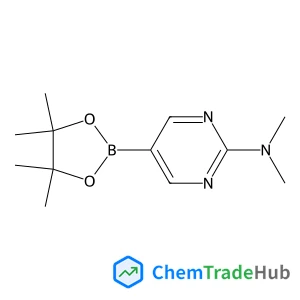
N,N-Dimethyl-5-(4,4,5,5-tetramethyl-1,3,2-dioxaborolan-2-yl)-2-pyrimidinamine
CAS Number:
1032759-30-0
Molecular Formula:
C12H20BN3O2
![6-Bromo-2,3-dihydro-1H-pyrido[2,3-b][1,4]oxazine structure](https://static.chemtradehub.com/structs/120/1203499-17-5-b4d1.webp "6-Bromo-2,3-dihydro-1H-pyrido[2,3-b][1,4]oxazine structure")
6-Bromo-2,3-dihydro-1H-pyrido[2,3-b][1,4]oxazine
CAS Number:
1203499-17-5
Molecular Formula:
C7H7BrN2O
Recommended Suppliers




Disclaimer
This page provides academic journal information for reference and research purposes only. We are not affiliated with any journal publishers and do not handle publication submissions. For publication-related inquiries, please contact the respective journal publishers directly.
If you notice any inaccuracies in the information displayed, please contact us at support@chemtradehub.com. We will promptly review and address your concerns.